
***Fast Facts: The Centers for Disease Control and Prevention reports SCD disproportionately affects minority populations, with 1 in 365 Black or African American babies and 1 in 16,300 Hispanic American babies born with the condition.
Worldwide: The World Health Organization notes that nearly 80% of global cases occur in sub-Saharan Africa.***
Sickle Cell Disease (SCD) is a group of inherited red blood cell disorders that alter hemoglobin. In 2026, the treatment landscape has radically advanced. The standard of care has evolved past lifelong medication and blood transfusions to include potentially curative, one-time gene therapies and breakthrough oral drugs.
What is Sickle Cell Disease?
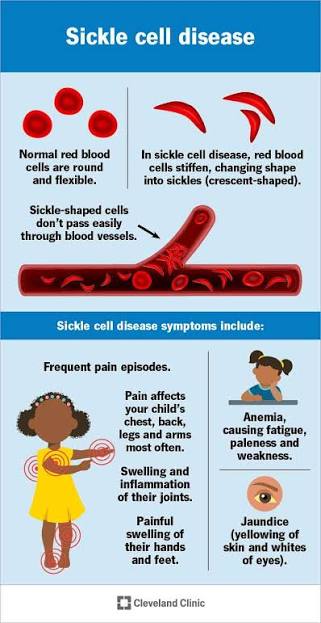
SCD occurs when a genetic mutation causes red blood cells to become rigid, sticky, and crescent-shaped rather than flexible and disc-shaped. Because of their shape, these cells can get stuck in small blood vessels and block blood flow. This blockage causes severe episodes of pain called vaso-occlusive crises (VOCs), acute chest syndrome, strokes, and progressive organ damage.
The Evolution of Treatments in 2026
Management for SCD aims to relieve pain, prevent infections, and control complications. Today, treatment strategies fall into three primary buckets:
1. Curative Gene Therapies
Gene therapies are the most significant leap in SCD management. They modify a patient’s own blood stem cells in a laboratory to either produce fetal hemoglobin or correct the defective gene:
Lyfgenia: A gene therapy that utilizes a lentiviral vector to insert a functional gene into the patient’s blood stem cells to synthesize normal hemoglobin.
Casgevy: Developed by Vertex Pharmaceuticals and CRISPR Therapeutics, this therapy utilizes CRISPR/Cas9 gene-editing technology. It was previously approved for patients 12 and older, but a 2026 FDA approval expanded its eligibility to include children as young as 2 years old.
2. Traditional and Emerging Medications
For patients who are not candidates for gene therapy or require ongoing symptom management, several medications exist:
Hydroxyurea: The long-standing, first-line therapy. It works by increasing the production of fetal hemoglobin, which prevents red blood cells from sickling.
L-glutamine: An oral powder therapy designed to decrease oxidative stress within the red blood cells, reducing crisis frequency.
Mitapivat: An oral pill currently under FDA priority review for SCD that acts as a pyruvate kinase (PK) activator, designed to support red blood cell fitness and reduce hemolysis.
3. Supportive Care
Blood Transfusions: Used to treat severe anemia and proactively lower the risk of stroke by increasing the number of normal red blood cells.
Pain Management: Over-the-counter and prescribed analgesics are utilized to manage acute crises.
Links:
Check This Out...
-
Pennsylvania Measles Outbreak Surpasses 1,000 Cases In Nation’s Worst Surge In 35 Years
-
Flu Season Starts This Month: Health Experts Advise Early Vaccination Amid Flu, RSV, And Covid-19 Risk
-
Razor Bumps And Ingrown Hairs: How To Quickly Treat And Get Rid Of Them
-
September Is Prostate Cancer Awareness Month: What It Is, What The Signs Are, And Who Is At Highest Risk From It
-
Food Warning: Great Value, GreenWise Frozen Berries Recalled