
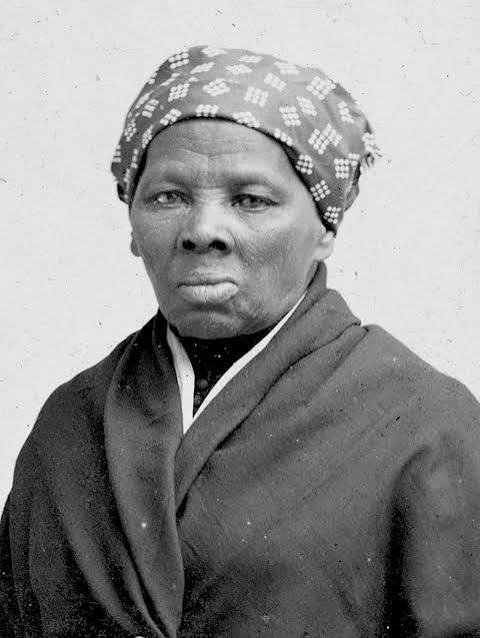
Harriett Tubman (born Araminta Ross, c. 1822–1913), the legendary abolitionist and social activist who helped secure freedom for American slaves in the 1800s, will not appear on the $20 bill while the Trump administration is in office, according to reports.
When asked by Spectrum News on Monday if the U.S. Treasury Department is planning to put Harriet Tubman on the $20 bill, Treasury Secretary Scott Bessent said, “We are not at present”, without further elaboration.
Bessent’s comments signaled the end of a decades-long plan to put Tubman on the $20 bill after political push-and-pull and delays.
In 2016, former President Barack Obama’s Treasury Secretary, Jacob Lew, announced the plan to replace seventh U.S. President Andrew Jackson on the $20 bill. Under the proposal, Tubman would have become the first Black American featured on U.S. paper currency.
The plan was shelved under the first Trump administration, with former Treasury Secretary Steven Mnuchin delaying the timeline to focus on anti-counterfeiting security features. The Biden administration revived the redesign efforts, pushing the expected release out to 2030.
Frustrated by the delays, activists and design groups launched campaigns to manually stamp Tubman’s portrait over Jackson’s face on existing $20 bills. Supporters often carried these bills alongside Tubman 20 Mighty Wallets as a symbolic tribute.
Advocates and lawmakers made repeated efforts to cement the redesign by law. For example, Sen. Jeanne Shaheen (D-N.H.) introduced the Harriet Tubman Tribute Act of 2025 in an attempt to legally require the Treasury to feature Tubman on all $20 bills printed after 2030.
Shaheen was quoted as saying she was, “extremely disappointed to hear that Secretary Bessent has halted plans to put Harriet Tubman’s likeness on the $20 bill.”
But the Treasury chief’s comments likely mean the replacing the face on the bill is not going to happen anytime soon.
Tubman, also known as the “Moses of her People”, made nearly a dozen perilous trips back to the South to lead her family and dozens of others to freedom in the North and Canada. She famously boasted that her train “never ran off the track and [she] never lost a passenger”.
During the American Civil War, Tubman joined the Union Army as a nurse and cook before utilizing her knowledge of Southern waterways and terrain to become a scout and spy. In 1863, she became the first woman in U.S. history to lead a military expedition: She guided armed Union gunboats along the Combahee River in South Carolina, destroying Confederate supplies and liberating approximately 750 enslaved people.
Harriett Tubman died at the age of 90-91 in 1913.
Check This Out...
-
Around 10,000 Children Are In Need Of A Loving, Safe Home In Georgia: Here’s How You Can Become A Foster Parent Or Adopt A Child
-
Happening Today: Hip Hop Icons And East Point Legends Outkast Launch Merch With Waffle House, Host Collab Drop At Centennial Olympic Park Restaurant At 11 A.M.
-
PINK RIBBONS AND PERSONAL JOURNEYS: OCTOBER MARKS GLOBAL BREAST CANCER AWARENESS MONTH
-
The Taste Of Survival: Chitterlings Came Out Of Necessity But Managed To Become A Soul Food Delicacy: The Story Of The “Chitlin” Plate–And Who Still Eats Them Today
-
Hispanic Heritage Months Begins This Week: Events And Celebrations Run From September 15 To October 15: South Fulton Features “México en el Corazón” Tour At Wolf Creek Sunday + More