
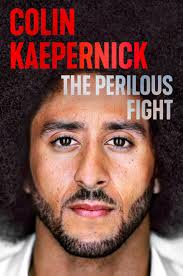
Exactly ten years after his on-field demonstrations fundamentally transformed the intersection of American sports and politics, bringing heightened awareness to the treatment of Black Americans by the nation’s law enforcement, former San Francisco 49ers quarterback Colin Kaepernick confirmed he completely boycotted viewing professional football.
In a rare, expansive interview with NBC News to promote his upcoming memoir, The Perilous Fight, the 38-year-old activist made it clear that his relationship with the National Football League remains entirely fractured. Rather than supporting the professional league, Kaepernick stated that he has redirected his television viewership elsewhere.
“I’m not gonna support an organization that one, is actively blackballing me, but two, has targeted my brothers who have been protesting as part of this as well,” Kaepernick says. “I watch college football.”
Kaepernick cited the continued blackballing of himself and protesting peers as the reason for his boycott, noting that he prefers college football instead, while still occasionally checking player statistics.
In 2017 multiple teams facing severe quarterback shortages notably opted to sign significantly less accomplished players rather than bring Kaepernick in for a tryout, bolstering in the minds of many that he was blackballed–something the NFL never officially confirmed.
“Coming on the back of going to a Super Bowl, going to an NFC Championship, setting records, and not a single team would bring me in, even for a workout?” Kaepernick said in the NBC News interview with sports reporter Rohan Nadkarni.
Kaepernick has stated that multiple NFL coaches and general managers reached out privately to express interest, only to tell him the move was “getting shut down above us” by ownership.
Kaepernick used the NFL and reportedly was awarded around $10 million in the settlement, though the actual numbers have not been publicly disclosed.
In his NFL career, Kaepernick led the 49ers to a Super Bowl appearance and an NFC Championship game as starting quarterback.
The Evolution of a Protest
Kaepernick’s movement–and his catapult into Black and American Civil Rights History–began quietly on August 14, 2016, when Kaepernick remained seated on the bench during the presentation of the National Anthem at a preseason game.
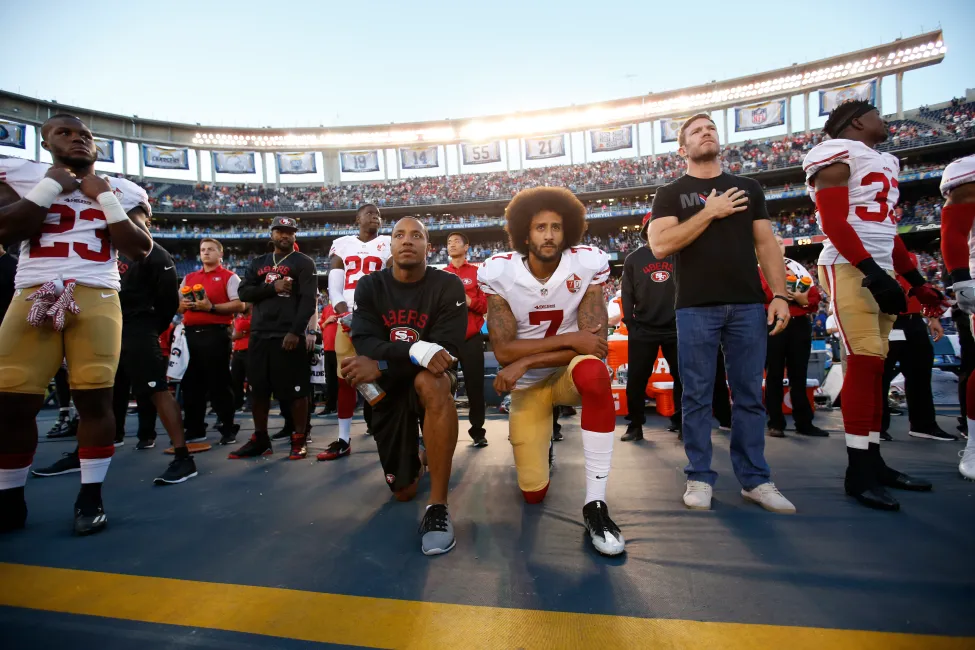
On September 1, 2016—exactly one decade ago today—Kaepernick altered his approach. Following a conversation with retired Green Beret Nate Boyer, who suggested that kneeling would show more respect to military veterans, Kaepernick and teammate Eric Reid took a knee during the anthem.
“I am not going to stand up to show pride in a flag for a country that oppresses Black people and people of color,” Kaepernick told reporters at the time. “To me, this is bigger than football.”
Kaepernick’s bold and selfless gesture quickly caught on as NFL players, coaches, and staff across the league followed his gesture with their own.
“Business as Usual”
Though the NFL later introduced initiatives like “Inspire Change” and end-zone messaging, Kaepernick dismissed these efforts as superficial branding.
“I don’t think the NFL has materially changed. None of their actions show that,” Kaepernick says. “We have seen it time and time again. For them it has gone back to business as usual, and I think that is a tragedy that we have allowed them to be able to get to that point.”
The league responded to NBC by stating that the raised issues remain important and deserving of attention.
Unfinished Business
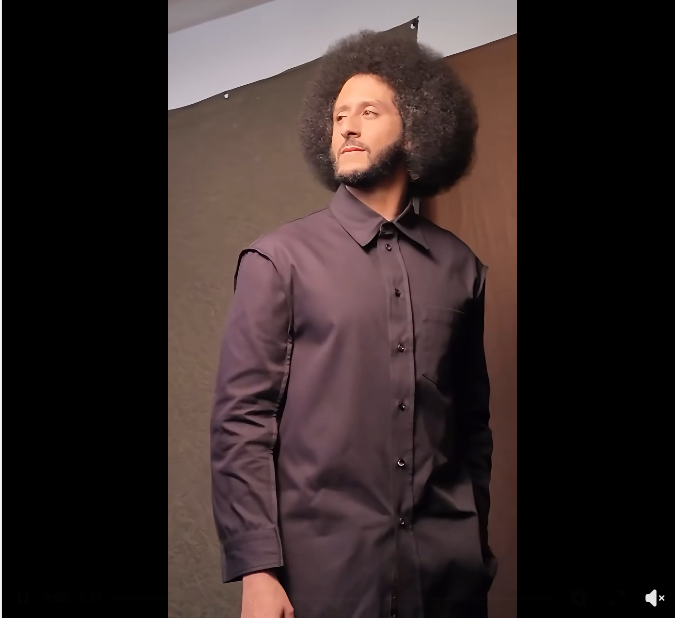
Now a father of a 4 year old girl, Kaepernick views his ongoing activism as a vital message for his community that standing up for civil rights remains worthwhile.
“You no longer have the luxury of thinking about it from a perspective of, it’s just me going through this world,” he says. “You think about it from the responsibility of creating an environment and a society that allows someone that is like your child to be able to grow up and thrive.”
The Book: The Perilous Fight
Colin Kaepernick’s upcoming memoir, The Perilous Fight, is equal parts personal autobiography and political manifesto that details his journey from a Black child adopted by a White family in Turlock, California, to becoming a Super Bowl quarterback and global social justice icon.
The book offers a firsthand look at his historic 2016 national anthem protest, revealing the intellectual influences—such as Malcolm X and Angela Davis—that shaped his awakening, while exposing the hidden power dynamics and systemic racism within the NFL that ultimately led to him being blackballed from professional football.
It is expected to become a bestseller this year and is the fifth book written by, about, or in part by Kaepernick, who also owns his own book company, Kaepernick Publishing.
“Perilous Fight” comes out on September 15, 2026.
His Legacy
“Candidly, I don’t think about legacy a whole lot,” Kaepernick aid when asked about his own legacy. “What I think about is what are the areas that I can do work that I think are going to have an impact and help us move towards that future together. At the end of the day, people will decide what that legacy is, and hopefully that’s a positive one.”
Check This Out...
-
Reminder: The Deadline To Register To Vote In Georgia Is October 5th
-
College Football Saturday Early Reminder: Florida-Georgia Rivalry Game To Be Played In Atlanta This Year On Saturday, October 31, 2026, at 3:30 p.m. ET At Mercedes-Benz Stadium
-
Notre Dame–For The First Time In Two Decades–Predicted To Earn National Title Alongside Ohio State
-
The Atlanta Braves Wallop The Washington Nationals–And Avenge Yesterday’s Loss–9-0
-
Tiger Woods Driver License Suspended For 5 Years As Part Of Plea Deal: Golfing Legend Was Arrested For DUI In March; Judge Warns If He Drives For “Any Reason At All” Over The Next 5 Years, He’ll Be Back In Jail