
The Southern fried peach pie—often affectionately called a “hand pie” or “peach jack”—is a cornerstone of traditional Appalachian and Southern comfort food. While it feels uniquely American, its story is a complex one rooted in European tradition, frontier survival, and the profound culinary innovations of enslaved African Americans.
Roots in the Frontier and Plantation Kitchens
The fried pie’s shape and concept began centuries ago, evolving from European turnover and hand pie traditions brought over by early Scottish, Irish, and English immigrants. When these settlers moved into the rugged mountain terrains of the Upper South and Appalachia, they had to adapt their baking customs to an isolated wilderness.
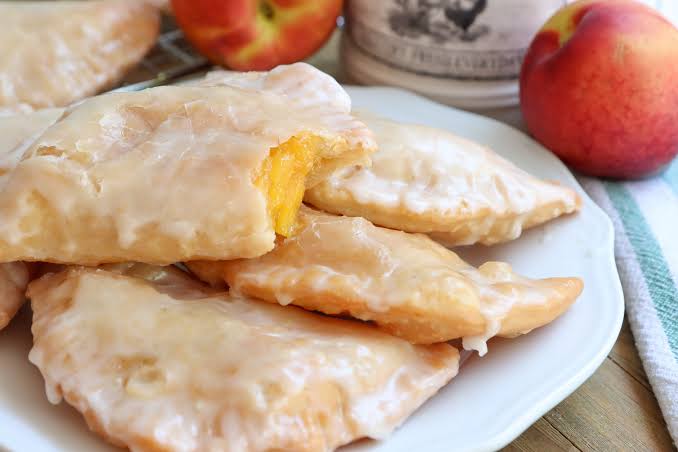
Fresh peaches were highly seasonal and easily spoiled in the heavy Southern humidity, prompting families to sun-dry their harvest to preserve it for the long winter months. Lacking the reliable oven temperatures of modern kitchens, early cooks relied on the hearth, frying the pocket pastries in heavy cast-iron skillets filled with farm-rendered lard. What emerged from the oil was a durable, energy-dense meal that a laborer could slip right into a coat pocket.
However, the refinement and mass popularity of Southern pastry can directly be traced to the plantation kitchens of the antebellum South. Here, the exhausting labor of cooking fell entirely on enslaved men and women. These uncredited chefs blended European pastry styles with their own deep-rooted West African culinary heritage—which included a rich, centuries-old mastery of deep-frying.
By applying these sophisticated frying techniques to European doughs using available animal fats, enslaved cooks elevated the humble hand pie into a crispy, blistered art form. For enslaved field hands enduring brutal, long shifts, these portable pockets made from rationed ingredients and native fruits became a critical means of survival.
The Frugal Farmhouse Staple
Following the Civil War, the fried pie transitioned from a tool of plantation survival to a universal Southern staple, driven by the strict, waste-nothing economics of the rural kitchen. Heating a wood-fired oven for a large Sunday dessert required immense labor and fuel; by contrast, a pan of fried pies could be whipped up quickly over a single stovetop burner.

Southern cooks quickly mastered the art of the culinary rescue, rolling out leftover dough scraps from the morning’s biscuits to wrap around a spoonful of fruit stew. Furthermore, because the filling relied on reconstituted dried peaches, the fruit’s natural sugars were heavily concentrated. This meant cash-strapped families rarely had to dip into their precious, expensive reserves of white sugar to make a dessert taste like a luxury.
In 1881, this oral tradition was formally cemented into American history when Abby Fisher, a formerly enslaved woman from Alabama, published What Mrs. Fisher Knows About Old Southern Cooking. Her landmark book—one of the earliest cookbooks authored by an African- American—documented the precise techniques of Southern fruit pastries and “jacks,” proving to the nation that the foundational flavors of the South were built on Black culinary brilliance.
From Lunch Buckets to Gas Stations
Before plastic wrap and insulated coolers, the fried pie served as the South’s original fast food. Its crisp, completely sealed crust acted as a natural protective barrier, allowing the pastry to survive for days without refrigeration. It became the ultimate portable lunch for the Southern workforce, packed tightly into metal buckets by coal miners, farmers, and timber workers to be eaten on the job without the need for plates or utensils.
Inevitably, this solitary worker’s fuel became a communal celebration. Because they were pre-portioned and easy to handle, fried pies became an essential fixture at church suppers, family reunions, and local county fairs. Legendary soul singer Gladys Knight famously reminisced about her Georgia childhood, recalling that massive Sunday family dinners always culminated in an “all-day eating frenzy” featuring her Aunt Velma’s iconic fried pies.
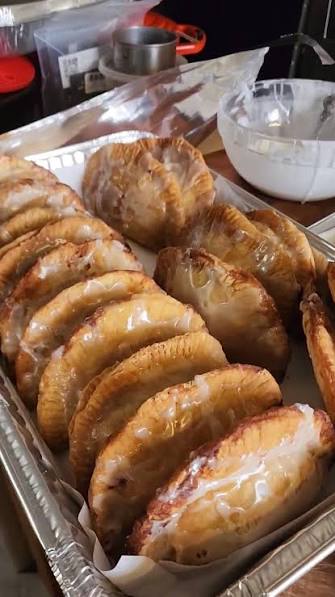
As the 20th century brought automobiles and paved highways to the region, the fried pie adapted once more. Local bakers began placing cellophane-wrapped treats on the countertops of roadside country stores and gas stations for hungry travelers.
Commercial institutions like New Orleans’ Hubig’s Pies, founded in 1922, cemented the hand pie into the daily fabric of Southern convenience food, ensuring that even city-dwellers could get a taste of old-fashioned country baking.
And Atlanta’s own The Varsity continues to sell its long-celebrated peach pies, long one of the iconic eatery’s most famous offerings: The dessert is so woven into Atlanta culture that The Varsity sells merchandise dedicated to it, including a popular glass Peach Pie Christmas Ornament.
THE TRADITIONAL APALACHIAN RECIPE
To experience the authentic flavor that fueled generations, this recipe avoids fresh fruit or store-bought biscuits, relying instead on the traditional method: a flaky pastry crust wrapped around a rich, concentrated dried-peach filling.
- Prep Time: 30 minutes
- Cook Time: 45 minutes
- Yield: 8 to 10 hand pies
Ingredients
The Peach Filling:
- 6 ounces dried peaches
- 2 cups water
- 1 cup granulated sugar
- 1/4 cup unsalted butter
- 1 tbsp lemon juice
- 1/2 tsp ground cinnamon
The Pastry Dough:
- 2 cups all-purpose flour
- 1 tsp salt
- 1/2 cup vegetable shortening (cold)
- 1/2 cup whole milk
- Vegetable oil or lard (for frying)
Instructions:
Simmer the Filling: Place the dried peaches and water in a saucepan over medium heat. Bring to a boil, then lower the heat and simmer for 30 to 45 minutes until the peaches are completely soft and plumped.
Mash and Cool: Add the sugar, butter, lemon juice, and cinnamon. Stir frequently for 10 minutes until the sugar dissolves and the mixture thickens into a chunky, jam-like consistency. Mash any large fruit chunks with a fork. Let the filling cool completely before using.
Make the Dough: Whisk together the flour and salt in a bowl. Cut in the cold shortening using a pastry blender or two forks until the mixture resembles coarse crumbs. Pour in the milk and stir just until a cohesive dough forms.
Roll and Cut: Divide the dough into 8 to 10 equal balls. On a lightly floured surface, roll each ball out into a thin circle about 5 to 6 inches in diameter.
Assemble the Pies: Place 2 tablespoons of the cooled peach filling onto one half of each dough circle, leaving a clear border. Moisten the outer edge with water, fold the dough over to create a half-moon shape, and press firmly to seal. Crimp the edges tightly with the tines of a fork.
Fry to Golden Perfection: Heat 1/2 inch of oil or lard in a heavy cast-iron skillet to 350°F (175°C). Carefully fry 2 or 3 pies at a time for 2 to 3 minutes per side until the crust is blistered and golden brown. Drain on a paper towel-lined plate and let cool for 5 minutes before serving warm.
Check This Out...
-
Fall Is 3 Just Weeks Away: Tips To Get Your Home Ready For The Coming Season
-
Finding Love—And Even Friends With Benefits–On Social Media Is Growing More Popular, Giving Dating Apps Competition
-
Are Home Warranty Plans Worth The Cost?
-
Cleaning Out The Basement Could Fetch You Dollars: Forgotten Household Items That Could Be Worth Serious Money
-
Why Age Matters–And Doesn’t Matter–In Relationships