
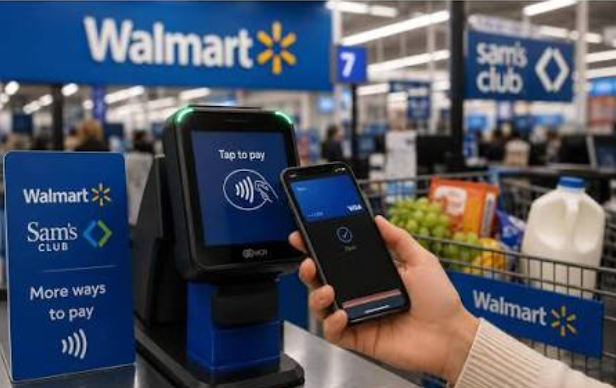
n a major shift for the retail industry, Walmart Inc. announced Monday the long-awaited launch of contactless tap-to-pay functionality at its U.S. stores and Sam’s Club locations. The move officially ends a decade-long resistance during which the retail giant barred popular mobile wallets like Apple Pay and Google Pay in favor of its proprietary smartphone application.
Since the 2014 debut of Apple Pay, Walmart remained the most prominent retail holdout against near-field communication (NFC) technology. Instead, the company pushed consumers toward “Walmart Pay”—a system requiring shoppers to open a store app, activate a smartphone camera, and scan a QR code at the register.
Company executives previously defended the choice, citing a desire to maintain direct customer relationships and avoid external transaction fees. However, growing shopper frustration and the near-universal adoption of contactless payments post-pandemic ultimately forced the retail giant to pivot.
A Phased U.S. Rollout
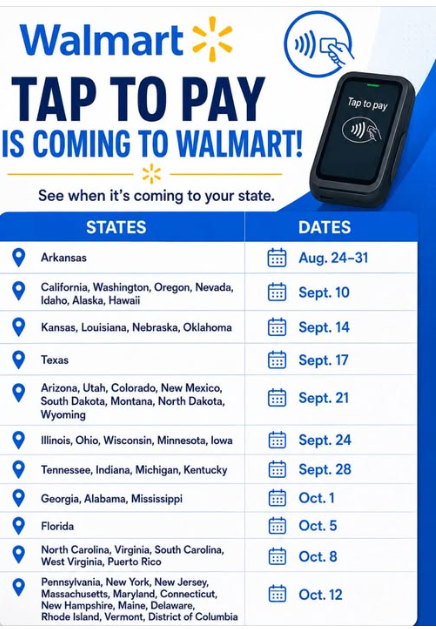
According to a company statement, the technology began going live at select test locations on August 24. A massive, phased infrastructure update is now underway:
In-Store Registers: Contactless terminals will expand across all U.S. Walmart and Sam’s Club stores by the end of 2026.
Fuel Stations: Digital tap-to-pay capabilities will roll out to all company-branded gas pumps by mid-2027.
Once the hardware upgrades are complete at a location, shoppers can complete transactions using Apple Pay, Google Pay, Samsung Pay, or any chip-enabled contactless credit and debit card.
The technology is slated to make its debut in Georgia on October 1, offering a long-overdue convenience to Metro Atlanta shoppers.
Modernizing the Checkout Lane
The upgrade also streamlines Walmart’s proprietary financial ecosystem. Customers holding co-branded Walmart, Sam’s Club, or OnePay cards will soon be able to load those credentials directly into third-party digital wallets, retaining store rewards while enjoying a faster checkout experience.
Industry analysts view the upgrade as a necessary step to stay competitive with modern grocery chains and online retailers. While the company will maintain its signature “Scan & Go” and QR-code app features for loyal users, everyday shoppers will finally gain the universal checkout ease they have requested for years.
Check This Out...
-
Wholesale Inflation Prices Shot Up In September: Soaring Gas Prices Lead Business Costs
-
Inflation Rate Accelerates to 3.7%: Energy Prices Lead Jump; Consumers Feel Price Surge With Midterm Election Days Away
-
Not All Vehicle Repossessions Are Legal: What Constitutes An Unlawful Repossession, And What To Do If You Believe It Has Happened To You
-
Automobile Repossessions Remain A Constant As Georgians Endure Mounting Economic Challenges: What You Need To Know As A Consumer: Loan Deferment, Breach Of Peace Explained
-
Labor Market Stalls As U.S. Economy Adds Just 29,000 Jobs in September–Much Lower Than Projected; Unemployment Rises to 4.2%: Voters Head To Polls In Days