

In a historic regulatory shift, the Trump administration has proposed a sweeping overhaul that would radically redefine what it means to be a “small business” in America.
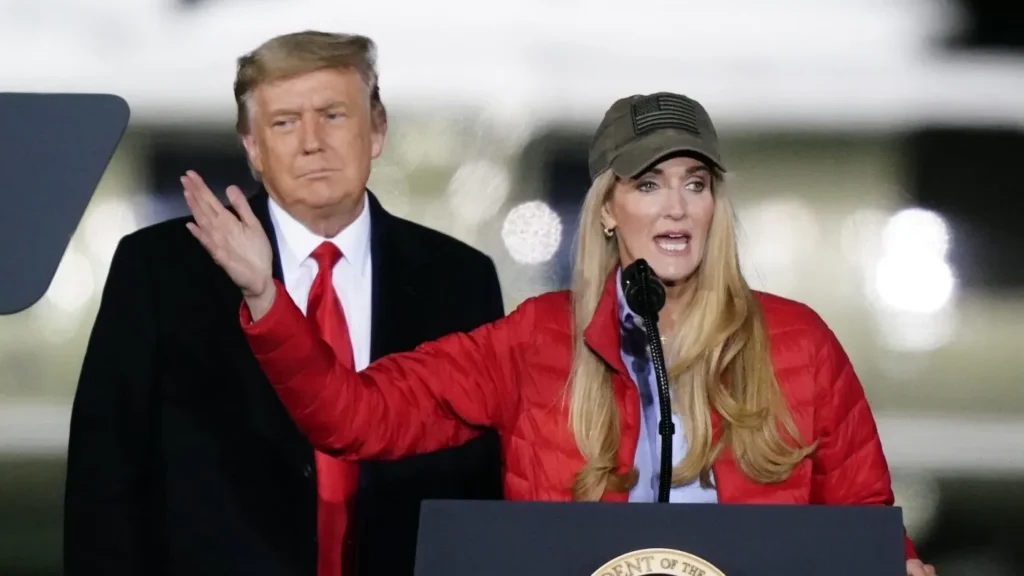
The proposed rule, spearheaded by Small Business Administration (SBA) Administrator Kelly Loeffler, seeks to compress nearly 1,000 specific industry size standards into 338 consolidated categories. By defaulting primarily to employee headcounts rather than revenue, the administration plans to raise financial thresholds to unprecedented heights.
Under the new guidelines, financial firms pulling in more than $1 billion annually or manufacturing companies employing up to 3,000 workers would officially qualify for federal “small business” status.
The administration frames the restructuring as a common-sense modernization effort designed to reward corporate growth and dismantle an overly complex bureaucratic system . However, the proposal has sparked intense backlash from critics and advocates who warn it will deliver a devastating blow to true mom-and-pop operations—particularly Minority-owned enterprises.
The SBA estimates that the rule rewrite will instantly grant small business status to an additional 114,541 firms. Roughly 37,000 of these newly classified companies already hold a collective $71 billion in federal contracts.
For minority-owned businesses, this influx represents an immediate and massive competitive threat. To participate in lucrative Minority-focused federal initiatives—such as the SBA 8(a) Business Development Program—a firm must first meet baseline SBA size standards. By opening the floodgates to corporate-sized newcomers boasting hundreds of millions of dollars in revenue, critics argue the government is forcing chronically under-capitalized Minority firms to compete against corporate giants for the exact same pool of set-aside government funds.
The proposed size restructuring arrives alongside another fundamental shift to the SBA’s minority-focused initiatives. Effective September 10, 2026, a separate finalized SBA rule will entirely eliminate the “rebuttable presumption” of social disadvantage for specific Minority racial and ethnic groups.
Previously, Minority business owners were automatically considered socially disadvantaged when applying for the 8(a) program. Under the new policy, race-based eligibility is erased. Applicants must now prove their disadvantage on a case-by-case basis, submitting detailed narratives and verifiable evidence of chronic discrimination or bias.
Concurrently, the program is opening up to any business owner—including White business owners—who can document severe, non-racial barriers to their success. While the administration claims this ensures fairness, advocacy groups worry the dual burden of proving discrimination while fighting off newly minted, multi-million-dollar “small” competitors will effectively squeeze minority firms out of the federal pipeline.
Beyond federal contracting, the redefinition threatens to reshape access to capital. Historically, Minority-owned firms face disproportionate hurdles when securing traditional bank loans, relying heavily on SBA-backed loan programs to bridge the gap.
Financial analysts warn that if multi-million-dollar corporations with thousands of employees suddenly qualify for SBA loans, commercial banks will naturally favor lending to these lower-risk, well-established entities. This dynamic could crowd out traditional small businesses from critical capital reserves.
The Trump administration and its defenders maintain that the policy rewrite offers a distinct advantage to Minority firms that manage to successfully scale.
Under the existing framework, a fast-growing Minority firm that wins a few large contracts can quickly outgrow its “small business” designation. This forces mid-sized firms into open competition against multi-billion-dollar global conglomerates before they are truly equipped to handle the pressure. The administration argues that the higher thresholds will give scaling minority businesses the necessary headroom to grow significantly larger without losing their protected statuses and preferences.
The public comment period for the proposed size standards overhaul remains open on the Federal eRulemaking Portal through September 21, 2026.
Numbers At A Glance:
Higher Thresholds: The proposal massively increases revenue and employee limits across various sectors. For example, public relations firms could see caps jump from $19 million to $543 million, and commercial banks could hold up to $5.03 billion in assets.
Federal Access: Under the new limits, larger companies would qualify for federal small business loans, grants, and set-aside contracts.
Criticism: Small business advocates warn the rule forces mom-and-pop shops to compete directly with massive corporations for limited federal resources.
Check This Out...
-
Wholesale Inflation Prices Shot Up In September: Soaring Gas Prices Lead Business Costs
-
Inflation Rate Accelerates to 3.7%: Energy Prices Lead Jump; Consumers Feel Price Surge With Midterm Election Days Away
-
Not All Vehicle Repossessions Are Legal: What Constitutes An Unlawful Repossession, And What To Do If You Believe It Has Happened To You
-
Automobile Repossessions Remain A Constant As Georgians Endure Mounting Economic Challenges: What You Need To Know As A Consumer: Loan Deferment, Breach Of Peace Explained
-
Labor Market Stalls As U.S. Economy Adds Just 29,000 Jobs in September–Much Lower Than Projected; Unemployment Rises to 4.2%: Voters Head To Polls In Days