
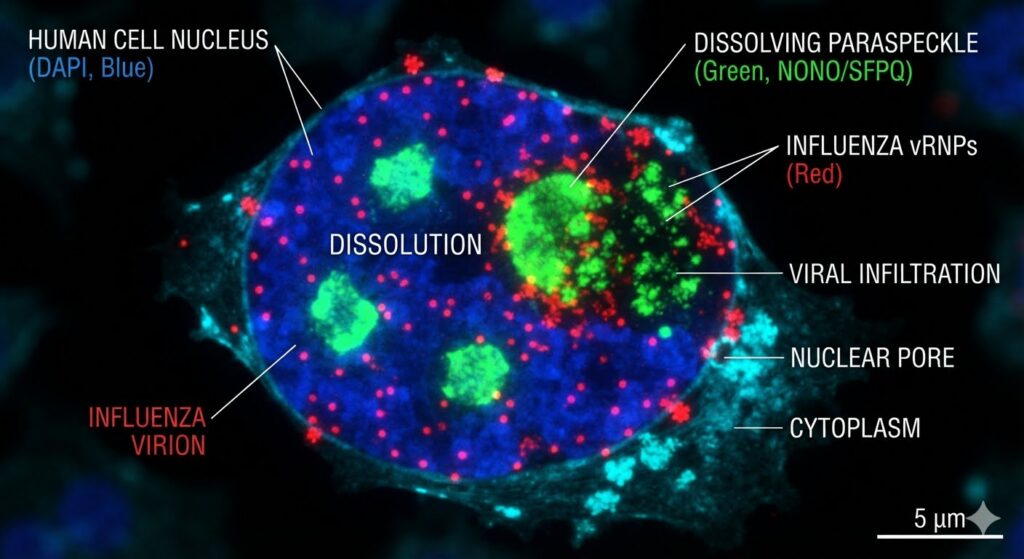
Researchers have mapped how the influenza A virus commandeers human cells by dissolving nuclear structures called paraspeckles. Published in Nature Microbiology by scientists from EMBL Hamburg and partner institutions, this detailed molecular map reveals two primary ways the pathogen hijacks host machinery to replicate.

Inside the Hijacked Cell
Tracking protein interactions inside intact, infected cells has historically presented a major challenge for virologists. To overcome this, the research team combined cross-linking mass spectrometry with a modified version of the AI tool AlphaFold. This technological leap exposed roughly 800 distinct peptide contacts between the virus and its human host, pinpointing two key structural takeovers:
- The Hemagglutinin Assembly Line: The virus exploits the host’s internal protein transport and processing network. By interacting with human cellular proteins of previously unknown functions, influenza properly folds its critical surface protein, hemagglutinin, which allows the virus to bind to and enter other cells.
- Dissolution of Nuclear Paraspeckles: Within four to eight hours of infection, the virus triggers the complete breakdown of paraspeckles—small, droplet-like organelle compartments located inside the cell nucleus.
A Deliberate Viral Strategy
The destruction of paraspeckles was observed consistently across every single cell line and flu strain tested by the team, confirming it as a deliberate tactical maneuver rather than accidental cellular damage.
When these nuclear bodies dissolve, they release vital RNA-binding proteins that the influenza virus then repurposes to assemble new copies of its own viral genome. Furthermore, because paraspeckles normally assist with cellular stress reactions and the regulation of antiviral defenses, their disintegration simultaneously dismantles part of the human cell’s natural security system.
Toward Future Treatments
Seasonal influenza continues to cause up to 650,000 deaths and severe illness in millions of people globally each year. By exposing the exact molecular blueprints of how the virus rewires human cellular architecture, this new map gives drug developers precise physical targets. The research team notes that this same high-resolution mapping approach can now be deployed against other pathogens carrying high pandemic potential, including dangerous avian influenza strains like H5N1.
The Timing of Flu Season
While influenza viruses circulate year-round, major activity tracks alongside colder winter temperatures:
- Start: Activity usually begins rising in October.
- Peak: The height of the season almost always hits between December and February.
- End: Cases decline significantly by spring, typically wrapping up in April or May.
How Many People Get Sick?
The Centers for Disease Control and Prevention (CDC) tracks annual infections using statistical modeling because many people recover at home without getting tested.
Worldwide: Globally, the numbers are much higher. The World Health Organization (WHO) estimates there are roughly 1 billion cases of seasonal influenza annually, with 3 million to 5 million of those progressing to severe illness.
A Deeper Look At U.S. Estimates
Annual Illness Estimates:
- U.S. Illnesses: 31 million to 54 million cases per year.
- U.S. Medical Visits: 14 million to 24 million visits.
- U.S. Hospitalizations: 380,000 to 780,000 admissions.
- U.S. Deaths: 23,000 to 78,000 deaths.
- Global Burden: About 1 billion total cases and up to 650,000 respiratory deaths worldwide
Check This Out...
-
U.S. Companies Turn To AI As American Consumers Voice Complaints Over Outsourced Foreign Customer Service–But Consumers Don’t Like Phone Bots Either
-
AI Skeptics Say The Technology Could Kill Humans: How And Why They Believe It Could Happen
-
NASA Readies Sunday Launch Of Historic Nancy Grace Roman Space Telescope: Powerful Lens Will Allow View Of Billions Of Galaxies, Dark Universe In Record Time
-
Meta Agrees To Settle For $17.1 Billion: But What Does The Settlement Mean, What It Changes–And Who Gets The Money?
-
What Does The Immediate Future Of AI Look Like?