
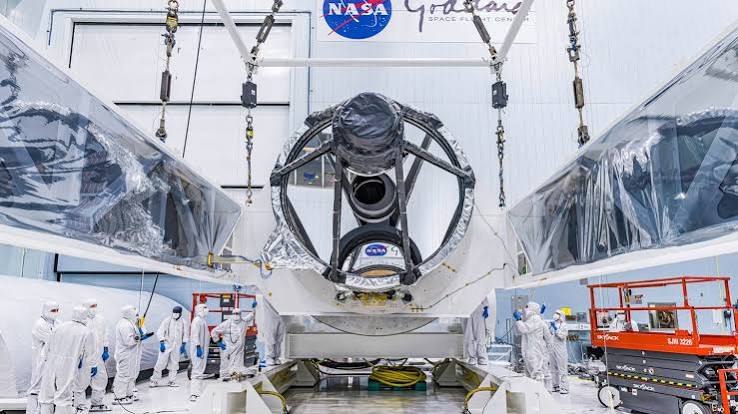
NASA is just 48 hours away from launching its next great eye in the sky. On Sunday, August 30, a SpaceX Falcon Heavy rocket will lift the Nancy Grace Roman Space Telescope into orbit, marking a monumental leap forward in our quest to understand the cosmos.
A Hundred Hubbles in One
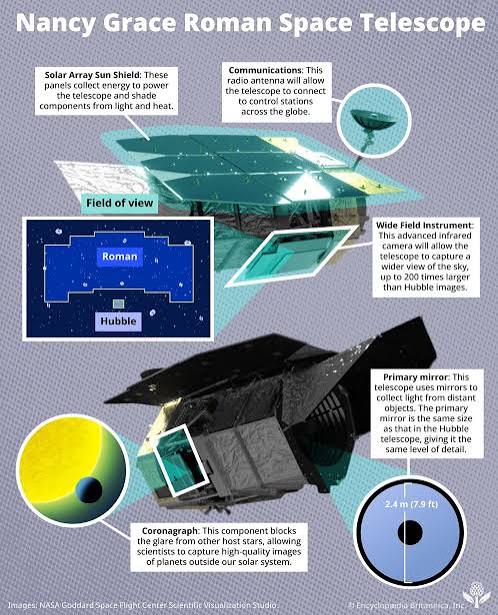
Named after Dr. Nancy Grace Roman, NASA’s first chief astronomer and the “Mother of Hubble,” the new observatory boasts a game-changing design. While it features a 2.4-meter primary mirror identical in size to Hubble’s, Roman’s view is vastly superior.
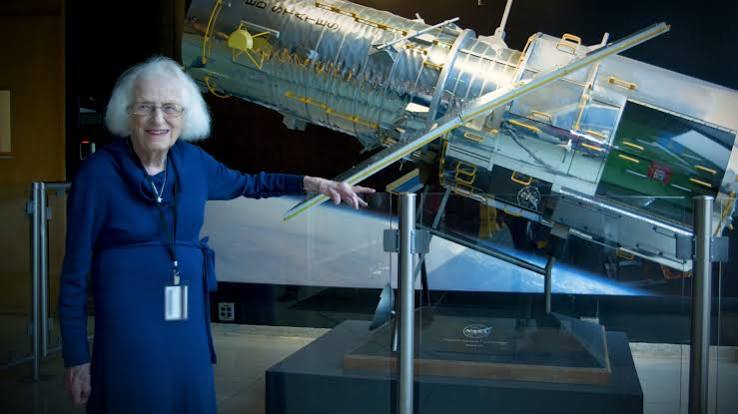
“Roman will capture images with the same razor-sharp clarity as Hubble, but with a field of view 100 times larger,” said a NASA project scientist. “It is like upgrading from a peephole to a massive panoramic window.”
Dr. Grace-Roman passed away in 2018 at the age of 93.
This wide lens allows the telescope to map billions of galaxies and capture massive swaths of the night sky in days rather than decades.
Mapping the “Dark” Universe
The five-year mission focuses on solving the biggest mysteries in modern astrophysics: dark energy and dark matter. Together, these invisible forces make up roughly 95% of the universe, yet their exact nature remains completely unknown.
By observing how the gravity of dark matter distorts light from distant galaxies—and by tracking thousands of stellar explosions known as supernovas—Roman will help scientists chart the expansion of the universe with unprecedented precision.
Hunting for 100,000 Worlds
Beyond cosmic expansion, Roman is a premier planet hunter. Using a technique called gravitational microlensing, which watches for the subtle gravitational warp of distant stars, the telescope is expected to discover roughly 100,000 new exoplanets.
It also carries a revolutionary Coronagraph Instrument. This high-tech light blocker acts like a cosmic visor, blocking out the blinding glare of parent stars so scientists can directly photograph gas giants orbiting millions of miles away.
If successful, the Roman Space Telescope will not just look at the universe; it will rewrite what we know about it.
Check This Out...
-
U.S. Companies Turn To AI As American Consumers Voice Complaints Over Outsourced Foreign Customer Service–But Consumers Don’t Like Phone Bots Either
-
AI Skeptics Say The Technology Could Kill Humans: How And Why They Believe It Could Happen
-
Meta Agrees To Settle For $17.1 Billion: But What Does The Settlement Mean, What It Changes–And Who Gets The Money?
-
What Does The Immediate Future Of AI Look Like?
-
Getting That YouTube Bag: Who Are The Highest Paid YouTubers, And How Much Money Are They Making?