
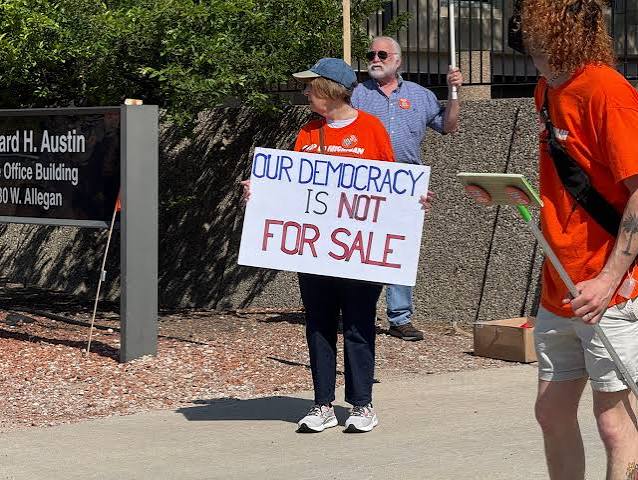
Michigan voters could dramatically alter how some corporate dollars influence the state’s political campaigns if voters approve a statewide amendment there next month.
Proposal 2 (on the November 3, 2026 ballot) is a citizen-initiated statute known as the “Michiganders for Money Out of Politics” initiative. If approved by voters, it will amend the Michigan Campaign Finance Act to significantly restrict campaign contributions from specific corporate entities and broaden disclosure rules for political advertisements.
The proposal introduces three primary reforms, alongside a few key exemptions and arguments from both sides of the issue.
Banning Contributions from Utilities & Government Contractors
The core of the initiative aims to combat “pay-to-play” politics by cutting off direct and indirect campaign contributions from entities heavily impacted by government decisions:
Regulated Utilities: Restricts regulated electric and gas companies (such as DTE Energy and Consumers Energy) from donating to state candidates.
Government Contractors: Restricts businesses with more than $250,000 in annual state or local government contracts from contributing to the political campaigns of officials who oversee or award those contracts.
Sweeping Affiliates: The ban extends past the corporate treasury to political action cassettes (PACs), board members, executives, majority owners, lobbyists, and even the immediate family members of these individuals.
Expanding Disclosure for Political Ads
Currently, groups are only required to disclose their funding if an advertisement explicitly tells people how to vote (using phrases like “vote for” or “defeat”). Proposal 2 would expand these rules. Consult official resources to verify the specific timeframes that trigger electioneering disclosure requirements and the reporting thresholds for required donor public disclosures.
Regulating Digital and AI Content
The measure explicitly updates campaign finance laws for modern technology. Consult official election resources to verify disclosure requirements for digital ads and specific regulations regarding artificial intelligence (AI) utilized in political communications.
What Proposal 2 Does Not Do
According to analyses by groups like the Michigan Society of Association Executives, the initiative does not completely remove private money from elections. You can check the provided link to confirm its specific impact on individual citizens, everyday corporations, labor unions, nonprofit spending, and its application to state versus federal level elections.
Arguments For and Against
| Position | Primary Groups | Key Arguments |
|---|---|---|
| Support (Vote YES) | Michiganders for Money Out of Politics | • Limits corporate influence and stops utility companies from using ratepayer funds to influence the legislators meant to regulate them. • Promotes fair elections focused on ideas rather than deep pockets. |
| Opposition (Vote NO) | Protect MI Free Speech, MI Chamber of Commerce | • Infringes on First Amendment rights by over-regulating political speech. • Unfairly targets certain employers and could shift influence toward wealthy out-of-state donors. |
Next Steps and Legality
Because Proposal 2 is a statutory initiative rather than a constitutional amendment, it contains a severability clause. If passed by voters and later challenged in court, judges could strike down parts deemed unconstitutional (such as certain speech restrictions) while allowing the rest of the law to stand.
Reform advocates in other state are watching closely to see if they could seek to introduce similar amendments.
Recent polling shows two thirds of Michigan voters support approving Prop 2.
Check This Out...
-
Longtime 82 Year Old Virginia State Senator Indicted: L. Louise Lucas Faces Federal Charges Accusing Her Of Trafficking Marijuana And Money Laundering: Lucas Vows To Fight Charges: “I’m Not New To This. I’m True To This”
-
Six Charlotte Cops Face Termination Over Texts Allegedly Containing Text Message Thread Filled With Racial Slurs, Racial Profiling, And Police Brutality: Allegedly Competed To Pull Over The Most Black Drivers: Texts Came To Light Amid Flock Camera Misuse Investigation
-
Handcuffs With That Order? Popular San Diego Chef Allegedly Kidnapped And Shot Ex-Girlfriend In Iowa In 2014, Then Fled The State: Social Media Popularity Led U.S. Marshals To Him
-
Federal Judge Blocks Deportation Of 28 Year Old NYC Man Shot By ICE Agents Thursday: Who Is Oscar Belgal, And What Are The Circumstances Surrounding His Case?
-
Mike Ditka Dies At 86: Legendary Chicago Bears Player And Later Head Coach Led The ’85 “Bad News Bears” To Super Bowl Win