
A sweeping transformation of the federal safety net is reshaping the lives of hundreds of thousands of low-income families across Georgia. One year after the passage of the federal budget reconciliation package known as the “One Big Beautiful Bill Act,” the Supplemental Nutrition Assistance Program (SNAP) looks fundamentally different, prompting a stark decline in the number of residents receiving grocery assistance.
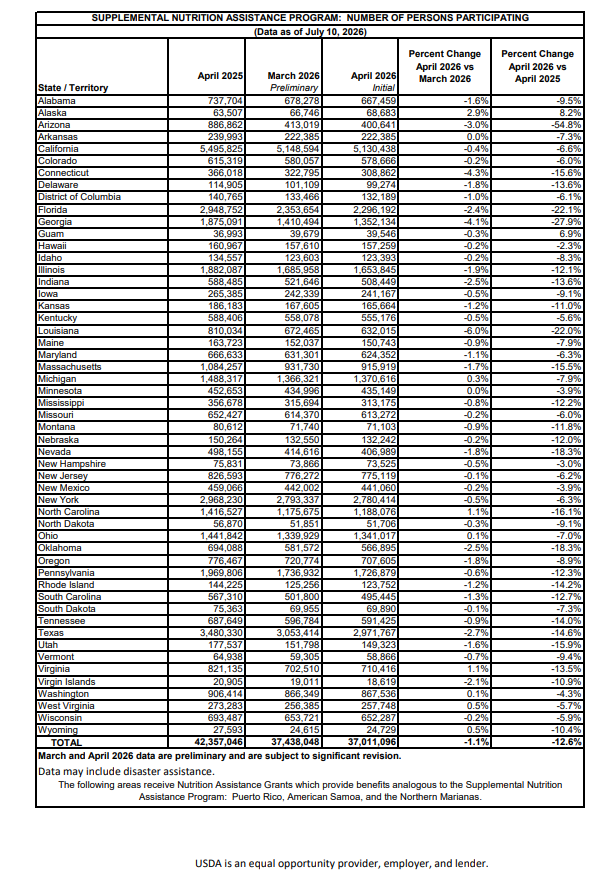
According to freshly released data from the U.S. Department of Agriculture, Georgia experienced a 28% drop in SNAP participation between April 2025 and April 2026, marking one of the steepest declines in the nation. In a state where roughly 1.77 million residents relied on food stamps in early 2025, the rolls have plummeted to approximately 1.2 million monthly recipients.
Supporters of the federal overhaul celebrate the legislation as a necessary push toward fiscal responsibility and individual accountability. However, local advocacy groups and affected families report that the transition has left an unprecedented void in Georgia’s community food security.
Stricter Work Mandates Thin the Rolls
The primary driver of this rapid reduction is the expansion of Able-Bodied Adults Without Dependents (ABAWD) work requirements. Implemented by the Georgia Department of Human Services on November 1, 2025, the law raised the maximum age for mandatory employment rules to 65 and narrowed caretakers’ exemptions.
Under these updated guidelines, individuals must log at least 20 hours of work or approved job training per week. Missing this threshold for three months within a three-year period results in an automatic loss of food assistance. The Center on Budget and Policy Priorities initially projected that 96,000 Georgians would lose coverage due to the strict provisions—a figure that has compounded as sequential recertification cycles take effect.
The White House championed the measures, calling the previous framework “bloated” and reinforcing that SNAP should serve as “temporary help for those who encounter tough times”.
State Budget Pressures and Penalty Risks
Beyond individual recipients, the federal policy shift places a heavy administrative burden directly on the state government. The law mandates that states increase their coverage of SNAP administrative costs from 50% to 75%.
Compounding the problem, federal authorities are targeting high billing mistakes. Georgia currently holds a 15.2% payment error rate—one of the highest in the country. If state leaders cannot drastically lower these systemic errors before automated penalty phases begin, Georgia faces millions of dollars in out-of-pocket structural cost-sharing.
To offset the federal cuts and prevent catastrophic local processing delays, state administrators actively sought $60 million from state coffers last fall to protect staffing levels. Organizations like the Georgia Budget and Policy Institute have urged lawmakers to tap into Georgia’s $14.6 billion budget surplus to protect the program from falling apart.
Communities Feel the Strain
Local safety nets are already absorbing the impact. In rural municipalities, where roughly 17% of the population utilizes food stamps, local grocery stores and community food pantries are dealing with a severe influx of demand.
“People are having to make impossible choices between paying their rent or putting food on the table,” noted a spokesperson from a metro-Atlanta nonprofit distribution center. “The system changed so quickly that many families didn’t even realize they had lost eligibility until they reached the grocery checkout lane.”
As the state navigates the long-term economic effects of the “One Big Beautiful Bill,” the divide remains deep between those seeing it as an economic victory for the taxpayer and those witnessing a widening gap in nutrition for Georgia’s most vulnerable citizens.
Food Insecurity Resources In Metro Atlanta:
- Atlanta Community Food Bank
- Address: 3400 N Desert Dr, East Point, GA 30344
- Hours: Mon–Fri: 8 AM – 5 PM
- Services: Operates as the central supply hub for hundreds of local partner pantries. You can text “FOOD” or “COMIDA” to 877-877 to find their closest neighborhood distribution site.
- Feeding Georgia
- Address: 3400 N Desert Dr, Atlanta, GA 30344
- Hours: Mon–Fri: 9 AM – 5 PM
- Services: Coordinates statewide food distribution and supports centralized sourcing for regional food providers.
Community Food Pantries & Grocery Boxes
- P.O.W.E.R Atlanta Inc.
- Address: 1024 Avon Ave SW, Atlanta, GA 30310
- Hours: Mon–Wed: 9:30 AM – 6:30 PM, Thu: 10 AM – 7 PM, Fri: 9 AM – 5 PM
- Services: Hosts a dedicated weekly food pantry every Thursday from 2 PM to 6 PM, giving out free household groceries.
- Feeding GA Families
- Address: 3113 Main St, Atlanta, GA 30344
- Hours: Mon: 2:30 PM – 5:30 PM, Sun: 12 PM – 2 PM
- Services: Offers walk-up pantry services with fresh vegetables, fruits, eggs, and specialized vegan or allergy-friendly food boxes.
- Fountain of Hope, Inc.
- Address: 829 Hollywood Rd NW, Atlanta, GA 30318
- Hours: Mon–Wed, Fri: 9 AM – 1 PM & 2 PM – 3 PM; Thu: 2 PM – 3 PM
- Services: Prepares emergency grocery boxes for families in crisis and distributes ready-to-eat foods directly to the public.
- Emmaus House Food Pantry
- Address: 27 Haygood Ave SW, Atlanta, GA 30315
- Hours: Mon & Fri: 9 AM – 2:30 PM
- Services: Client-choice food pantry serving the 30315 zip code area. They also host a monthly pop-up giving out 30–40 lbs of food and fresh produce to the broader community.
- Urban Recipe
- Address: 970 Jefferson St NW Ste 7, Atlanta, GA 30318
- Hours: Mon–Fri: 9 AM – 4 PM
- Services: Uses a cooperative model where members gather to share and distribute frozen foods, non-perishables, and home goods.
Specialized Delivery Services
- Open Hand Atlanta
- Address: 1380 West Marietta St NW, Atlanta, GA 30318
- Hours: Mon–Fri: 7:30 AM – 4 PM
- Services: Provides free, home-delivered, medically tailored meals and nutrition services to individuals managing chronic illnesses or mobility challenges.
- The Online Food Pantry
- Hours: Open 24 hours online
- Services: A virtual food rescue non-profit offering a digital platform where you can order food and have grocery boxes or hot meals delivered straight to your home for free.
Check This Out...
-
Wholesale Inflation Prices Shot Up In September: Soaring Gas Prices Lead Business Costs
-
Inflation Rate Accelerates to 3.7%: Energy Prices Lead Jump; Consumers Feel Price Surge With Midterm Election Days Away
-
Not All Vehicle Repossessions Are Legal: What Constitutes An Unlawful Repossession, And What To Do If You Believe It Has Happened To You
-
Automobile Repossessions Remain A Constant As Georgians Endure Mounting Economic Challenges: What You Need To Know As A Consumer: Loan Deferment, Breach Of Peace Explained
-
Labor Market Stalls As U.S. Economy Adds Just 29,000 Jobs in September–Much Lower Than Projected; Unemployment Rises to 4.2%: Voters Head To Polls In Days