
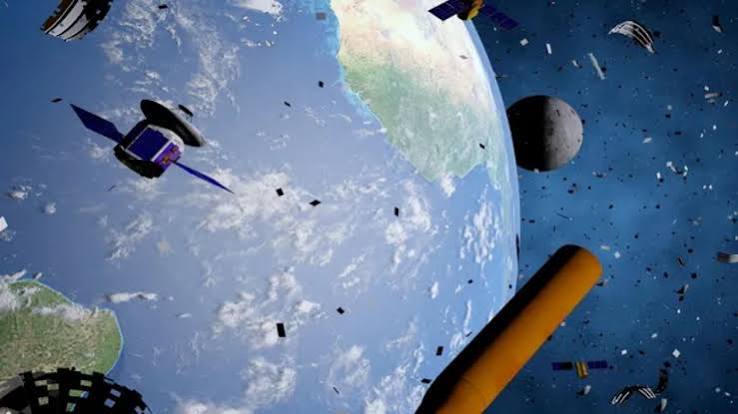
At least one metric ton of space junk re-enters Earth’s atmosphere every single week. While minor debris fragments burn up daily, massive objects—like spent rocket boosters, dead satellites, and discarded station hardware—fall back in an uncontrolled loop driven by atmospheric drag and a massive boom in global rocket launches.
Why Space Junk Falls Every Week
Space junk returns to Earth through a predictable mix of orbital physics and a crowded lower orbit:
Orbital Decay: Even in low Earth orbit (LEO), a thin layer of Earth’s atmosphere exists. Over time, this air creates friction (drag) against traveling objects. This friction robs the debris of its speed, causing its orbit to decay and pull it lower until it plummets into the thicker atmosphere.
Increased Launch Volume: The global space race is accelerating rapidly. More than 300 rockets launch annually, flooding LEO with fresh equipment and mega-constellations. More things going up inherently means more dead hardware falling back down.
Solar Activity: When the sun goes through active phases, it releases bursts of energy that heat and expand Earth’s upper atmosphere. This increased atmospheric density acts like a brake, dragging satellites down much faster than initially calculated by scientists.
What Happens During Re-Entry
The European Space Agency (ESA) and the U.S. Space Force actively track these returns. The process usually follows a strict pattern:
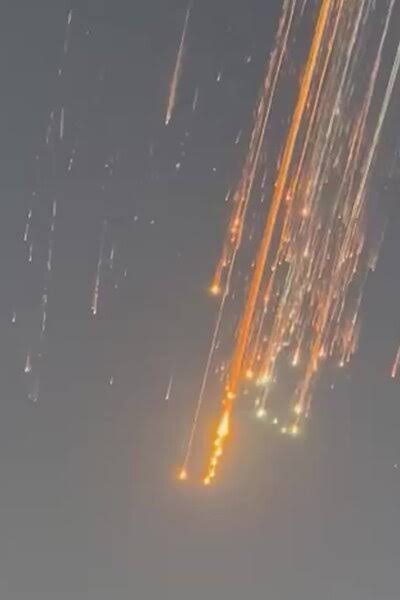
- The Burn: Traveling at speeds over 17,000 mph (27,000 km/h), the extreme friction against the dense air creates intense heat. Most smaller objects completely vaporize.
- The Survivors: Highly durable materials—such as titanium fuel tanks, dense rocket engine parts, and heavy metal rings—can survive the extreme thermal pressure.
- The Landing: The vast majority of surviving space junk drops harmlessly into the Pacific Ocean or over unpopulated land masses. However, because these re-entries are largely uncontrolled, pieces occasionally crash into residential areas or farmlands.
The Scale of the Problem
The frequency of heavy objects returning to Earth has spiked significantly over the last decade:
| Metric | Past Decade | Current Day |
|---|---|---|
| Annual Space Force Re-entry Alerts | ~110 alerts | Over 820 alerts |
| Intact Object Re-entries | Less than 1 per day | ~3 separate objects per day |
| Massive Debris Re-entry (>1 Ton) | Occasional | Roughly once per week |
Because a minute’s error in calculating a descent trajectory can shift an object’s landing zone by 300 miles, tracking teams at organizations like the Aerospace Corporation remain on constant alert to watch the skies.
1. The Risk to Humans on Earth (Ground Level)
Historically, the risk to people on the ground has been treated as negligible, and no confirmed deaths from falling space junk have ever been documented. Only one person in history, a woman in Oklahoma in the 1990s, has been recorded as being struck by a tiny piece of space debris, and she survived uninjured.
However, because more than 300 rockets now launch annually, the mathematical risk is shifting:
The 10% Casualty Threshold: Peer-reviewed studies, including research published in Nature Astronomy, estimate that there is roughly a 10% chance of one or more human casualties from uncontrolled rocket re-entries over the coming decade.
Geographic Inequality: Rocket debris does not fall evenly across the globe. Debris is roughly three times more likely to land in latitudes corresponding to the Global South (such as near Jakarta, Dhaka, or Lagos) than in the Northern latitudes of cities like New York or London.
Property and Industry Risks: In recent years, massive carbon-fiber chunks and titanium fuel cylinders have crushed livestock fields in Australia, landed on farms in Canada, and disrupted fisherman in Southeast Asia. Aviation authorities also track a rising probability of debris passing through active commercial airspace.
2. The Risk to Humans in Space (Astronauts)
For humans actively living in orbit, space junk is a critical, daily threat. Debris traveling through the vacuum of space moves at hypersonic speeds exceeding 17,000 mph (27,000 km/h)—faster than a bullet. At that speed, even a tiny speck of paint or a loose bolt carries the kinetic energy of an exploding hand grenade.
The International Space Station (ISS): NASA considers orbital debris the number one threat to human spaceflight programs. The ISS must routinely fire its thrusters to perform “collision avoidance maneuvers” to dodge tracked chunks of old satellites.
Threat to Lifespan: If a stray bolt or piece of shrapnel punctures a habitat module or an astronaut’s suit during a spacewalk, it would cause instant depressurization, threatening the crew’s lives
Check This Out...
-
NASA Readies Sunday Launch Of Historic Nancy Grace Roman Space Telescope: Powerful Lens Will Allow View Of Billions Of Galaxies, Dark Universe In Record Time
-
Meta Agrees To Settle For $17.1 Billion: But What Does The Settlement Mean, What It Changes–And Who Gets The Money?
-
What Does The Immediate Future Of AI Look Like?
-
Getting That YouTube Bag: Who Are The Highest Paid YouTubers, And How Much Money Are They Making?
-
Playstation To Push Forward With Ending Discs By 2028 Even As Gamers Ready Boycott