
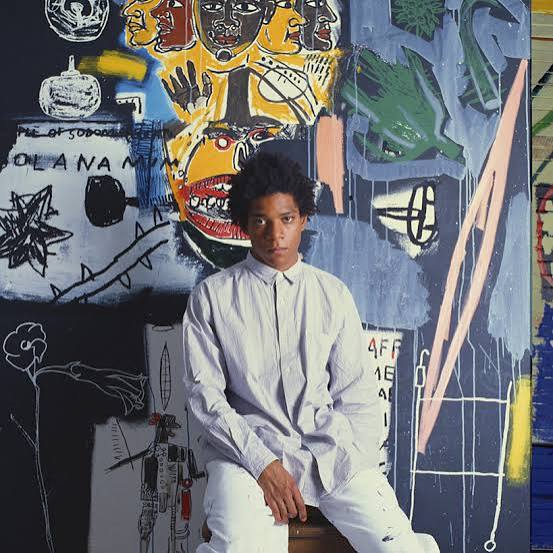
The High Museum of Art has announced a major upcoming exhibition dedicated to the late legendary Jean-Michel Basquiat, anchoring the museum’s highly anticipated centennial anniversary celebration.
The multi-year centennial calendar will also feature major exhibits dedicated not only to Jean-Michel Basquiat but Civil Rights photography by Doris Derby.
The Jean-Michel exhibition, titled “Basquiat, the Blue Ribbon Paintings, and the Art of Reproduction,” will run from February 19 through May 16, 2027. Organized in partnership with the Princeton University Art Museum, the landmark presentation aims to reframe the narrative surrounding one of the 20th century’s most enduring cultural icons.
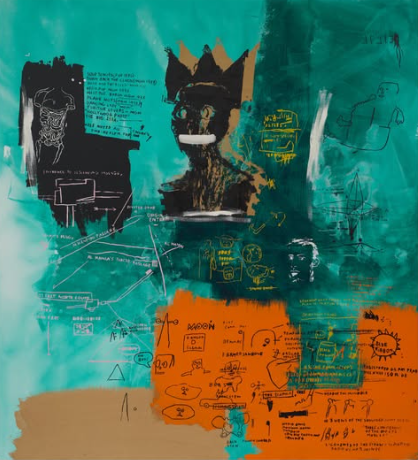
Rather than focusing solely on Basquiat’s meteoric, well-documented rise from homeless teenager to mainstream 1980s art prodigy, the exhibition critically examines his sophisticated engagement with identity, appropriation, and reproductive media. Curated by scholar Jordana Moore Saggese, the show features more than 50 works. It is anchored by a rare reunion of 11 specific mixed-media canvases from 1984 known as the Blue Ribbon Paintings—so named because they experiment with silk-screened reproductions of the Pabst Blue Ribbon beer logo and bottle cap.
From Street Poet to Fine Art Vanguard
But asquiat’s amazing evolution from barely surviving a rough upbringing in New York City to becoming a global art phenom cannot be overstated. Born in Brooklyn in 1960 to a Haitian father and a Puerto Rican mother, Basquiat first captured the public imagination under the street pseudonym SAMO. Alongside collaborator Al Diaz, he spray-painted cryptic, philosophical aphorisms across Lower Manhattan in the late 1970s.
By the early 1980s, Basquiat transitioned to canvas, spearheading the raw and expressive Neo-Expressionism movement. In 1982, he achieved international stardom, becoming the youngest artist ever to exhibit at Germany’s prestigious Documenta.
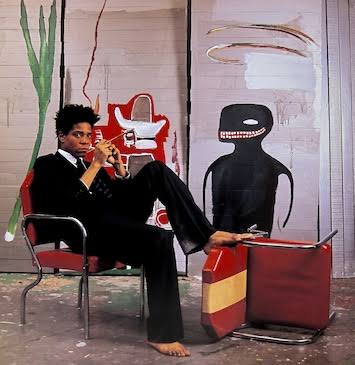
His rapid ascent was further cemented by a famous, deeply collaborative friendship with pop art titan Andy Warhol. Together, they produced dozens of works that juxtaposed Warhol’s clean, commercial screenprints with Basquiat’s frantic, visceral painting style. Though his career was cut short by a tragic drug overdose in 1988 at the age of 27, his visionary fusion of high art and street culture left a permanent mark on global culture.
An Enduring Legacy of Resistance and Sampling
What separates Basquiat from a mere 1980s phenomenon—and why his legacy aggressively endures today—is the depth of his subject matter. Long before institutional galleries routinely integrated social justice themes, Basquiat used his brush to dissect the Black experience, systemic racism, and the enduring scars of colonialism.
His canvases acted as visual encyclopedias, seamlessly sampling from jazz music, boxing history, classic literature, and medical diagrams—the latter inspired by a copy of the 19th century book, Gray’s Anatomy written by Henry Gray. It was given to him during a childhood hospital stay.
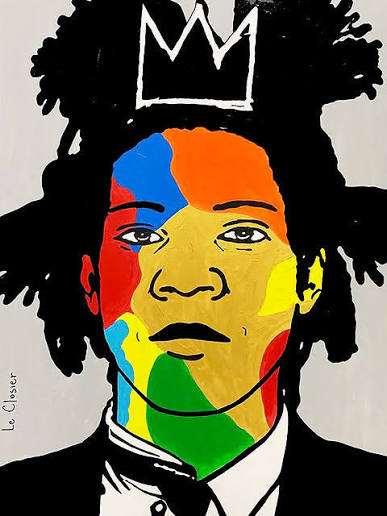
Basquiat’s most famous motif—a simplistically drawn three-pointed crown—was systematically placed over the heads of Black historical figures, musicians, and athletes to elevate his subjects to the status of royalty.
He also included himself, and deservedly so.
The upcoming High Museum exhibition highlights this intellectual lineage. It traces his dialogue with historical masters like Leonardo da Vinci and Robert Rauschenberg, while specifically celebrating his ties to pioneering Black printmakers like Bob Blackburn.
Astronomical Value and Pop Culture Currency
Today, Basquiat’s cultural currency is insatiable. His visual shorthand has been thoroughly adopted by the music and fashion industries; Hip-Hop moguls regularly invoke his name as a symbol of ultimate creative independence, while global fashion labels continually license his imagery.
Simultaneously, the art market’s appetite for his work remains at an all-time high. In 2017, Basquiat’s 1982 painting of a skull, Untitled, sold at Sotheby’s for a record-breaking $110.5 million, making him one of the most commercially valuable and historically significant artists of all time.
As the High Museum prepares to open its doors to this marquee exhibition in 2027, Atlanta audiences will get a precise look into the thinking of a conceptual genius who spent less than a decade in the spotlight, but left behind a visual language that remains entirely unmatched.
Atlanta’s High Museum of Art is located at 1280 Peachtree St. NE, Atlanta, GA 30309.
Check This Out...
-
Around 10,000 Children Are In Need Of A Loving, Safe Home In Georgia: Here’s How You Can Become A Foster Parent Or Adopt A Child
-
Happening Today: Hip Hop Icons And East Point Legends Outkast Launch Merch With Waffle House, Host Collab Drop At Centennial Olympic Park Restaurant At 11 A.M.
-
PINK RIBBONS AND PERSONAL JOURNEYS: OCTOBER MARKS GLOBAL BREAST CANCER AWARENESS MONTH
-
The Taste Of Survival: Chitterlings Came Out Of Necessity But Managed To Become A Soul Food Delicacy: The Story Of The “Chitlin” Plate–And Who Still Eats Them Today
-
Hispanic Heritage Months Begins This Week: Events And Celebrations Run From September 15 To October 15: South Fulton Features “México en el Corazón” Tour At Wolf Creek Sunday + More