
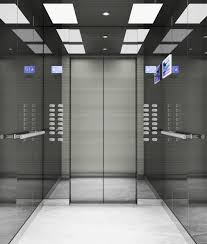
Step into any modern skyscraper today, and you will notice a stark silence. The gentle, synthesized bossa nova and orchestral pop covers that once defined the American vertical commute have vanished from elevator shafts entirely.
Yet, industry analysts say the music didn’t actually die. It survived corporate collapse, weathered shifting copyright laws, and morphed into a highly lucrative sensory marketing industry worth an estimated $3 billion to $5 billion globally–with the aid of social media.
The Bankruptcy and Rebirth of an Empire
What society broadly labeled “elevator music” was pioneered by Muzak, a corporate behemoth that grew rapidly in the mid-20th century. Muzak patented a psychological conditioning system called “Stimulus Progression.” By selling businesses 15-minute blocks of instrumental music designed to boost factory productivity and maximize shopper retention, Muzak established a virtual monopoly on public commercial spaces.
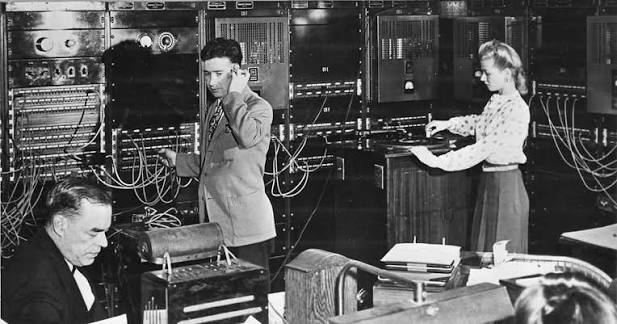
However, the business model eventually fractured. By the late 1990s and 2000s, consumer backlash against “corporate brainwashing,” combined with the skyrocketing costs of public performance licensing, drained the company’s margins. In 2009, burdened by $435 million in debt, Muzak filed for Chapter 11 bankruptcy protection.
The company looked like a relic of a bygone era, but private equity saw untapped value in corporate soundscapes. In 2011, Mood Media acquired Muzak for $345 million, subsequently retiring the “Muzak” brand name entirely. It was a strategic pivot from low-cost background noise to premium, data-driven “audio architecture.”
The Economics of Audio Architecture
Today, commercial sound curation is no longer a matter of playing generic jazz over a loudspeaker. It is a highly sophisticated, high-margin subscription business model.
Modern B2B music streaming services operate much like commercial versions of Spotify, but with strict legal compliance built into their pricing. Under global copyright law, businesses cannot legally stream music from personal accounts (like Spotify or Apple Music) to the public. Doing so triggers severe fines from Performance Rights Organizations (PROs) like ASCAP, BMI, and SESAC.
Commercial providers solve this pain point by charging businesses a premium monthly subscription—typically ranging from $25 to over $100 per location, per month—which covers the necessary public performance licenses. For massive enterprise clients like Target, Whole Foods, or Marriott Hotels, scaling these subscriptions across thousands of retail locations translates into hundreds of millions of dollars in predictable, recurring annual revenue for audio branding agencies.
The ROI of the Retail Soundtrack
The financial justification for these curation fees lies in consumer behavioral economics. Studies in retail psychology have consistently demonstrated that background music directly impacts a corporation’s bottom line:
Pacing and Basket Size: Slower-tempo music in grocery stores decreases shoppers’ walking speed, causing them to spend more time browsing and increasing average basket sizes by up to 38%.
Premium Up-Charging: Upbeat, sophisticated jazz or classical tracks played in restaurants and boutiques subconsciously signals luxury, allowing establishments to command higher price premiums on food and luxury goods.
Brand Retention: A distinct sonic identity increases a customer’s likelihood of returning to a retail space, turning ambient audio into an essential metric for customer lifetime value (LTV).
Real Elevator Music Never Stopped Being Used
The term “elevator music” has long been used as an umbrella term for various forms of often vocal-less music and has simultaneously been labeled lounge, piano solo, jazz, easy listening, lounge, bossa nova or middle of the road music. This format is generated from the era of “beautiful music”.
Beautiful music peaked in popularity from the late 1950s through the 1980s, often dominating FM radio ratings: Stations played long, uninterrupted blocks of music with minimal talking and clustered commercial breaks.
This style of music is sometimes used to comedic effect in mass media such as film, where intense or dramatic scenes may be interrupted or interspersed with such anodyne music while characters use or are for instance trapped in an elevator.
Some video games have used the music as well: Metal Gear Solid 4 where a few elevator music-themed tracks are accessible on the in-game iPod, as well as GoldenEye 007, Mass Effect, and Earthworm Jim.
The Elevator You “Hear” Today
The final nail in the coffin for traditional elevator music arrived with smartphones and wireless earbuds, allowing building landlords to cut audio budgets as commuters ignored the sound that once piped out from elevator speakers and instead into their own personal sonic bubbles.
But downstairs, the corporate soundtrack is thriving: Many multi-level commercial buildings have re-purposed music from elevators and instead piped it into offices and lobbies.
The Rise of the Elevator DJ
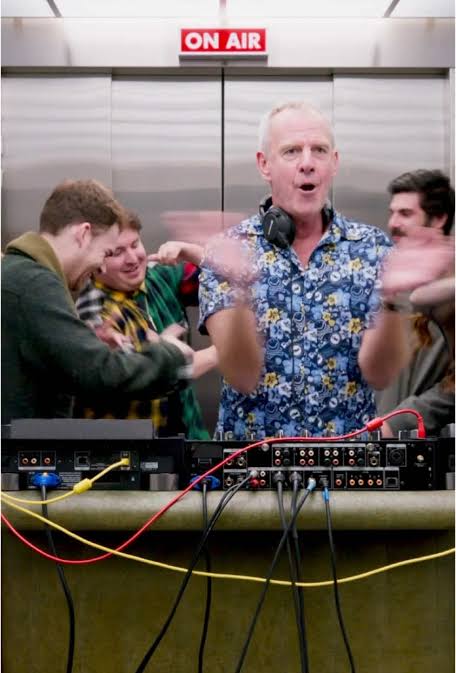
Today, there’s a movement called Elevator Music which is an independent music platform that takes the concept literally. The organization partners with venues to install full DJ decks and high-definition cameras inside functioning elevators, hosting intimate, high-energy sets.
The contrast between the cramped, industrial setting and world-class talent has proven to be a massive hit. Global heavyweights like Fatboy Slim and Kaytranada have stepped into the small enclosures, spinning electronic tracks for a handful of stunned riders. The resulting videos have captured millions of views online, redefining how fans consume live music.
Commuter Shock and Viral Ambushes
Simultaneously, a wave of performers is taking over public elevators to capture the raw, unpredictable reactions of everyday commuters.
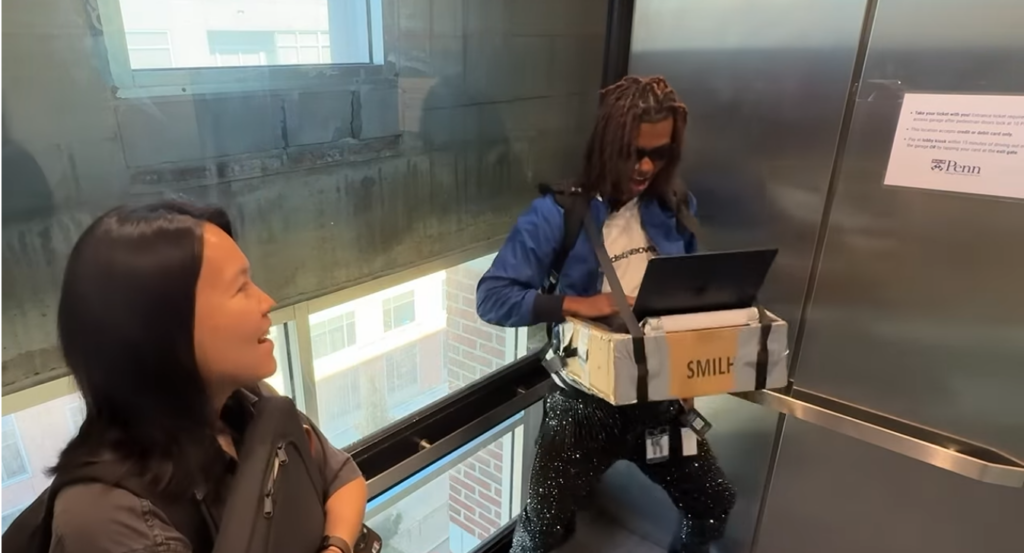
Content creators like Maxwell Ye have gone viral by smuggling compact, battery-powered DJ rigs into public lifts. The formula is simple but effective: the doors close, the lights dim, and a heavy electronic bass drop fills the tight space, forcing unsuspecting strangers to either look for an emergency exit or join an impromptu rave.
It isn’t just electronic music breaking through the sliding doors. A cappella groups like Vokale Randale have taken to crowding into elevators to ambush passengers with sudden, flawlessly harmonized choral arrangements. Elsewhere, metal vocalists are subverting expectations by letting traditional muzak play quietly, only to scream heavy metal lyrics the moment the elevator starts moving.
Architecture as an Instrument
While some musicians use elevators as a backdrop, others are turning the machinery itself into the music.
Earlier this summer, an artist named Bryant transformed the iconic architectural elevators at the Hyatt Regency in San Francisco into a living synthesizer. By retrofitting five hotel lifts with pressure sensors and older cell phones, Bryant tracked the real-time altitude of the cabs as guests moved between floors.
The data was fed into a custom program that mapped each floor to a specific musical note. As the elevators ascended and descended throughout the day, the hotel lobby was bathed in an ever-shifting, ambient soundscape entirely composed by the hotel’s traffic.
As artists continue to seek out unconventional spaces to break through the noise of the digital age, the humble elevator has proven to be the perfect catalyst.
For the modern commuter, pressing the button for the penthouse may no longer guarantee a quiet ride—it might just be your ticket to the front row.
Check This Out...
-
Legendary R&B And Soul Singer Freddie Jackson Laid To Rest In Harlem On Monday: Melba Moore, Valerie Simpson, And More Pay Tribute + Video Of Homegoing Service
-
90s-2000s R&B Fans Are In For A Treat: A New Verzuz Battle Featuring Carl Thomas Vs. Case: Thursday, October 22 At 9:00 P.M.
-
The East Point News Rewind: The Dynamic Superiors Made History And Dazzled Audiences In The 1970s With Hit Songs–And A Lead Singer Who Wore Make-Up And Occasionally Performed In Drag
-
The East Point News Offers A New Feature To Readers: The East Point News REWIND. It Offers A Look At Unique Music And Entertainment Figures Who Quietly Impacted Both Entertainment And Culture
-
Legendary R&B And Soul Singer Freddie Jackson Dies, Shocking Longtime Fans: Jackson Turned 70 Years Old This Past Friday, Performed In Atlanta Two Weeks Ago