
Troubled Maine Senate candidate Graham Platner dropped out of his state’s race today after months of salacious allegations were leveled against him. Recent polls showed him with a slight lead over longtime Republican incumbent Susan Collins, an unpopular figure in Democratic circles. Now Democrats there will have to navigate a still-developing nominating process that could delay the party’s need to unify in order to take on Collins in November.
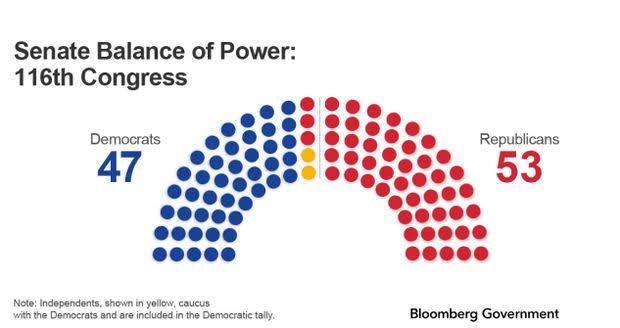
The stakes couldn’t be higher: Democrats will need to unseat Collins, a nearly 30 year incumbent, and flip the state to blue in order to get to a majority in the Senate. As it stands today, Republicans control 53 Senate seats and Democrats control 47. In order to take the majority, Democrats will need to get to 51; 50 won’t do, as a tie in the Senate will leave Republican Vice President L.D. Vance with the body’s tie-breaking vote.
The path to 51 requires Democrats to hold the seats they currently possess while flipping at least 4 GOP-held seats. Democrats are defending a Senate seat in Michigan that may turn into a battle down the stretch, and the seat here in Georgia, in which incumbent Democrat Jon Ossoff is running a solid campaign against the GOP nominee and maintains a polling lead against his opponent.
From there, the road to 4 runs through these states:
Ohio: Former Democratic Senator Sherrod Brown is staging a fiercely competitive comeback bid in a state that has leaned heavily toward the GOP.
Maine: Democrats see a massive opportunity to unseat five-term incumbent Republican Susan Collins, though the race has been thrown into sudden turmoil following controversies surrounding Platner and the uncertainty surrounding choosing his replacement to be the party’s nominee.
Texas: High-profile Democrat James Talarico is mounting a surprisingly aggressive campaign against embattled Republican incumbent Ken Paxton.
Alaska & North Carolina: Both of these states have seen their ratings shift toward toss-ups, driven in part by top-tier Democratic candidate recruitment and shifting voter sentiment.
Additionally, Iowa is proving to be competitive for Democrats as well, almost two years after the state went for Trump by double digits.
In addition to traditional party candidates, progressive-leaning Independents are running formidable campaigns in deep-red states like Montana and Nebraska. If these independent candidates win, they could potentially caucus with the Democrats, offering another narrow path to the majority.
Furthermore, Democrats are receiving a boost from historical midterm patterns and President Donald Trump’s declining approval ratings amid economic anxiety. These factors are injecting fresh energy into the Democratic base and making a once-unthinkable path to control a distinct reality.
The U.S. Senate, the upper house in the nation’s bicameral national legislature, holds significant governing power. Aside from sharing lawmaking power with the U.S. House, the Senate confirms presidential appointees, Cabinet secretaries, U.S. Attorneys, and federal judges.
The Senate’s power to confirm judges is particularly important since many Court decisions are decided at the district or appellate level, and all of those judges require Senate approval to be confirmed.
Check This Out...
-
More Than 520,000 Ballots Have Been Cast In Georgia Since Early In-Person Voting Began On Tuesday
-
20 Days Away: Democratic U.S. Senator Jon Ossoff, Republican Mike Collins Debate: Epstein Files, Tariffs, And Allegations Of Antisemitism Figure Prominently In Second And Final Debate Between The Two Candidates
-
Early In-Person Voting Begins Today October 13
-
Democratic Michigan Senate Candidate Dr. El-Sayed Addresses Past Obama Criticism, Jewish Safety In Meet The Press Interview
-
In November, Democrats Could Take A Majority Of Governorships For The First Time Since 2010