
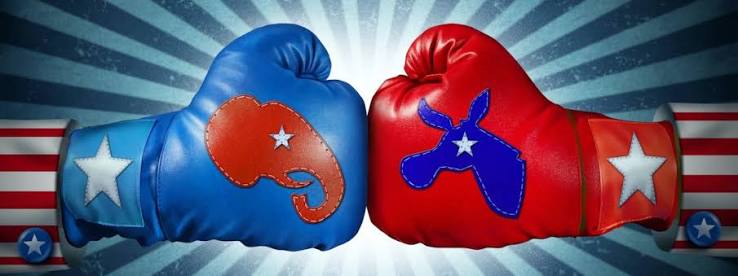
A stark and widening divide has opened between the legislative agenda of national Republicans and the immediate financial anxieties of the American electorate, signaling a high-stakes gamble for control of Congress in the 2026 midterm elections.
While conservative strategists pump millions of dollars into campaigns centered on transgender rights and the preservation of girls’ sports, hoping to gin up their base and peel away Independent voters, public opinion data and tense congressional debates indicate that voters are demanding a conversation focused strictly on their wallets.
The Capital Hill Face-Off
The friction over the national narrative reached a boiling point during a recent U.S. Senate Judiciary Committee hearing. Republican lawmakers used the platform to demand federal intervention to bar transgender athletes from competing in female sports categories, framing the issue as an urgent defense of Title IX.
Republican committee leaders argued that federal protections are necessary to ensure fairness in amateur and collegiate athletics. However, Democrats on the panel sharply pushed back, labeling the proceedings a coordinated distraction. They countered that the legislative focus on cultural issues ignores the severe economic pressures, from grocery bills to housing costs, currently facing American families.
Public sentiment appears to align closely with the economic argument. A recent Fox News poll revealed that voters do not rank transgender issues or broader cultural debates among their top national concerns. Instead, the data shows an electorate overwhelmingly preoccupied with inflation, high energy prices, and the overall cost of living–issues that polling shows voters believe Democrats may be better equipped than Republicans to address.
A Multimillion-Dollar Gamble
Despite data suggesting the broader public is experiencing “culture war fatigue,” deep-pocketed conservative organizations are doubling down on the strategy.
Groups like Elon Musk’s America PAC, alongside major Republican congressional committees, have launched a massive, coordinated advertising blitz. The campaigns, which heavily feature messaging around transgender sports restrictions and limitations on minor gender-affirming care, are blanketing competitive midterm battlegrounds in critical states such as here in Gerogia, in Ohio, Iowa, Kansas, Texas, and Florida.
Strategists defending the ad buy argue that while the issue may not top general public polling, it acts as a highly effective tool for base mobilization. In midterm elections, where voter turnout is traditionally lower than in presidential years, maximizing enthusiasm among core supporters can often dictate the outcome of razor-thin races.
The Dynamic in the States
The persistence of this messaging is creating unusual campaign dynamics in states where these legislative battles were settled years ago.
In Florida’s gubernatorial race, Republican candidates have deployed a barrage of attacks against Democratic nominee David Jolly regarding school sports rules. The aggressive messaging continues despite the fact that Florida codified restrictions on transgender athletes over five years ago–under current Governor Ron Desantis.
Jolly has repeatedly stated he has no intention of revisiting or altering the existing law, yet the topic remains a central pillar of the conservative platform against him.
A parallel script is playing out in Kansas and Texas, where incumbent Republicans are centering their reelection bids on gender-affirming care bans that are already written into state statutes.
But poling in all three states has shown Democrats running neck and neck with Republicans and in some polls, leading.
Wallet vs. Culture
Political analysts suggest the Republican strategy carries significant risk. While hardline social stances secure the party’s right flank, they threaten to alienate moderate, independent voters in suburban districts. These swing voters are routinely cited by pollsters as being laser-focused on economic relief rather than social legislation.
And most American voters view the Republican effort to turn their attention toward trans issues as a deliberate distraction when many families are struggling to keep gas in their cars and food on their tables.
Polls show that most Americans have definite views on trans issues, with an overwhelming majority supporting equal protection laws. Polling shows the public has a less favorable and more complicated view when it comes to sports participation and gender-affirming care for minors, but do not seem to prioritize the issue in the way that Republicans hope they will in an election cycle.
However, neither issue registers on most public polls as voters appear laser-focused on kitchen table issues.
Compounding problems for Republicans in an effort many voters see as a scapegoating effort is extensive media coverage of President Trump’s spending of taxpayer funds on a billion dollar ballroom, his family’s business deals, and hundreds of millions of dollars in customizations to a new Air Force One jet donated by Middle East nation Qatar.
Polls also show voter disapproval over the effort by the White House to award nearly $18 billion in reparations payments to January 6 participants–an issue that itself has drawn widespread, bipartisan criticism.
With control of the House and Senate hanging in the balance, the 2026 midterms are shaping up to be a referendum on what drives the American electorate. The coming weeks will determine whether the GOP can successfully channel cultural grievances into election night victories, or if a squeezed voting public will electorally punish candidates who fail to prioritize their financial survival.
Check This Out...
-
More Than 520,000 Ballots Have Been Cast In Georgia Since Early In-Person Voting Began On Tuesday
-
20 Days Away: Democratic U.S. Senator Jon Ossoff, Republican Mike Collins Debate: Epstein Files, Tariffs, And Allegations Of Antisemitism Figure Prominently In Second And Final Debate Between The Two Candidates
-
Early In-Person Voting Begins Today October 13
-
Democratic Michigan Senate Candidate Dr. El-Sayed Addresses Past Obama Criticism, Jewish Safety In Meet The Press Interview
-
In November, Democrats Could Take A Majority Of Governorships For The First Time Since 2010