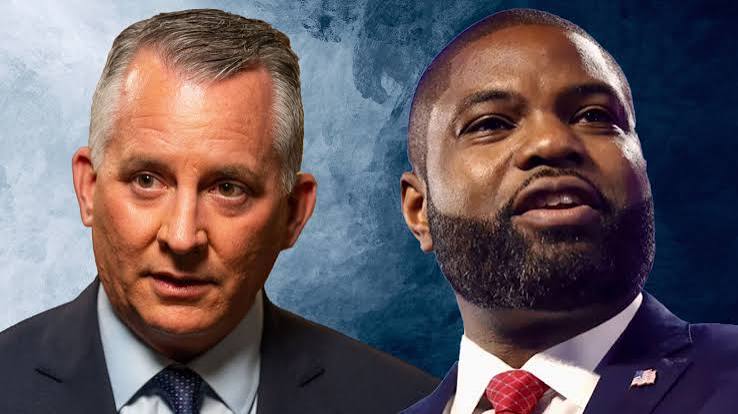
Florida Democratic gubernatorial nominee David Jolly recently visited The Roland Martin Show to discuss his views and promote his candidacy to win the governor’s race in November.
He faces Byron Donalds, a Naples-area Republican congressman and top Trump ally who is seeking to become the first Black governor in Florida history.
But Jolly didn’t mince words when he categorized the Donalds platform as embracing an “anti-Black agenda”.
“The agenda is…the agenda an anti-Black agenda”, Jolly said. “I know those are harsh words, but I’m repeating the words of Black leaders in Florida who have said the Byron Donalds agenda is an anti-Black agenda”, Jolly, who is White, said.
Host Martin agreed. “No, it’s not harsh, it’s facts”, he said. “And we lay out what those anti-Black policies have been, and they’ve actually been taking place even before Trump got sworn in again”, Martin added.
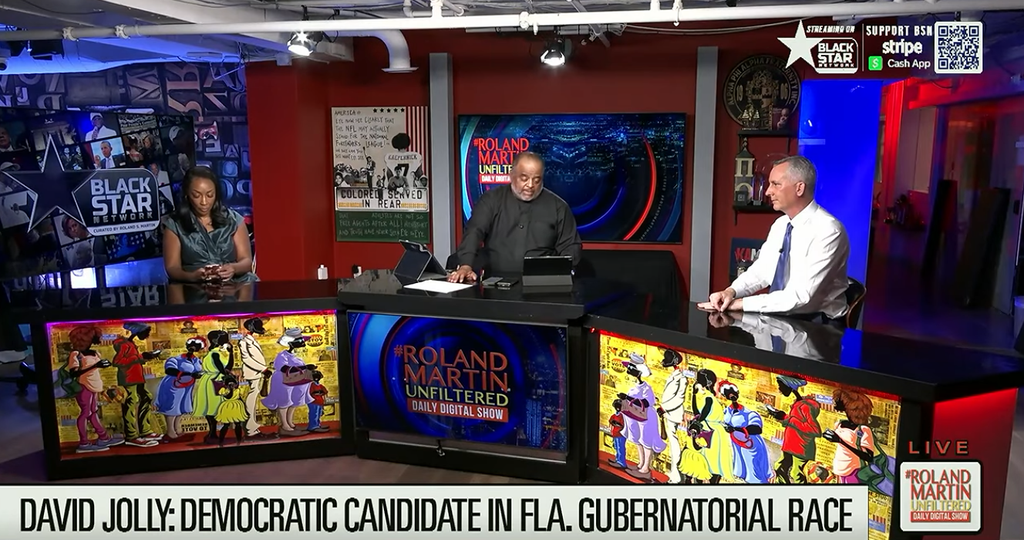
In the interview, Jolly also alleged that Donalds gave a local Haitian leader about $90,000 to fund outreach and voter mobilization in South Florida.
Jolly alleged the funding was an attempt to soften backlash against Donalds regarding his support for ending TPS (Temporary Protected Status) protections for Haitians: More than 300,000 Haitians nationwide lost the protection after the Trump administration secured a Supreme Court decision that opened the door for them to be deported.
The decision’s critics have pointed out that Haiti is a devastated nation with a failed governmental infrastructure.
Ohio’s Republican governor even went so far as to describe the deportation as sending Haitians “to hell”.

After the court gave its OK, the Trump administration implemented deportations almost immediately.
Now with the election less than 6 weeks away, Donalds’s relationship with Black voters and Black voter concerns has come into question as a number of African-American voters in the state grapple with whether to vote for a Black Republican seeking to make history or a White Democratic candidate who supports issues that resonant with Black voters.
Opposition To Voting Rights Act
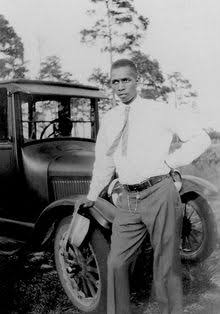
In August 2026, Black-led non-partisan voting rights organizations, such as Equal Ground, publicly called on Donalds to break his silence and declare his position on the Harry T. Moore Florida Voting Rights Act. This proposed state legislation, which was named after the late NAACP leader who was murdered in Florida in 1951, was designed to expand Black voting power and counter recent court rulings that advocates argue have diluted minority voting representation.
Donalds explicitly stated he would not support the proposal, countering that Florida already maintains robust election protections.
In an official statement reported by Florida Politics on August 26, Donalds asserted:
“Florida has the best election laws in the country, and we’re going to make sure we keep our elections secure”.
“This proposal would make Florida’s elections look more like California’s, and it takes them a month to count ballots. Why would we do that?” Donalds added.
Restoring Of Felon Voting Rights
Critics and political opponents have also highlighted Donalds’ legislative voting record on the re-enfranchisement of individuals with past felony convictions.
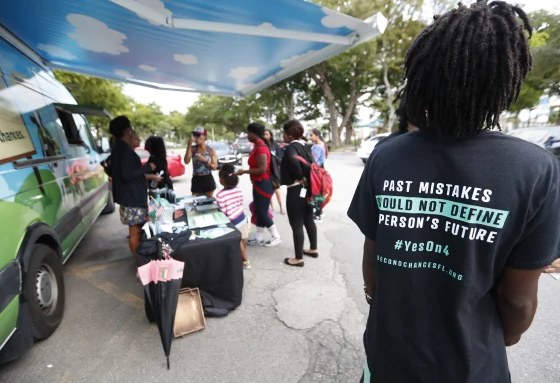
Opponents point out that although Donalds said he supported the Amendment 4 referendum in 2018 which restored the right to vote to convicted felons in the state, he later supported the effort led by Governor Ron Desantis to require individuals to pay all outstanding fines, fees, and court-ordered restitution before their voting rights could be legally restored.
Voting rights advocates said this policy created a financial barrier that disproportionately impacts low-income minorities, leaving many unable to vote even after completing their physical prison sentences.
Second Chance Program
It has been widely reported that Rep. Donalds benefited from court-ordered leniency and a pretrial diversion program following two arrests during his youth. Critics frequently contrast this personal history of “second chances” with his current political stances on criminal justice and felon voting rights.
While he spent years characterizing one of the charges, a marijuana case, as simple possession, Donalds publicly admitted for the first time in a March 2026 interview with CBS Miami that he had actually sold low-level amounts of weed.
The other case involved a fraudulent check cashed at a bank.
Because of the structure of these programs and his compliance, Donalds avoided a formal felony conviction. Both of his records were later sealed and expunged, allowing him to build a career in finance and politics without a permanent criminal record.
The Political Controversy and Criticism
But civil rights advocates, voting rights organizations, and political opponents—including his rival David Jolly—argue there is a sharp contradiction between Donalds’ past and his current policy platform:
| The “Second Chance” Received | Present Policy Stance / Action | Critics’ Argument |
|---|---|---|
| Pretrial Leniency: Avoided a felony conviction and permanent record through diversion and probation. | Support for Financial Restitution Laws: Supported Florida legislation requiring former felons to pay all court fees, fines, and restitution before voting rights are restored. | Critics argue this creates an insurmountable financial barrier for low-income minorities, denying them the same path to redemption he received. |
| Flexible Juvenile/Youth Sentencing: Benefited from judicial discretion that treated him leniently as a young adult. | The D.C. CRIMES Act: Sponsored federal legislation to lower Washington D.C.’s youth offender protections from age 24 to 18 and eliminate judicial discretion for lower mandatory minimums. | Opponents claim he is “closing the door behind himself” by stripping flexible sentencing options away from today’s young adults. |
Donalds’ Defense
Donalds has consistently rejected the idea that his platform is hypocritical. He has stated that his experiences taught him the importance of personal accountability and facing the consequences of one’s actions.
Regarding his legislative push to crack down on young offenders, Donalds defended his stance by stating, “In Florida, I had to face the music as an adult”, arguing that modern progressive sentencing policies have become too soft on crime and fail to keep communities safe.
Polls Tighten
Although Donalds led by double digits in earlier polling snapshots of the race, as the campaign has intensified and time has passed, polls have tightened significantly: A recent St. Pete Polls report shows the race deadlocked.
Political analysts believe a number of factors could be leading to what has now become an unusually tight race in a state that has been trending solid red for nearly a decade. One of those factors is likely President Trump’s sagging poll numbers across the country and in Florida a well as voter unhappiness with high fuel and food prices shifts voter attitudes about Republicans.
And though many analysts believe the race is likely to go in Republicans’ favor due to the state’s rightward title, it has become a serious race nonetheless where the only poll that will count is the one that takes place when the final votes are counted–and the Black vote will play a role in the final count as well.
Check This Out...
-
More Than 520,000 Ballots Have Been Cast In Georgia Since Early In-Person Voting Began On Tuesday
-
20 Days Away: Democratic U.S. Senator Jon Ossoff, Republican Mike Collins Debate: Epstein Files, Tariffs, And Allegations Of Antisemitism Figure Prominently In Second And Final Debate Between The Two Candidates
-
Early In-Person Voting Begins Today October 13
-
Democratic Michigan Senate Candidate Dr. El-Sayed Addresses Past Obama Criticism, Jewish Safety In Meet The Press Interview
-
In November, Democrats Could Take A Majority Of Governorships For The First Time Since 2010