
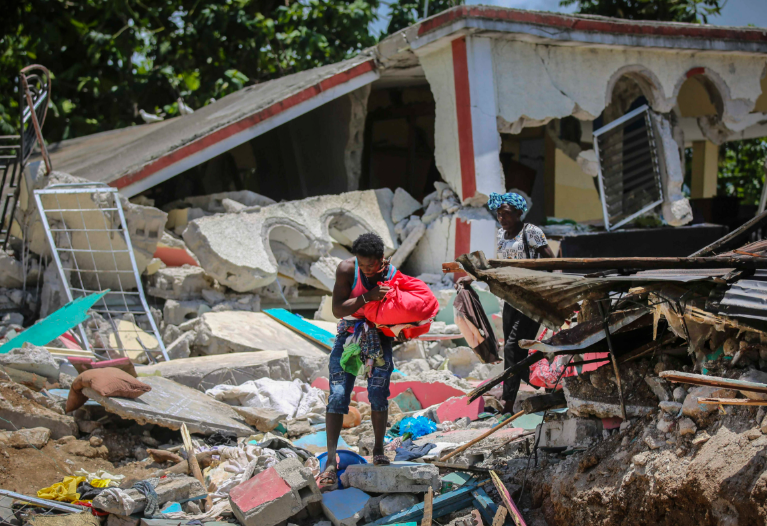
The Trump administration has commenced the mass deportation of hundreds of thousands of Haitian nationals following a landmark legal victory that allowed the government to strip humanitarian protections from an estimated 350,000 immigrants from the devastated island nation living in the U.S..
The enforcement surge follows the formal termination of Temporary Protected Status (TPS) for Haiti on July 27, 2026. The program had long shielded Haitian nationals from being returned to a country locked in a severe humanitarian, institutional, and security collapse.
The resumption of deportation flights comes on the heels of a major 6–3 decision by the U.S. Supreme Court in Mullin v. Doe. The ruling affirmed the executive branch’s legal authority to end temporary humanitarian programs, clearing the path for the administration to terminate TPS designations for both Haitian and Syrian immigrants.
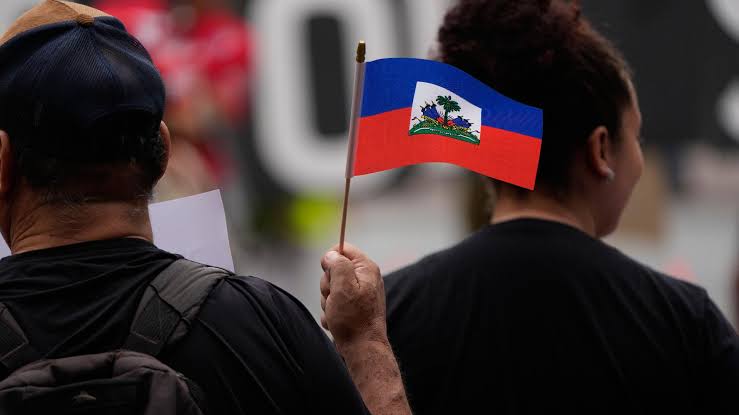
Following the high court’s decision, a federal district judge in Washington, D.C., dissolved the remaining lower-court injunctions that had blocked physical deportations. The ruling immediately invalidated the work permits and employment authorization documents of hundreds of thousands of workers nationwide.
The Department of Homeland Security (DHS) subsequently issued a directive ordering the affected population to self-deport or face immediate apprehension and forced removal.
Immigration and Customs Enforcement (ICE) has since launched targeted, coordinated operations across the country. Enforcement actions have heavily focused on states with large Haitian communities, including Florida, New York, and Massachusetts.
The operational impact is already being felt across multiple sectors:
Flights Underway: The first federal deportation flights have successfully landed back in Haiti, marking the first systematic returns to the island nation since the TPS protections expired.
Labor Shockwaves: Industries heavily reliant on the Haitian workforce—most notably regional healthcare networks, agriculture, and commercial hospitality—are reporting immediate labor disruptions.
Widespread Panic: Immigrant advocacy centers and legal clinics report being completely overwhelmed by families seeking emergency counsel to prevent imminent separation.
The Trump administration’s aggressive enforcement push has ignited outraged opposition from human rights groups, civil rights attorneys, and international observers, who point to a glaring contradiction in U.S. policy.
The U.S. State Department currently maintains a strict “Level 4: Do Not Travel” advisory for Haiti—the highest warning level possible. The advisory explicitly tells Americans to avoid the country due to unchecked kidnapping, a complete lack of medical infrastructure, and the fact that armed criminal federations control over 85% of the capital city, Port-au-Prince.
Human rights organizations argue that forcing hundreds of thousands of people into a territory the U.S. government itself deems an active danger zone is a profound moral failure.
But federal officials have defended the actions, stating that TPS was never intended to be a permanent residency program and that the agency is executing its statutory duties in accordance with the Supreme Court’s mandate.
However, such is the chaos in Haiti that the capital’s airport in Port-au-Prince has been deemed too unsafe for U.S. airplanes to land in due to ongoing gun violence by armed gangs: The few incoming flights landing in the country have been rerouted to a smaller airport away from the city, including rare U.S. flights.

Zero Infrastructure
The Haitian government offers almost no safety net for the arrivals. The National Office of Migration provides water, a light meal, and a cash stipend of roughly $65. Local advocacy groups, including the Group Supporting Refugees and Returnees (GARR), warn that the state lacks the resources to absorb these deportees safely.
A Compromised And Nearly Useless Criminal Justice System
Haiti’s entire security and legal apparatus is in a state of functional collapse, paralyzed by the dual failure of a severely outgunned law enforcement corps and a judiciary deeply compromised by systemic internal corruption.
The Haitian National Police (PNH), operating with fewer than 10,000 active officers for a population of 11 million, lacks the basic ammunition and armored vehicles needed to combat dominant gang coalitions like Viv Ansanm. This profound security vacuum forced the deployment of a United Nations-backed Multinational Security Support (MSS) mission to protect critical infrastructure.
However, battlefield victories remain short-lived because both the police force and the courts are heavily infiltrated by the criminal underworld.
Corrupt customs, law enforcement, and judicial officials routinely collude with traffickers to facilitate the movement of illegal arms and drugs, while some judges and prosecutors maintain documented ties to the very gang financiers they are tasked with rooting out. Rampant death threats alongside political bribes have effectively silenced the remaining honest magistrates. This environment fosters near-total impunity where over 90% of violent crimes go unprosecuted.
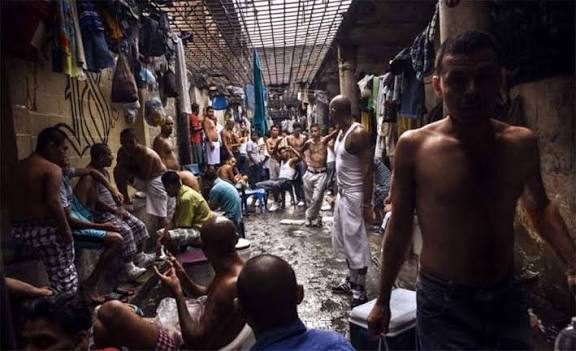
Consequently, even when joint law enforcement operations manage to detain high-profile gang members, a compromised justice system immediately nullifies these efforts, stranding thousands of unindicted inmates in inhumane, overcrowded prisons while powerful actors evade accountability.
A Difference In The U.S. Approach To Cuba And Haiti: Is Race A Factor?
The disparate treatment of Cuban and Haitian migrants by the United States is primarily rooted in Cold War-era foreign policy and unique legislative mandates. For decades, U.S. policy heavily favored individuals fleeing communist regimes, treating Cuban arrivals as political refugees to delegitimize Fidel Castro’s government and granting them a fast-track to permanent residency under the Cuban Adjustment Act of 1966.
Conversely, during the brutal Duvalier dictatorships in Haiti, Washington maintained diplomatic alliances with Port-au-Prince to counter regional communism. Consequently, successive U.S. administrations categorized Haitian asylum seekers fleeing identical levels of state terror and systemic economic collapse as mere “economic migrants,” subjecting them to strict maritime interdictions, immediate detention, and rapid deportations under policies like the historic “wet-foot, dry-foot” era.
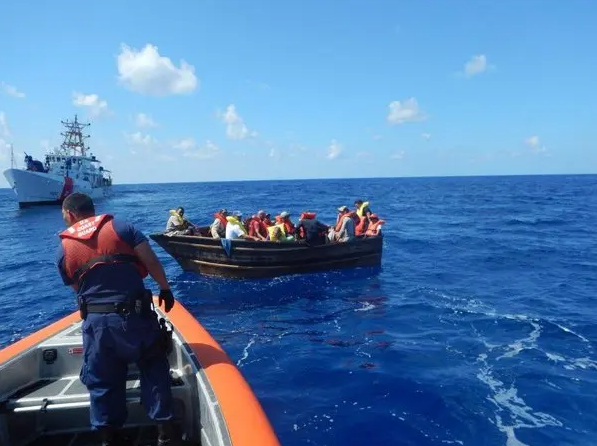
But immigration scholars, civil rights organizations, and legal advocacy groups argue that systemic racism has heavily influenced this policy double standard. They contend that anti-Black bias has shaped a highly punitive, securitized enforcement apparatus specifically targeting Creole-speaking Black Haitian asylum seekers, who are routinely turned away or placed in immigration detention.
In contrast, predominantly lighter-skinned Cuban exiles historically received widespread federal relocation assistance, housing stipends, and expedited legal protections. While geopolitical goals initially established these opposing legal pathways, critics maintain that racial bias has sustained the starkly different hurdles faced by Black Caribbean migrants compared to their neighbors.
Lives Fractured
The impact of the deportations extends far beyond politics, tearing apart families and livelihoods. Many deportees lived in the U.S. for years, leaving behind jobs, homes, and American-born children. Some returnees speak minimal Haitian Creole, arriving with no local family ties or memories of the country. They are left entirely displaced in an unfamiliar, volatile environment.
Republican Ohio governor has spoken out against the deportations, saying: “Haiti is hell today. So you’d be sending people … back to hell” , he said after the administration announced its deportation plans.
“Very few of these Haitians will voluntarily go back to Haiti”, he continued. “If they have to leave, they’ll go someplace else. They want to work. They want to support their family. They don’t want to go back to Haiti.”
The History Of Haiti: The Successful Fight For Independence
The Haitian Revolution (1791–1804) stands as history’s most successful rebellion by enslaved people, transforming the brutal French colony of Saint-Domingue into the world’s first independent Black republic.
The uprising began with a coordinated revolt ignited by Boukman Dutty, eventually coming under the brilliant military leadership of Toussaint Louverture, who successfully forced the abolition of slavery. When Napoleon Bonaparte later sent troops to reinstitute slavery and captured Louverture, Jean-Jacques Dessalines took command of the revolutionary forces, uniting the population to decisively defeat the French army at the Battle of Vertières.
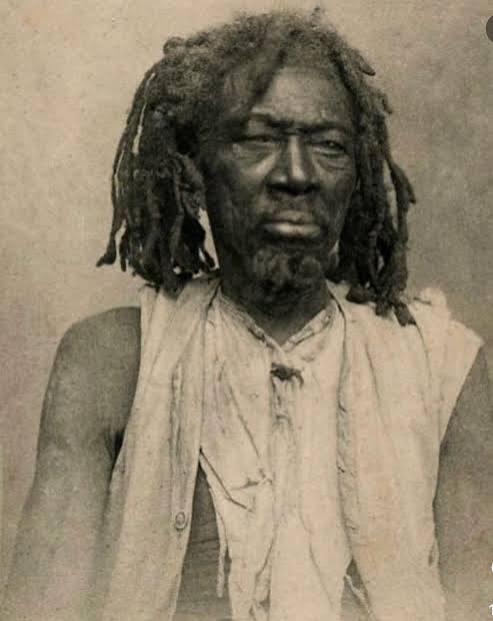
On January 1, 1804, Dessalines officially declared independence and renamed the nation Haiti, cementing a monumental victory against European colonialism.
Life After Independence: Foreign Dominance, Weather Disasters, Struggle
Following its 1804 independence, Haiti’s development was severely stunted by a crippling 1825 financial indemnity forced by France, a brutal 19-year U.S. military occupation starting in 1915, and decades of terror under the Duvalier dictatorships.
The nation’s fragile infrastructure was further devastated by a catastrophic 2010 earthquake, laying the groundwork for a complete political and humanitarian collapse following the 2021 assassination of President Jovenel Moïse.
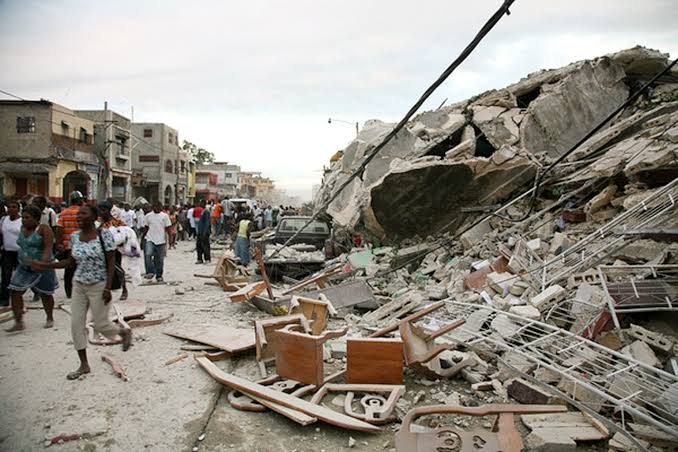
Today, heavily armed gang coalitions control roughly 90% of the capital, displacing 1.5 million people and leaving over half the population facing acute food insecurity, while an international security mission struggles to restore enough order to hold the country’s first elections in a decade.
Check This Out...
-
Plan To Rename Nashville Airport After Late Country Superstar Dolly Parton: Petition To Support Name Change Draws Hundreds Of Thousands Of Signatures
-
Meta Agrees To Settle For $17.1 Billion: But What Does The Settlement Mean, What It Changes–And Who Gets The Money?
-
Power Restored To Nearly All Residents Of Gary, Indiana Weeks After Outage–But How Did The Power Go Out, And Why For So Long?
-
A Woman With A Big Voice And An Even Bigger Heart Is Gone: Beloved Country Music Legend Dolly Parton Dies At 80: Singer Donated Millions To Multiple Causes
-
Georgia Department Of Corrections Announces Job Openings As Agency Looks To Fill Crucial Personnel Vacancies