

By: Mike Herring/The East Point News Editor
Recent estimates from the U.S. Census Bureau confirm that the Peach State has officially crossed a historic threshold: Georgia is now a Majority-Minority state. Nonwhite residents account for 100% of the state’s net population growth over the last five years, now making up roughly 52% of the overall population. As the state marches toward the 2026 midterm elections, the defining question consuming political strategists is simple: Will Georgia finally and comprehensively start voting like the diverse state it has become?
While demographics are shifting at a blistering pace, translating raw census numbers into state-level governing power remains a massive challenge for Democrats. Historically, a complex web of voting eligibility, geographic clustering, and structural map-drawing has kept a firm Republican trifecta in place at the State Capitol.
The Voting Age and Electorate Gap
A primary driver of the mismatch between the state’s residents and its leaders is the distinction between total population and the Citizen Voting-Age Population (CVAP). Georgia’s booming minority communities—particularly Hispanic and Asian American populations—skew significantly younger. Many of these residents are under 18 or are non-citizens, meaning they cannot yet vote. Consequently, the actual electorate that shows up at the ballot box remains older and Whiter than the state’s overall data suggests.
Furthermore, minority voting patterns are not monolithic. While Black voters consistently deliver overwhelming support to the Democratic ticket, Hispanic and Asian American voters are far more politically fluid. In recent election cycles, Republicans have made notable inroads with these communities, eroding the assumption that demographic diversity automatically yields sweeping Democratic victories.
Geographic Barriers and the Redistricting Firewall
The state’s political geography also heavily favors the GOP. Democratic voters are densely concentrated in the metro Atlanta region and select urban hubs, while Republican voters are distributed widely across Georgia’s vast rural and exurban landscapes. This geographic distribution gives Republicans a structural advantage in district-based legislative elections.
This natural advantage is amplified by partisan gerrymandering. Controlling both legislative chambers, Republican lawmakers have utilized the redistricting process to maximize their seat count by “packing” high concentrations of Democratic voters into fewer districts and “cracking” diverse communities across multiple rural districts. Even under federal court orders to comply with the Voting Rights Act, the legislature successfully redrew maps that protected overall Republican control.
A Clash of The Titans: Culturally Historic Statewide Battles
The stakes for the 2026 cycle are amplified by an unprecedented, highly historic lineup of statewide races. With term-limited Republican Governor Brian Kemp stepping aside, the battle for the state’s highest office looks to be a toss-up. Democratic nominee Keisha Lance Bottoms, the former Mayor of Atlanta, is looking to make history as Georgia’s, and the nation’s, first Black female governor. She faces Republican nominee Rick Jackson, a wealthy businessman and political outsider who secured the GOP nomination after a highly competitive, self-funded primary runoff campaign.

Simultaneously, the race for the U.S. Senate features popular Democratic incumbent Jon Ossoff, the state’s first Jewish U.S. Senator, and Republican challenger Congressman Mike Collins.
Adding a layer of history to the ballot is the wide-open race for Georgia Attorney General. With two-term incumbent Chris Carr vacating the seat, voters will choose between two state legislators: Democrat Tanya Miller and Republican Brian Strickland. If elected, Miller—a former prosecutor and current state representative representing East Point and Atlanta—would make history as the first Black woman to serve as Georgia’s top legal officer. This race has gained significant attention as Miller and Strickland address state law enforcement, legal interpretations, and public policy.

The state’s gubernatorial and attorney general contests are only two of the statewide contests which feature minority nominees as Black women candidates are running against mostly White male Republicans up and down the statewide ballot.
And in a historic first for Georgia, most of the Democratic nominees in the statewide races are Black and female. This is a testament to the growing political influence of both Black and Black female voters in Georgia’s statewide Democratic nominating process: 2026 will be the third consecutive gubernatorial election in Georgia that features a Black woman as the Democratic standard-bearer.
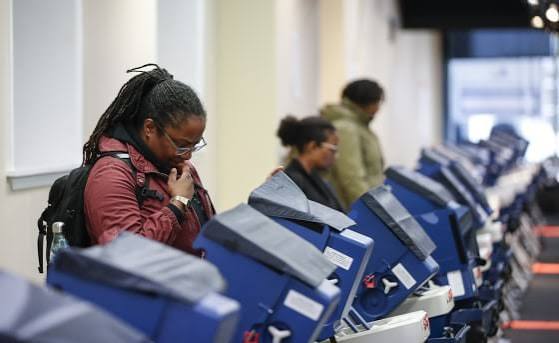
However, 2026 also presents a critical test as to whether the state has shifted enough demographically that minorities can secure victories in many if not all of the statewide races:
The Secretary of State Race: Following the exit of Brad Raffensperger, the administration of the state’s election infrastructure is an open seat. Democrat Penny Brown Reynolds, a former judge, advanced through the primary process to capture the nomination. She faces Republican Tim Fleming in a race watched for its impact on state voting access and ballot rules.
The Insurance Commissioner Race: Democrat Keisha Sean Waites, a former state representative and Atlanta City Council member, is mounting a challenge against incumbent Republican John King, who identifies as Latino. Waites centers her platform on consumer protection, equity in insurance rates, and emergency response funding.
The School Superintendent Race: Democrat Lydia Powell is challenging Republican incumbent Richard Woods in a statewide race focusing on the future direction of public education, curriculum standards, and state funding for school districts.
The Public Service Commission (PSC): Regulatory positions involving energy and utility oversight are actively contested. In District 5, Democrat Shelia Edwards is challenging Republican nominee Josh Tolbert. Edwards has engaged coalitions by running on an affordability platform addressing household utility bills and energy costs.
The Backlash Factor: Will Race-Based Redistricting and Deportations Fuel a Minority Turnout Surge?
As the 2026 campaign nears Election Day in November, a central debate centers on whether federal and state-level policy actions will influence minority voter mobilization. Political observers and strategists are watching to see whether specific legislative maneuverings and federal immigration enforcement actions may impact how diverse electorates engage with different political parties.
Polls show most Americans disapprove of the Trump administration’s pursuit of race-based redistricting along with its controversial immigration enforcement tactics and both issues continue to draw national media attention as pro-voting advocates, civil rights organizations, and political campaigns maintain a national discussion around both.
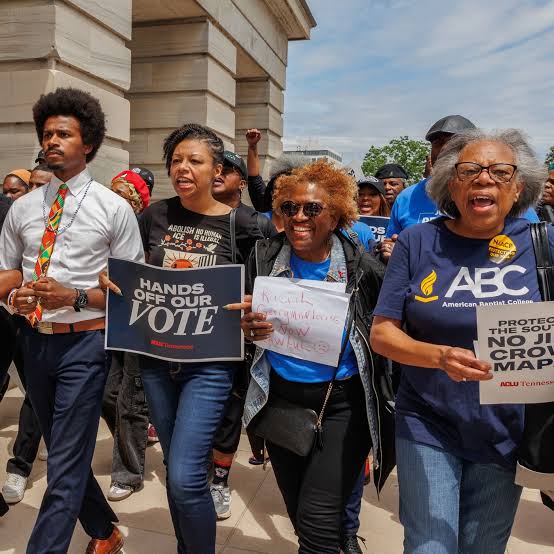
And although Georgia Republicans backed off their scheduled effort to pursue a racially-impacted gerrymandering throughout the state, thereby eliminating most of the state’s Black congressional voting districts in the process, Black voters here are aware the GOP is likely to re-fuel the effort after the November election, which has contributed to high Black voter turnout this cycle.

At the same time, federal immigration enforcement and deportation policies remain a subject of discussion within immigrant communities and among policy analysts examining voter priorities. Whether these policy debates and community concerns translate into specific voting numbers in the November tally is a subject of ongoing analysis. But economic issues—such as inflation, housing, and utility costs—frequently emerge as key factors for many households, including Minority ones. These are concerns that polls show a growing number of Georgians believe Republicans have not handled particularly well.
Will 2026 Be the Tipping Point?
Despite structural hurdles, indicators from the May 2026 primary elections suggest that the state’s new majority-minority dynamics are beginning to alter the political calculus. Driven by enthusiastic diverse communities, Democrats drove record-setting primary turnout, out-participating Republicans by a 52.6% to 45.4% margin.
For Democrats to fully activate this majority-minority reality in November, political strategists believe their strategy must evolve across several fronts:
Closing the “Drop-Off” Turnout Gap: Younger and non-White demographic groups turn out heavily for high-stakes presidential cycles, but historically plummet during midterms. Turning these new residents into habitual voters is priority number one.
Expanding the Map: Relying strictly on the deep-blue core of Atlanta leaves Democrats mathematically short in the General Assembly. The path forward requires cultivating candidates who can compete in the rapidly changing northern and suburban rings, alongside mid-sized hubs like Savannah, Augusta, and Macon.
Reframing the Message around Affordability: Recent non-partisan polling indicates that Georgia voters are putting pocketbook issues first. Top-tier Democratic candidates, like gubernatorial hopeful Keisha Lance Bottoms, are locked in highly competitive races by focusing heavily on an “affordability” agenda—running on cross-partisan issues like lowering household utility bills and pushing for full federal Medicaid expansion.
Challenging the Courts: With federal gridlock, Democrats are channeling historic energy into contesting non-partisan judicial races, aiming to leverage public frustration over the state’s restrictive abortion laws to back progressive-leaning judges to the State Supreme Court.
As the 2026 midterm campaigns enter their final stretch, Georgia stands at a pivotal crossroads. The state possesses the raw diverse demographics to vote like a majority-minority state, but whether Democrats can successfully bypass the GOP’s structural defensive lines to mobilize that electorate will dictate the state’s political future.
Check This Out...
-
More Than 520,000 Ballots Have Been Cast In Georgia Since Early In-Person Voting Began On Tuesday
-
20 Days Away: Democratic U.S. Senator Jon Ossoff, Republican Mike Collins Debate: Epstein Files, Tariffs, And Allegations Of Antisemitism Figure Prominently In Second And Final Debate Between The Two Candidates
-
Early In-Person Voting Begins Today October 13
-
Democratic Michigan Senate Candidate Dr. El-Sayed Addresses Past Obama Criticism, Jewish Safety In Meet The Press Interview
-
Ugly Loss: Georgia Bulldogs Players Told To Put Helmets On As They Exited The Field Due To Alabama Fans Throwing Water Bottles, Cans At Team: Fan Appears To Shove Bulldogs Player’s Head: Georgia Fans React On Social Media As SEC Expected To Weigh In