
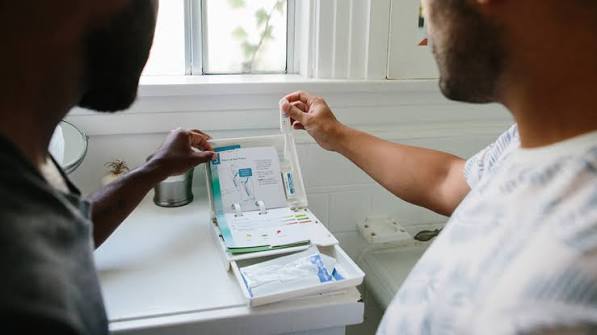
For many, the primary hurdle to getting tested for HIV is not physical, but emotional. Public health data shows that the terror of a positive diagnosis forces many individuals into deep denial. This psychological block is heavily reinforced by a persistent social stigma. Many individuals report a paralyzing fear of community rejection, family shame, or the immediate end of their romantic relationships. Furthermore, deep-seated worries over data privacy keep people away from clinics, as patients fear their confidential information might be leaked to employers or social circles.
Systemic and Economic Roadblocks
Beyond emotional distress, practical and financial hurdles create insurmountable walls for vulnerable populations:
Financial strain: High out-of-pocket costs and a lack of health insurance prevent low-income individuals from seeking care.
Geographical isolation: Rural and underserved urban neighborhoods frequently lack local testing clinics.
Transportation gaps: A lack of reliable public transit prevents long-distance travel to regional health facilities.
Rigid clinic hours: Most testing sites operate strictly during standard working hours, forcing hourly workers to choose between their paycheck and their health.
The healthcare system itself often acts as a deterrent. Communities of color and marginalized groups report high levels of medical distrust, rooted in historical discrimination and negative personal experiences with staff. Many patients avoid testing simply to escape perceived provider bias, fearing lectures or judgment from medical staff regarding their lifestyle or sexual history.
A final, critical barrier is a widespread lack of updated health education. Many individuals maintain a low perceived risk, falsely believing that HIV only impacts specific demographics. Additionally, a tragic misconception persists that an HIV-positive diagnosis is an immediate death sentence, leaving patients unaware of modern, highly effective antiretroviral therapies that allow individuals to live long, healthy lives. Finally, public health campaigns face uphill battles in spreading awareness about modern, low-barrier testing alternatives, such as rapid, anonymous, or at-home testing kits.
Approximately 36% of U.S. adults aged 18 to 64 report ever having been tested for HIV during their lifetime. This means that nearly two-thirds of the eligible adult population has never undergone a screening.
The Centers for Disease Control and Prevention (CDC) explicitly recommends that every American between the ages of 13 and 64 get tested for HIV at least once as part of routine healthcare.
The Undiagnosed Population
Because overall testing rates remain low, about 13% of the 1.2 million Americans living with HIV do not know they are infected. This population of roughly 158,000 individuals remains completely unaware of their status, which delays essential medical treatment and unintentionally drives new transmissions. In fact, delayed testing means that 22% of people newly diagnosed with HIV are already at the late stage of AIDS by the time they find out.
Gaps Among High-Risk Groups
Despite heightened public health efforts, less than 30% of individuals at a higher risk of acquiring HIV are tested annually.
- The Geographic Gap: In localized urban centers where over half of all national HIV diagnoses occur, only about 35% of high-risk individuals receive their recommended annual screening.
- The Rural Gap: In highly impacted rural areas, annual testing compliance among high-risk groups drops further to just 26%.
Georgia has the second-highest rate of new HIV diagnoses in the southern United States, with Metro Atlanta serving as the epicenter of the state’s crisis. Despite local public health efforts, significant testing gaps persist across the metropolitan area, leaving thousands unaware of their status.
The 20-county Atlanta metropolitan area consistently ranks among the top three U.S. metro regions for new HIV diagnoses.
- Overall Testing Lifetime Average: Approximately 52% of Georgia adults have ever been tested for HIV in their lifetimes. This number is significantly higher than the national average, and leaves nearly half the population unscreened, falling short of universal baseline guidelines.
- Knowledge of Status: An estimated 15.6% of Georgians living with HIV do not know their status. This lack of awareness delays entry into the state’s care continuum.
- Disproportionate Concentration: Metro Atlanta accounts for more than half of all new HIV diagnoses across the state of Georgia.
- Prevalence Benchmark: In the core metro area, roughly 1 in 51 people are currently living with HIV.
Testing and Burden Disparities by County
The impact of the epidemic and the availability of testing are unevenly distributed across the region’s core public health districts.
| Metro County / District | Local HIV Impact Context |
|---|---|
| Fulton County | Highest case rate in the state. Houses a downtown spatial cluster containing 60% of the metro area’s prevalent cases. |
| DeKalb County | Consistently logs high diagnosis rates. It is a primary target of the federal Ending the HIV Epidemic (EHE) initiative. |
| Clayton County | High concentrations of HIV cases match Fulton and DeKalb. However, it faces stricter geographic and financial service gaps. |
| Cobb & Gwinnett | Lower case concentrations per capita than the urban core, but they feature rapidly expanding suburban pockets with limited localized clinical testing sites. |
Where to Find Free, Confidential Testing
To counter these metrics, the Georgia Department of Public Health and local non-profits provide completely free, anonymous, or confidential screening programs. If you want to check your status or find resources, you can use the official locator on AIDSVu to find localized testing clinics, at-home test kits, and PrEP providers in your neighborhood.
Check This Out...
-
Pennsylvania Measles Outbreak Surpasses 1,000 Cases In Nation’s Worst Surge In 35 Years
-
Flu Season Starts This Month: Health Experts Advise Early Vaccination Amid Flu, RSV, And Covid-19 Risk
-
Razor Bumps And Ingrown Hairs: How To Quickly Treat And Get Rid Of Them
-
September Is Prostate Cancer Awareness Month: What It Is, What The Signs Are, And Who Is At Highest Risk From It
-
Food Warning: Great Value, GreenWise Frozen Berries Recalled