
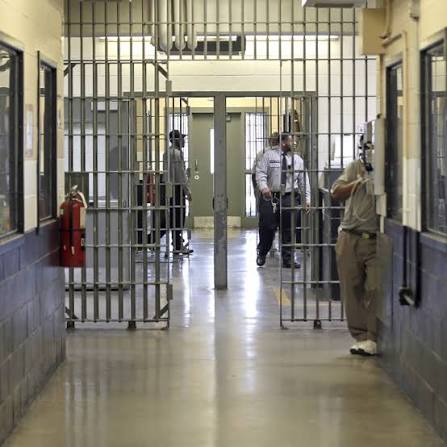
For decades, the path out of a local jail cell followed a simple, mathematical rule: if you had the cash, you went home to await trial; if you were broke, you stayed behind bars.
Today, that math is changing. A sweeping wave of legal reforms across the United States has targeted the traditional cash bail system, fundamentally reshaping local economies, jail populations, and courtroom dynamics.

While advocates celebrate a massive victory for civil liberties, the shift has triggered a fierce national backlash, culminating in a historic standoff over federal funding.
A Tale of Three States
Illinois made history by completely abolishing cash bail under its Pretrial Fairness Act. The results have upended many initial fears. Within its first year, Cook County’s jail population plummeted by 14%, while some rural counties saw drops of up to 25%. Local data shows that the reform saved defendants and their families an estimated $6.7 million in non-refundable bond fees in just nine months. Crucially, state safety data recorded a concurrent 7% drop in violent crime.
New Jersey, an early pioneer of the movement, virtually eliminated monetary bail back in 2017. Nearly a decade later, the state’s pretrial jail population remains down by roughly 50%. State records indicate that court appearance rates have held steady, disproving early predictions that defendants would skip their court dates without financial skin in the game.
The transition has been rockier in New York. After eliminating cash bail for most misdemeanors and nonviolent felonies in 2020, pretrial detention numbers dropped by a third. However, a fierce public and political backlash followed. Facing intense media scrutiny over high-profile offenses, state lawmakers stepped back, passing three separate rounds of amendments to restore judges’ powers to demand bail for a broader list of crimes.
Wealth vs. Risk
Under the new systems, the core question asked by judges has shifted from “How much can you pay?” to “Are you a danger to the community?”
Courts now rely on data-driven public safety assessments to evaluate a defendant’s risk of flight or re-offense. High-risk individuals are detained outright, regardless of their financial status, while low-risk individuals are released with supervision.
“The old system allowed wealthy, potentially dangerous individuals to buy their way out, while poor people accused of low-level shoplifting lost their jobs and apartments while waiting for trial,” said a legal policy analyst at the Brennan Center for Justice.
Independent academic studies have consistently found no statistical link between bail reform and rising crime rates. Instead, researchers point to significant social benefits: keeping nonviolent individuals employed and housed reduces the long-term drivers of recidivism.
The Cost of Time and the Federal Threat
The system is not without its growing pains. Defense attorneys and prosecutors report that pretrial hearings now take significantly longer. Judges must weigh complex risk profiles and issue detailed, written justifications for detention, stretching court dockets and exhausting legal staff.
The future of these reforms now faces its steepest hurdle yet. A sweeping federal executive order issued by the Trump administration targets any jurisdiction that has “substantially eliminated cash bail.” Under the directive, the federal government is reviewing the removal of crucial federal grants, law enforcement funding, and contracts from non-compliant states.
The move has set up a high-stakes constitutional battle. State governors argue the federal mandate is an unlawful encroachment on local judicial independence, while federal proponents argue that withholding funds is a necessary measure to ensure public safety.
As the legal challenges wind their way through the courts, the daily reality inside America’s courtrooms remains permanently altered. The era of the price tag on pretrial liberty is facing its definitive test.
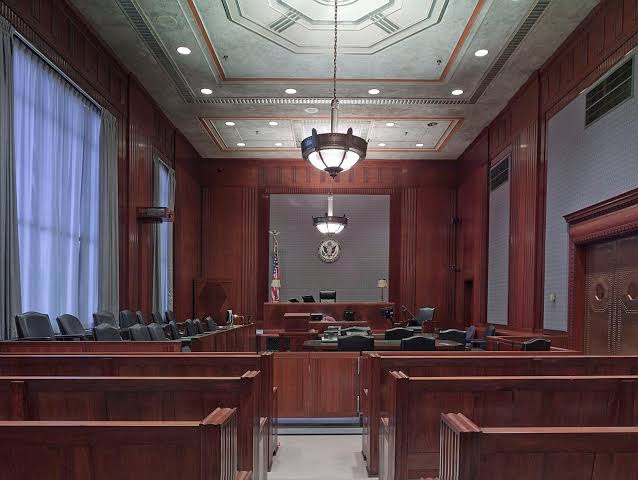
After Arrest–The Process
Cashless bail shifts the justice system from a wealth-based model to a risk-based model. Under this system, judges no longer set a dollar amount for a defendant’s freedom; instead, they decide whether a person must be jailed or released based entirely on public safety and flight risk.
The Step-by-Step Process
1. The Arrest and Risk Assessment
When a person is arrested, pretrial services immediately gather their information. Instead of looking at their bank account, the state uses a data-driven Public Safety Assessment (PSA) tool. This algorithm weighs specific factors to generate a score predicting the likelihood of the defendant committing a new crime or failing to appear in court. These factors include:
- The severity of the current charge.
- Prior violent crime convictions.
- The person’s history of showing up to previous court dates.
- Pending charges at the time of the arrest.
2. The Detention Hearing
Within 24 to 48 hours of arrest, the defendant appears before a judge. Because money cannot be used as a placeholder, the prosecutor must make a formal motion if they want the defendant kept in jail.
To detain someone, the state must prove with clear and convincing evidence that the defendant poses a specific threat to a person or the community, or is an extreme flight risk.
3. The Judge’s Decision
The judge reviews the evidence and the risk assessment score, then chooses one of three pathways:
Pretrial Detention: The defendant is denied release entirely and remains in jail until their trial. This is typically reserved for felony sex offenses, non-probationable violent crimes, domestic violence, or cases involving firearms.
Conditional Release: The defendant goes home but must comply with specific, non-monetary court restrictions.
Unconditional Release: The defendant is released on their own recognizance based on a promise to return to court
What Replaces the Money?
To ensure people return to court without using cash as collateral, states rely on a spectrum of pretrial monitoring tools tailored to the defendant’s risk level:
Electronic Monitoring: GPS ankle bracelets or voice-recognition check-in smartphone apps tracker location.
Mandatory Check-ins: Regular phone calls or in-person visits with a pretrial case manager.
Court Date Reminders: Automated text message and phone call systems (which studies show drastically reduce accidental missed court dates).
Social Support Services: Voluntary or mandatory referrals to drug treatment, mental health counseling, or housing assistance to address the root causes of the arrest.
Not In Georgia
Georgia stands in direct opposition to cashless bail, having recently passed and implemented aggressive legislation to expand mandatory cash bail and crack down on alternative release programs. While states like Illinois have abolished the practice, Georgia’s Republican state leaders have explicitly rejected that path, framing cashless bail as a failure that jeopardizes public safety.

The Mandate: Senate Bill 63
The core of Georgia’s stance is defined by Senate Bill 63 (SB 63), which was signed into law by Governor Brian Kemp and took full effect. This law systematically rolled back previous bipartisan criminal justice reforms from 2018:
- Expanded Cash Bail Offenses: The law adds 30 new offenses—including many nonviolent misdemeanors like criminal trespass, low-level marijuana possession, and failure to appear in court—to the list of crimes that strictly require a cash or surety bond.
- Stripping Judicial Discretion: Judges are legally blocked from releasing individuals on their own recognizance (without financial conditions) for these expanded offenses. Even if a judge believes a defendant poses zero risk to society, they are mandated by law to impose a financial price tag for release.
The Crackdown on Charitable Bail Funds
Georgia’s anti-cashless bail approach uniquely targets organizations that try to bypass the financial barrier for low-income defendants. SB 63 implemented strict new rules regarding charitable bail assistance:
- The Three-Person Limit: Individuals, charities, and religious groups are legally restricted from posting bail for more than three people per year.
- Bonding Agency Rules: To bail out more than three individuals, a charity or group must formally register and meet the strict licensing criteria of a professional, commercial bail bonds company.
- Ongoing Legal Battles: This specific provision sparked immediate civil rights lawsuits. Federal appeals courts have expressed heavy skepticism about the restriction, with judges suggesting that charitable bail—such as a local church bailing out low-income members—is a form of protected, value-based free speech.
Local Policy Conflicts: State vs. Atlanta
This statewide stance has created a sharp friction with major urban centers like Atlanta. In 2018, the City of Atlanta passed an ordinance completely eliminating cash bonds for city ordinance violations to stop low-income individuals from languishing in jail over minor offenses. State measures like SB 63 have purposely sought to squeeze out these local municipal workarounds, mandating that the state’s uniform cash-first rules take precedence.
Check This Out...
-
Falcons Travel To Miami, Notch 17-12 Preseason Win: But Team Now Faces Starting Quarterback Decision Between Tua Tagovailoa And Michael Penix Jr.
-
Braves Shutout Dodgers, Sweep 3 Game Series As Chris Sale Strikes Out 11: It’s The First Time Since 2013 That Atlanta Swept L.A.
-
What To Know When Applying For Disability Benefits In Georgia
-
Atlanta Braves Outduel Los Angeles Dodgers, Take 6-5 Win: Braves In The Hunt For Playoff Second Seed
-
What Happens If Your Neighbor’s Tree Falls In Your Yard? You Might Not Want To Know…But You Should