
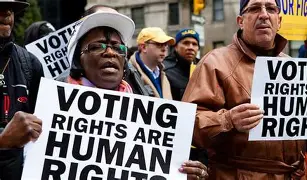
The right to vote is a fundamental one in America and is a hallmark of American citizenship. But historically, that right has been one in which many Americans have struggled not only to obtain but to also hold onto.
Many Americans don’t realize that the struggle for voting rights has continued and evolved since the founding of this nation. In fact, it wasn’t until the 26th Amendment of the Constitution was ratified that people under the age of 21 could cast a ballot, and that was in 1971. In fact, many young people who were old enough to serve in Vietnam were not even old enough to vote during that time.
Many Americans also don’t realize that felon disenfranchisement, or the restriction on people who have been convicted of felonies from being allowed to vote, has an historic connection to the slavery era, and the push to restrict the voting power of newly freed slaves subsequent to the Reconstruction period.
As concerned parties and stakeholders such as the cotton industry and suddenly slaveless slaveowners faced life and labor without the free work of Black American slaves, many demanded their states find ways to either reinstitute slavery, thereby re-enslaving freed Black people, or at the very least reduce the freed slaves’ ability to fully participate in American society, especially in the areas of commerce and politics.
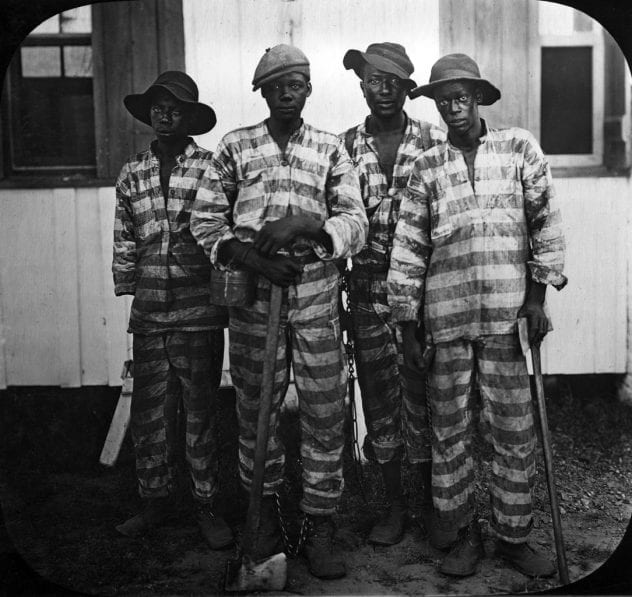
The result was the imposition of so-called Black Codes or Black Laws which were crafted and made into law that vastly expanded not only what could be an arrestable offense, but what constituted a felony as well. These laws primarily centered around poverty and homelessness–and who, in 1865, after the Civil War had ended, was more likely to be poor and homeless than a newly freed slave? Destitute, uneducated, illiterate, and widely resented, freed slaves who had been kicked off, albeit begrudgingly, plantations by their masters often found shelter and nourishment wherever they could.
Suddenly, jails and prisons were constructed. Police agencies were established and expanded and many freed slaves found they had traded the shackles of a plantation for the shackles of a jail or prison.
Sentences were often Draconian and absurdly long. The Supreme Court ruled that incarcerated persons could be forced to not only serve time but perform hard labor as punishment, and soon, many feed slaves were performing some of the same work for the State that they had performed for the slaveholder–also without compensation.
Rounding up and incarcerating many thousands of Black Americans proved easy for police departments that were often staffed with men who were either members of the Ku Klux Klan (KKK) or sympathizers of it. The KKK was established in 1865–the same year slaves were freed.
The push to limit Black voting power went full press, especially in former slaveholding states like Mississippi, where a post-Emancipation census report found there were more slaves in Mississippi than White people, a fact which alarmed the anti-Black constituency in that state. Widespread fear reigned as many White residents feared the freed and now potentially voting ex-slaves would take over government power and perhaps seek political revenge against their former enslavers.
That did not happen but for good measure, many states enacted tough new laws that endured for generations and sought to close the loopholes allowing Blacks to vote. Literacy tests, poll taxes, and grandfather clauses were implemented to halt Black voting progress. But as times changed, one constant remained from the ugliest era of Black voter suppression: Felon disenfranchisement.
Georgia was among the first in line to embrace felon disenfranchisement, beginning in 1877, the same year the Reconstruction Period ended. Georgia legislators, a majority of whom had been slaveholders or supporters of the practice, quickly created a new State Constitution that did away with the changes made during Reconstruction that granted new rights to former slaves and a brutal era of Jim Crow and segregation would ultimately follow.
But felon disenfranchisement proved a useful tool to affect not only Black voting power but has also ensnared many poor Whites as well. Today, more than a quarter of a million Georgians are barred from voting due to a felony conviction; a substantial number of these people are Black men and women, which underscores the fact that felon disenfranchisement was created in order to survive the test of time and achieve a long-term goal of stifling Black voting rights.
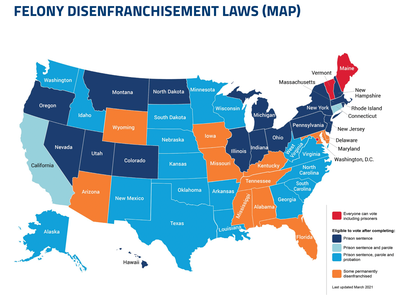
It has been estimated that one out of every 3 Black men in Georgia has a felony arrest or conviction and close to half of all Black men in Georgia have an arrest record.
As it now stands in Georgia, a person who has been convicted of a felony loses his or her right to vote if he or she is currently serving a term of probation or parole or is currently incarcerated in a jail or prison while serving a sentence for a felony conviction.
This means if someone has served either a jail or prison term, but is not presently incarcerated, or is not serving under a form of supervised release or on house arrest for a felony, and is longer on probation or parole, then he or she has the right to vote in Georgia. This is important information because many Georgians are unaware that they have their voting rights back and have avoided voting or even registering for fear of being prosecuted for voting illegally.
Often, many of the people in this state who have a felony conviction were prosecuted long ago, sometimes decades ago, and have long since put their past behind them and have not committed any new crimes. It’s important they know their rights as well and that they be allowed to cast their ballots.
Knowledge is power. Know your rights, know your POWER!
Check This Out...
-
Ugly Loss: Georgia Bulldogs Players Told To Put Helmets On As They Exited The Field Due To Alabama Fans Throwing Water Bottles, Cans At Team: Fan Appears To Shove Bulldogs Player’s Head: Georgia Fans React On Social Media As SEC Expected To Weigh In
-
Georgia Bulldogs Win In Regular Season At Alabama For First Time Since 2007, Now 6-0: Late Game No-Call On Assumed Penalty Stirs Controversy: Bulldogs Poised For #1 Ranking With Texas Loss
-
Minutes Away From Kickoff At 7:30 P.M.: The #2 Ranked Georgia Bulldogs Travel To Alabama To Face The 6th Ranked Crimson Tide: Both Teams Enter The Celebrated Matchup Undefeated
-
Hurricane Isaias Is Now A Category 3 Hurricane: East Point And Metro Atlanta Impact To Be Felt Later Today, Tomorrow: Flood Watch In Effect, Governor Declares Statewide State Of Emergency: How To Prepare
-
Atlanta Humane Society Announces Dog Adoption Event in Marietta On Saturday, October 10 From 12 P.M. – 3 P.M.