
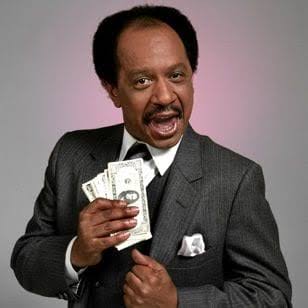
The character of George Jefferson, portrayed by Sherman Hemsley on the iconic sitcom The Jeffersons (1975–1985), remains one of the most influential representation milestones in television history. Long before modern discussions about Black wealth and startup culture became mainstream, George Jefferson served as a fictional blueprint for Black economic independence, grit, and entrepreneurial success.
A Radical Shift in Representation
Prior to The Jeffersons, Black men on television were rarely depicted as successful business owners. George Jefferson shattered that mold. As the owner of Jefferson Cleaners, a successful dry-cleaning chain in New York City, he symbolized the realization of the American Dream through the lens of Black ownership. He was not just surviving; he was thriving, famously “movin’ on up” to a deluxe apartment in the sky.
George’s success was not handed to him. He built his empire from a single store opened with an insurance settlement, expanding it into a multi-location franchise through sheer determination and sharp business acumen.
The Philosophy of Unapologetic Ambition
What made George Jefferson inspiring to aspiring Black business owners was his absolute refusal to diminish himself or his success to make others comfortable. In a society that historically restricted Black economic mobility, George’s fierce pride was revolutionary.
He understood that true independence came from financial self-reliance. He famously captured this sentiment regarding his work ethic and self-made status. Here is a notable George Jefferson quote:
“I didn’t get where I am today by listening to what people said I couldn’t do.”
For George, entrepreneurship was the ultimate vehicle for freedom. He did not want to work within an existing system that devalued him; he wanted to build his own system. As he bluntly put it:
“The only way to get ahead in this world is to be your own boss. That way, nobody can tell you when to sit, when to stand, or when to say ‘yessir’.”
Grit, Risk-Taking, and Business Acumen
Behind the comedic strut and the loud arguments with his wife, Louise, and his maid, Florence, George was a deeply strategic businessman. He understood marketing, customer retention, and the necessity of taking calculated risks to scale a business.
He knew that building a legacy required thick skin and an unwavering belief in one’s own product. He summarized his aggressive approach to market competition by saying:
“You don’t get to the top by being nice. You get to the top by being better than the next guy, and making sure everyone knows it.”
This competitive drive resonated deeply with Minority entrepreneurs who frequently faced systemic barriers, higher rejection rates for business loans, and skepticism in the marketplace. George showed that self-confidence was a vital business asset.
A Lasting Cultural Legacy
George Jefferson proved to Black viewers that financial success and cultural identity were not mutually exclusive. He remained fiercely authentic, demanding respect from his wealthy White neighbors and corporate peers alike.
Decades after the show went off the air, George Jefferson’s legacy endures in the spirit of the modern Black entrepreneurship movement. He normalized the image of the Black CEO, proving that with resilience, vision, and a refusal to take “no” for an answer, anyone could claim their piece of the pie.
The Blueprint of Black Capitalism
Long before Hip-Hop artists built multi-million dollar business empires, George Jefferson showed America a new kind of success. On The Jeffersons, George rose from a poor kid in Harlem to a millionaire owner of a chain of dry-cleaning stores. He did not just want to survive; he wanted to thrive and show off his wealth. His famous strut, sharp suits, and loud pride gave youth a visible image of a self-made Black man in charge of his own destiny.
“Movin’ on Up” as an Inspiration
The show’s gospel-tinged theme song, “Movin’ on Up,” became an unofficial anthem for upward mobility. The lyrics—“Took a whole lot of trying just to get up that hill”—resonated deeply with inner-city kids who would soon create hip-hop. Rappers frequently referenced George Jefferson in their lyrics as the ultimate symbol of making it out of the struggle and into a “deluxe apartment in the sky”.
Hip-hop entrepreneurs like Jay-Z, Diddy, and Master P mirrored George’s transition from the neighborhood hustle to corporate boardrooms. George owned his stores, controlled his assets, and was fiercely independent. He famously said he did not make the rules of the economic game, but he would play it better than anyone else. That unapologetic business mindset helped transform hip-hop artists from hired performers into studio owners, fashion designers, and corporate bosses.
Sherman Hemsley, best known as George Jefferson to audiences around the world, died on July 24, 2012 in El Paso, Texas. The cause of death was superior vena cava syndrome, a complication caused by a malignant lung mass. He was 74.
Check This Out...
-
Former Ward D Councilmember Stephanie Gordon Sponsors Tribute To Former Councilmember, State Representative Joe Heckstall: Bridge Dedicated To The Legacy Of East Point’s First Black Councilmember
-
Ugly Loss: Georgia Bulldogs Players Told To Put Helmets On As They Exited The Field Due To Alabama Fans Throwing Water Bottles, Cans At Team: Fan Appears To Shove Bulldogs Player’s Head: Georgia Fans React On Social Media As SEC Expected To Weigh In
-
Georgia Bulldogs Win In Regular Season At Alabama For First Time Since 2007, Now 6-0: Late Game No-Call On Assumed Penalty Stirs Controversy: Bulldogs Poised For #1 Ranking With Texas Loss
-
Minutes Away From Kickoff At 7:30 P.M.: The #2 Ranked Georgia Bulldogs Travel To Alabama To Face The 6th Ranked Crimson Tide: Both Teams Enter The Celebrated Matchup Undefeated
-
Hurricane Isaias Is Now A Category 3 Hurricane: East Point And Metro Atlanta Impact To Be Felt Later Today, Tomorrow: Flood Watch In Effect, Governor Declares Statewide State Of Emergency: How To Prepare