
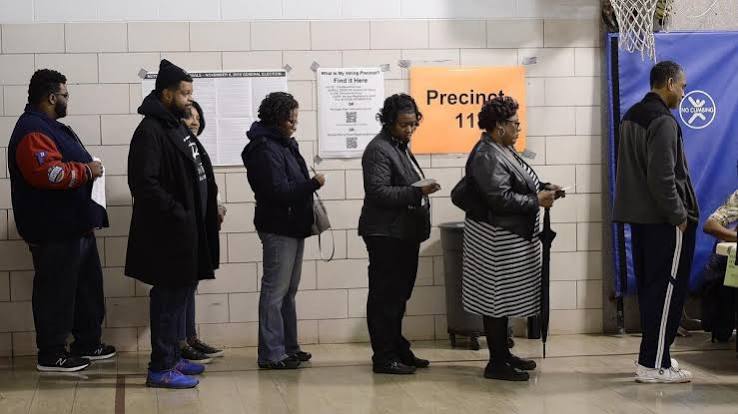
The path to a potential Democratic “blue wave” in the 2026 midterm elections runs directly through America’s Black communities, political analysts say, with Georgia emerging as a critical battleground for control of Congress and state government.
As both parties brace for a high-stakes battle ahead of the November 3, 2026, election, data indicates that Democratic momentum hinges heavily on the mobilization and turnout of its most loyal voting bloc–Black voters.
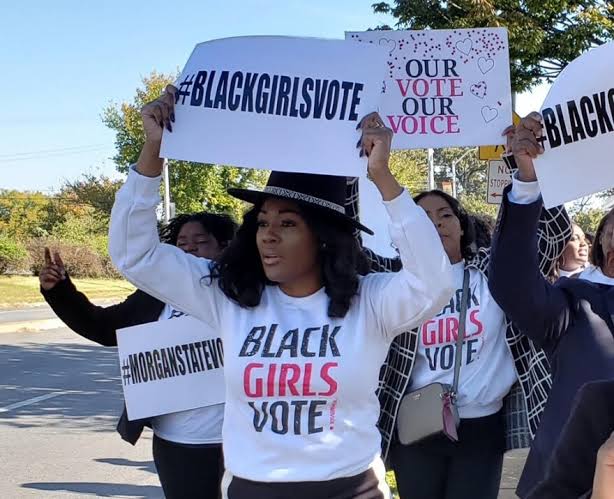
Historically, surges in Black voter turnout—particularly among Black women—have been the deciding factor in major Democratic victories, such as the sweeping congressional flips seen in the 2018 midterm cycle. Democrats are hoping to not only match prior election cycles where Black voters overwhelmingly turn out, but exceed them in 2026.
A Surge Driven by Redrawn Maps and Ballot Rights
According to reports from political correspondent Stephen Fowler for NPR, a distinct surge in Democratic voter enthusiasm is currently being led by Black voters across the South, notably in states like Georgia, South Carolina, and Mississippi. This wave of engagement is largely driven by fierce opposition to President Trump’s legislative platform and widespread backlash over recent judicial decisions.
Specifically, the Supreme Court’s ruling in Louisiana v. Callais effectively weakened key tenets of the 1965 Voting Rights Act, which was enacted to sustain and protect Black voting rights. While the full legislative fallout of that decision may not trigger immediate map changes in Georgia until after November, voting rights organizations like Black Voters Matter note that the ruling has heavily energized the local electorate.
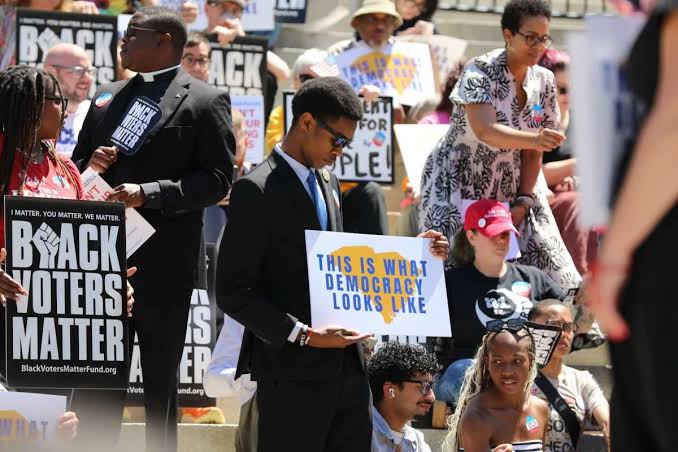
And rather than dampening enthusiasm, the threat of future redistricting efforts by the state’s Republican-controlled General Assembly has turbocharged motivation among communities determined to leverage their power at the ballot box.
This year’s primary races saw Democrats and Black voters turn out in record numbers and Democrats hope they have the formula to keep that momentum going through Early Voting and on to Election Day.
Reversing Multi-Cycle Gains With Black Male Voters
Following historic inroads by Donald Trump and the Republican Party during the 2024 presidential election—where Trump secured more than 20% of the Black male vote nationally—Georgia Democrats are executing an aggressive ground game to reverse that momentum.
The stakes could not be higher: control of the U.S. Senate and the future of Georgia’s leadership hinge directly on whether Democrats can solidify part of their most critical base.
Historically, political analysts opined that to win statewide, Democrats need to net at least 90 percent of the Black vote in Georgia. Aware that Black women will resoundingly vote Democrat statewide, Georgia Republicans are seeking to appeal to Black male voters, hoping to pull away enough Black men, which they did in 2024 and 2022, to keep Democrats under that 90 percent threshold.
But 2026 is a wild card year. The primary issue that helped the GOP attract record-numbers of Black male voters in Georgia and nationally is the same issue that Trump and Republicans are now polling poorly on: The economy.
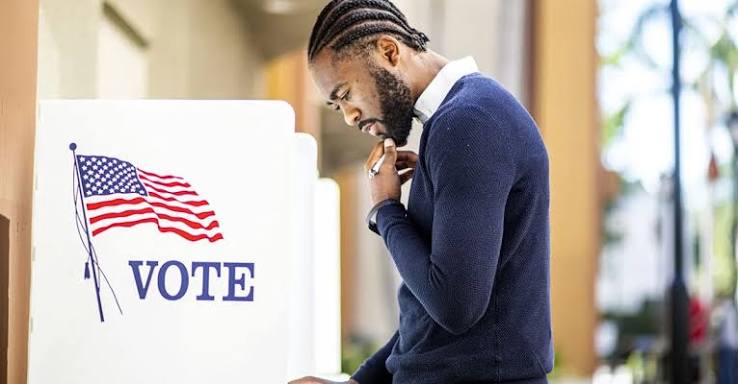
In the U.S., Black men are most likely to absorb the heaviest impact when the economy sputters and such is the case today as economic factors are causing headaches and financial strain on Black men across the country and in Georgia, potentially sending many of them back to the Democratic voting fold.
Key Georgia Races Take Center Stage
The true test of mobilization will play out in Georgia’s high-profile general election matchups. Black voters are expected to help decide the fate of two marquee races on the ballot:
The Gubernatorial Race: Democratic nominee and former Atlanta Mayor Keisha Lance Bottoms is locked in a tight statistical dead heat against Republican Rick Jackson. A recent late-September poll by InsiderAdvantage showed Jackson narrowly leading Bottoms 48% to 46%–a finding within the poll’s margin of error, indicating the race is essentially tied.


The U.S. Senate Seat: Democratic incumbent Senator Jon Ossoff is defending his seat in a closely watched national contest against Republican challenger Mike Collins. Ossoff’s campaign has deployed extensive grassroots coordination to maintain strong ties with Black communities statewide.
Recent polls have shown Ossoff maintaining a steady, consistent lead against Collins from the mid-single digits to 10 points and slightly more.
The 2026 cycle in Georgia also marks a historic first: The most significant display of Black political power and leadership in state history as the Democratic slate features an unprecedented number of Black, mostly women candidates on the statewide ballot.
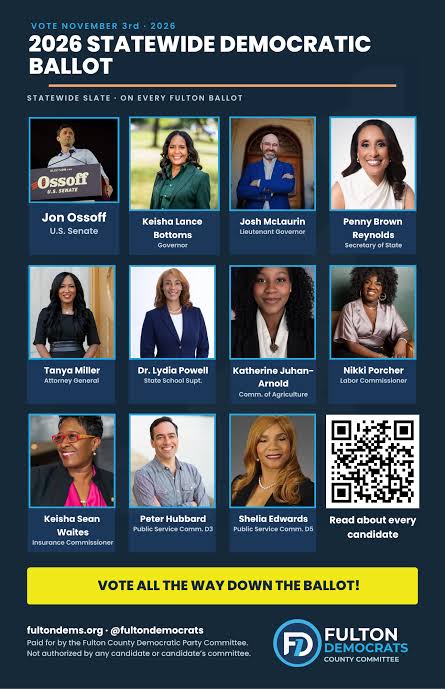
Georgia voting rights organizations note that the threat of future redistricting has heavily energized the Black electorate in the state, along with opposition to President Trump’s policies, the economy, and Republicans’ efforts to disenfranchise Black voters.
Democrats Expand Battleground Map With Black Vote Critical In Many States
As fuel prices remain prohibitively high along with the ever-rising costs of groceries and rent, Democrats are enjoying a consistent lead on Republicans in generic polling since most voters attribute the bleak current economic picture to Trump and his decision to go to war against Iran.
The underlying data also indicates that a growing majority of U.S. voters believe Democrats are better equipped than Republicans when it comes to managing the country’s economy.
Once safely-red seats are suddenly growing competitive as voters tire of the nearly 8 month-long war in Iran and high prices–potentially opening the door for Democrats to win not only the U.S. House but the Senate as well.
Black voter turnout is expected to play a significant role in elections in Georgia and nationwide, but will also play a particularly crucial role in congressional and gubernatorial matchups in states like North Carolina, Wisconsin, Ohio, Texas, Nevada, Florida and also Alabama and Louisiana.
Voting advocates meanwhile are encouraging Black voters nationwide to get registered and get to the polls.
“If you don’t feel like voting”, said Marvin Williams, a Democratic party activist in Atlanta, “Just think about Trump’s total destruction of the economy. Think about how him and Republicans tried to take our health care and our votes and change the maps”, he said. “And then get out there and you vote”.
Check This Out...
-
More Than 520,000 Ballots Have Been Cast In Georgia Since Early In-Person Voting Began On Tuesday
-
20 Days Away: Democratic U.S. Senator Jon Ossoff, Republican Mike Collins Debate: Epstein Files, Tariffs, And Allegations Of Antisemitism Figure Prominently In Second And Final Debate Between The Two Candidates
-
Early In-Person Voting Begins Today October 13
-
Democratic Michigan Senate Candidate Dr. El-Sayed Addresses Past Obama Criticism, Jewish Safety In Meet The Press Interview
-
Ugly Loss: Georgia Bulldogs Players Told To Put Helmets On As They Exited The Field Due To Alabama Fans Throwing Water Bottles, Cans At Team: Fan Appears To Shove Bulldogs Player’s Head: Georgia Fans React On Social Media As SEC Expected To Weigh In