

Vehicle repossessions across Georgia have steadily increased over the last several years, marking some of the highest default rates seen since the aftermath of the 2008 financial crisis.
And the numbers are likely to rise as current economic challenges, including rising prices for staples like food and fuel, take a deeper toll on consumer wallets.
Data tracked by automotive industry analysts, including Cox Automotive, reveals that local auto loan defaults and vehicle seizures project an often under-reported national crisis. Across the United States, annual repossessions have climbed past 2.2 million vehicles with projections pacing toward 3 million repossessions annually.
A Perfect Storm: Food, Fuel, and Financed Cars
Industry experts point to a compounding mix of high interest rates, inflated vehicle prices, and an escalating broader cost-of-living crisis as the primary drivers behind the surge. In Georgia, families are facing severe unpredictable price shocks on basic goods and services, leaving no room in household budgets for auto notes.

Subprime and nonprime borrowers in Georgia are facing auto interest rates climbing into the high double digits. These aggressive rates, paired with inflated vehicle valuations, have pushed average monthly payments to historic highs—averaging $700 to $900 for new vehicles and $500 to $700 for used models.
Compounding the auto crisis is the crushing weight of daily survival. Consumer Price Index data shows grocery bills are up 2.7% over the past year, forcing difficult tradeoffs at the grocery store.
Meanwhile, energy costs have heavily penalized commuter budgets.
While Georgia gas prices average $3.85 to $4.04 a gallon, diesel fuel has experienced historic spikes, hovering between $5.79 and $6.32 a gallon.
The strain on transportation and shipping costs has been so severe that Governor Brian Kemp declared a state of emergency, temporarily suspending the state’s motor fuel tax to shave roughly 33 cents off gas and 37 cents off diesel to offer temporary relief to struggling families.
Despite these measures, economists warn that lower- and middle-income consumers are disproportionately squeezed out of their vehicles.
Swept Away Without Warning
Georgia’s uniquely bank-friendly lending laws have intensified the speed and frequency of these seizures. Under Georgia Statute (O.C.G.A. § 11-9-609), lenders can utilize “self-help” repossession. This legally permits a creditor to seize a vehicle at any time without prior notice the moment a borrower defaults on a single payment, provided the repossession agent does not “breach the peace.”
Once a vehicle is taken, Georgia law grants borrowers a slim 10-day right to redeem the property. To recover the vehicle, the owner must pay off the entire outstanding loan balance, alongside accrued towing and daily storage fees.
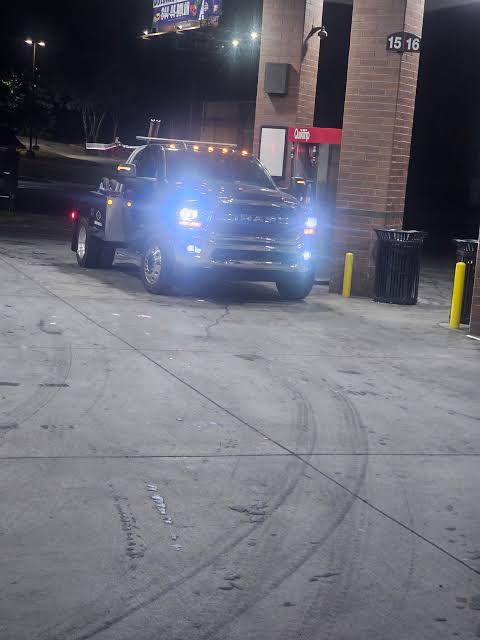
Because used car values are softening nationwide, vehicles sold at auction rarely cover the underlying debt. Under state law, lenders are actively pursuing borrowers for the remaining deficiency balance, leaving many Georgians legally liable for thousands of dollars on a car they no longer own.
Experts Urge Proactive Measures
Legal advisors and consumer advocacy groups are urging high-risk borrowers not to wait until a tow truck arrives. Experts recommend contacting lenders immediately to negotiate hardship extensions or payment deferrals before active repossession workflows begin.
A loan deferment usually only requires a request by the delinquent customer to the bank or finance company and an agreement to pay the loan on a mutually agreed-upon date.
Deferments are typically granted for 1-2 months and the amount deferred is pushed to the back of the loan period.
For those deep in distress, refinancing through a local credit union or exploring federal bankruptcy protections remain viable options. Filing for bankruptcy triggers an automatic stay under federal law, which instantly halts all active creditor collections and repossession efforts.
What to Do If You Are At Risk
If you are struggling to make your auto loan payments, taking swift action can help protect your credit score and keep your vehicle.

| Strategy | How It Works | Key Consideration |
|---|---|---|
| Loan Deferment | Lenders let you skip 1–2 payments and move them to the end of the loan. | Interest still accrues during the skipped months. |
| Refinancing | Replacing your current loan with a new one featuring a lower payment or longer term. | Harder to qualify for if your credit score has already dropped. |
| Voluntary Surrender | You hand the keys back to the lender yourself to avoid repo fees. | You are still responsible for any remaining loan balance. |
Breach Of The Peace
Under Georgia law, the phrase “breach the peace” is the most critical legal boundary protecting a vehicle owner during a repossession. While lenders have a right to seize a vehicle without a court order under O.C.G.A. § 11-9-609, the repossession agent cannot use force, threats, or enter restricted areas to do so.
If a repo agent breaches the peace, the repossession becomes illegal, and the borrower may have grounds to sue the lender for damages.
What Constitutes a “Breach of the Peace”?
Georgia courts look closely at the behavior of the repossession agent and the environment where the seizure takes place. A breach of the peace generally occurs if the agent does any of the following:
Enters an Enclosed Area: A repo agent can legally tow a car sitting in a public street, a commercial parking lot, or an open driveway. However, they cannot open a closed gate, cut a lock, or enter a closed garage to get to the vehicle.
Proceeds Over Direct Objection: If the vehicle owner is physically present and explicitly says, “No, you cannot take my car,” or orders the agent to leave their property, the agent is legally required to stop and leave. If they proceed anyway, it is a breach of the peace.
Uses Force or Threats: Any physical contact, verbal threats, or intimidation tactics used against the vehicle owner automatically violates the law.
Brings Police to Threaten You: A repo agent cannot bring a police officer along to intimidate a borrower into giving up the keys. If law enforcement is present, they are only allowed to keep the peace, not actively assist the repo agent.
Tricks or Deceives the Owner: Tricking an owner into bringing a vehicle to a dealership for “repairs” or “recalls” just to seize it can be deemed an unlawful breach of peace through deception.
Check This Out...
-
Wholesale Inflation Prices Shot Up In September: Soaring Gas Prices Lead Business Costs
-
Inflation Rate Accelerates to 3.7%: Energy Prices Lead Jump; Consumers Feel Price Surge With Midterm Election Days Away
-
Not All Vehicle Repossessions Are Legal: What Constitutes An Unlawful Repossession, And What To Do If You Believe It Has Happened To You
-
Labor Market Stalls As U.S. Economy Adds Just 29,000 Jobs in September–Much Lower Than Projected; Unemployment Rises to 4.2%: Voters Head To Polls In Days
-
Could A Legislative HOA Bill Make California Even More Expensive To Live? Real Estate Groups And Consumer Advocates Claim Bill Designed To Lower Housing Costs Will Instead Raise Them