
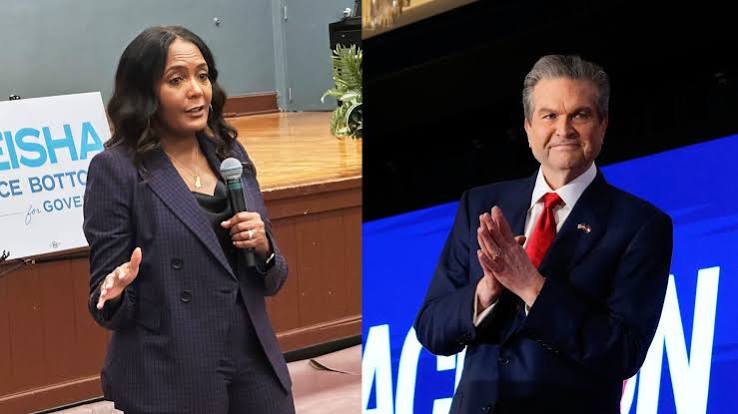
Voter turnout is shaping up to be the ultimate deciding factor in Georgia’s razor-thin gubernatorial race, as new polling confirms a statistical deadlock between Republican Rick Jackson and Democrat Keisha Lance Bottoms.
With early voting just weeks away, political strategists from both parties say the election will not be won by just converting undecided voters, but also by whichever campaign can successfully mobilize its core base to the polls.
A Statistical Dead Heat
The data reveals a complex landscape for both parties. While Democratic incumbent U.S. Sen. Jon Ossoff holds a more comfortable lead in his concurrent re-election bid, with some polls indicating a 10 point or better lead for the senator, Bottoms is locked in a dogfight for the state’s top executive seat. Analysts attribute this gap to a significant number of independent ticket-splitters who are backing Ossoff for Senate but tilting toward Jackson for governor.
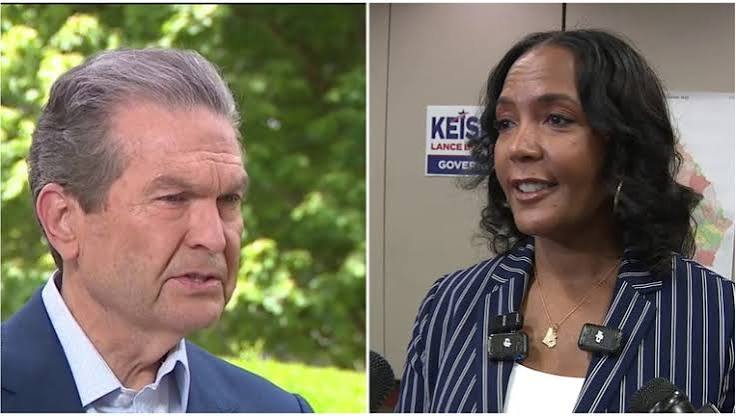
Recent polling underscores just how tight the race has become. A recent poll from the right-leaning Rasmussen Reports released on September 21, 2026, underscores the razor-thin margins of the race, showing Jackson at 48% and Bottoms at 45% among 1,019 likely voters. Because the 3-point gap falls within the survey’s margin of error, the contest is effectively a toss-up, with 7% of the electorate still undecided.
Navigating a Massive Spending Gap
The strategic emphasis on grassroots turnout is also a necessity driven by a historic financial disparity on the airwaves. According to an AdImpact analysis reported by the Atlanta Journal-Constitution on September 17, 2026, pro-Jackson groups have unleashed an unprecedented advertising blitz, spending or reserving nearly $76 million in airtime.
In contrast, Bottoms and her allied political action committees have spent just $8 million. Unable to match Jackson’s multi-million dollar media campaign dollar-for-dollar, the Democratic strategy is heavily dependent on a robust, localized field operation to drive early voting and Election Day turnout.
The Negative Ad Element
Advertising always plays a role in political campaigns and this cycle, more than $100 million is expected to be spent by the Jackson and Lance-Bottoms campaigns combined.
But Jackson’s enormous spending advantage has been clearly demonstrated as his campaign has unleashed a series of negative ads against former Atlanta mayor Lance-Bottoms. Specifically, Jackson has attacked her over her administration’s handling of the 2020 protests which came after George Floyd in Minnesota and Rayshard Brooks in Atlanta were killed by law enforcement officers.
Jackson also launched an ad featuring a group of people who accused Lance-Bottoms of being an ineffective leader during her term, although the ad was later revealed to have featured mostly Republican voters and party activists–a fact not disclosed in the advertisement itself.
Lance-Bottoms on the other hand, vastly outspent by an opponent who is working hard to define her as a one-term, failed mayor, has until recently largely eschewed negative campaign ads in favor of promoting herself as a capable, compassionate, and experienced leader.
In a recent ad, however, she herself refers to Jackson as “Slick Rick” and calls him out for profiting off healthcare–even as the Trump administration makes it harder for poor Americans to access it.
She has also sought to highlight Jackson’s promise to become “Trump’s favorite governor” if elected–though she has lately leaned less frequently into that line of attack as she seeks to woo independent and disenchanted Republicans to her campaign.
But Trump still looms large in the background of the campaign as voters nationwide and in Georgia express disapproval of the president’s handling of the economy and the war in Iran, which has triggered higher consumer prices. A Wall Street Journal poll released over the weekend shows Trump’s approval sits at 37%.
Republicans up and down the ballot fear Trump’s low favorable numbers will become a drag on their candidates campaigns–something that Democrats are counting on.
The Battle for Key Demographics
Campaign strategists are zeroing in on specific segments of the electorate expected to swing the final tally:
The Over-50 Electorate: Older voters are projected to play an outsized role in the final outcome. According to recent data from Scripps News, voters over the age of 50 are displaying exceptionally high enthusiasm metrics, making them the most reliable—and highly targeted—demographic for both campaigns.
The Primary Turnout Paradox: Georgia Democrats saw record-breaking turnout during the May primaries, signaling strong initial engagement. However, political scientists caution that high spring turnout does not automatically guarantee general election victory without sustained, aggressive mobilization through November.
Suburban Independents: The moderate suburbs surrounding metro Atlanta remain the primary battleground. Jackson has focused heavily on economic stability and healthcare, while Bottoms has countered with a heavy emphasis on urban infrastructure, education, healthcare availability and voting access.
Black Voters: Republicans have made inroads with Black voters, incouding here in Georgia where Trump reportedly took 12 percent of the Black vote in 2024, two years after Governor Brian Kemp notched the same percentage in his race for reelection against Democrat and former State House Leadxer Stacey Abrams.
Keisha Lance-Bottoms hopes to reverse that trend, as political analysts point out that Democrats statewide need overwhelming support from Black voters to win–typically 90 percent or better.
In order to do so, Lance-Bottoms is not only running a broad grassroots effort but is commissioning influencers and local elected leaders to help inspire turnout among Black voters.
Latino Voters: A growing voting demographic, the group represents around 4 percent of Georgia’s electorate today.
While Democrats traditionally hold the edge with Latino groups overall, Republicans in Georgia made huge inroads with this growing segment of the public in 2024 but Trump’s heavy-handed immigration tactics and what many see as federal immigration officials’ fixation with Latino residents may reverse the trend in the state in 2026–a potentially critical factor in a close statewide race.
Check This Out...
-
More Than 520,000 Ballots Have Been Cast In Georgia Since Early In-Person Voting Began On Tuesday
-
20 Days Away: Democratic U.S. Senator Jon Ossoff, Republican Mike Collins Debate: Epstein Files, Tariffs, And Allegations Of Antisemitism Figure Prominently In Second And Final Debate Between The Two Candidates
-
Early In-Person Voting Begins Today October 13
-
Democratic Michigan Senate Candidate Dr. El-Sayed Addresses Past Obama Criticism, Jewish Safety In Meet The Press Interview
-
In November, Democrats Could Take A Majority Of Governorships For The First Time Since 2010