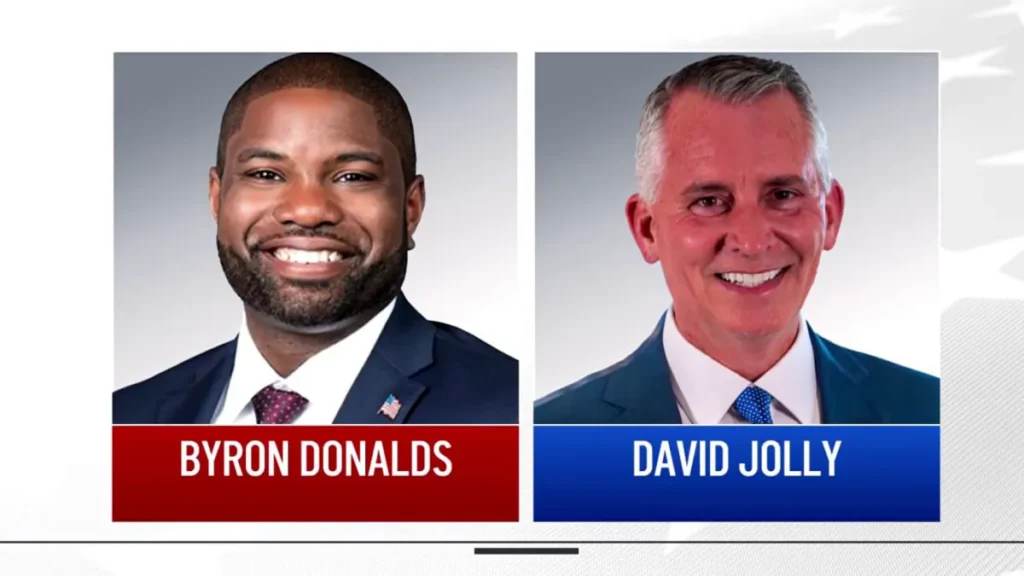
Florida voters will head to the polls this November without seeing the two major gubernatorial candidates share a stage, marking the first time in over a half-century that the state’s highest-profile race will proceed without a televised debate.
On September 20, 2026, Democratic nominee David Jolly officially declined to debate Republican nominee Byron Donalds, bringing a sudden end to weeks of public posturing and behind-the-scenes negotiations. The breakdown leaves the electorate without an unscripted, head-to-head forum between the two men vying to succeed the term-limited governor.
The last time Florida did not have a televised gubernatorial debate was in 1974, when Democratic incumbent Governor Reubin Askew faced Republican state lawmaker Jerry Thomas. During that cycle, no major televised general election debate took place between the leading gubernatorial candidates.
The Candidates–And Their Campaigns–Don’t Come To Terms
In a sharply worded statement, the Jolly campaign accused Donalds of operating in “bad faith” and attempting to unilaterally control the parameters of the events. Jolly’s team argued that Donalds’ reliance on “repeated lies” and highly negative campaign advertisements would make a constructive debate impossible.
Additionally, Democrats criticized Donalds for using a public press release to accept three debate invitations—including forums hosted by Florida A&M University and Telemundo—rather than negotiating formats and voter-interaction rules directly with the Jolly campaign.
The Donalds campaign immediately fired back, framing the refusal as a tactical retreat. Representatives for Donalds accused Jolly of “dodging” the events because he is afraid to defend his policy positions in front of a statewide audience. Donalds’ team maintained that they had readily agreed to established, independent invitations and argued that Jolly is actively hiding from voters.
However, Jolly’s campaign has pointed out that Donalds declined to debate his primary opponents during the Republican primary.
Jolly Wanted A Live Audience–Donalds Reportedly Did Not
According to reports, Jolly specifically wanted a town hall format that included a live audience where Florida voters could directly ask the candidates questions. He had initially agreed to a bipartisan forum with this style of public interaction, also according to reports.
Donalds reportedly backed out of the initial town hall format. When his campaign unilaterally accepted three separate debate invitations on September 18, 2026, none of those proposed debates reportedly included a live audience or allowed questions from voters.
Political analysts view the cancellation as part of a deeper, systemic shift in modern campaign strategy. The collapse of the gubernatorial debates mirrors a broader trend across the state this cycle; currently, no debates are scheduled for any statewide Florida races before the November 3, 2026 election.
Notably, incumbent U.S. Senator Ashley Moody has also declined to debate her Democratic challenger, State Representative Angie Nixon.
The decision by candidates in the two most high-profile races on the ballot this cycle represents a departure from the traditional, unscripted joint appearances that have defined Florida politics for generations.
A Race That Features A Former Republican-Now-Democrat Taking On One Of Trump’s Most Vocal Allies In Office
Many voters were looking forward to seeing the historic clash on their TVs or other devices: David Jolly is a former Republican congressman from the St. Petersburg and Pinellas county portion of the state. Jolly left the Republican Party in September 2018 following his vocal opposition to President Donald Trump.
He initially registered as an Independent (No Party Affiliation) before officially registering as a Democrat in April 2025 ahead of his gubernatorial run.
Byron Donalds is currently a Republican U.S. Representative serving a southwest Florida district that includes Naples and Fort Myers.
A close Trump ally, Donalds is seeking to become the state’s first Black governor.
Democrats Seek Win After Years Of Losses, As State Broadly Shifted To The Right
Democrats have failed to win statewide since former President Barack Obama carried the state in both 2008 and 2012. Since then however, only one Democrat has won statewide: Former Agriculture Commissioner and current Florida Democratic Party chair Nikki Fried, who won in 2019 and left office in 2023.
Notably, 2018 Democratic nominee Andrew Gillum, who was the first African-American to be nominated by a major party for the state’s governorship, lost by a fraction of votes to current Republican governor Ron Desantis. Four years later, Desantis defeated former governor Charlie Crist by double digits–cementing Florida’s change in status from electoral battleground to deep red state.
Jolly hopes to change that, and is counting on not only heavy Democratic voter turnout but votes from Independents and Republicans who have become disaffected with President Trump.
Though he seems to largely have consolidated support from within a Democratic party that desperately wants to finally win again statewide, Jolly has had to convince members of his new party that he deserves their trust–and their votes.
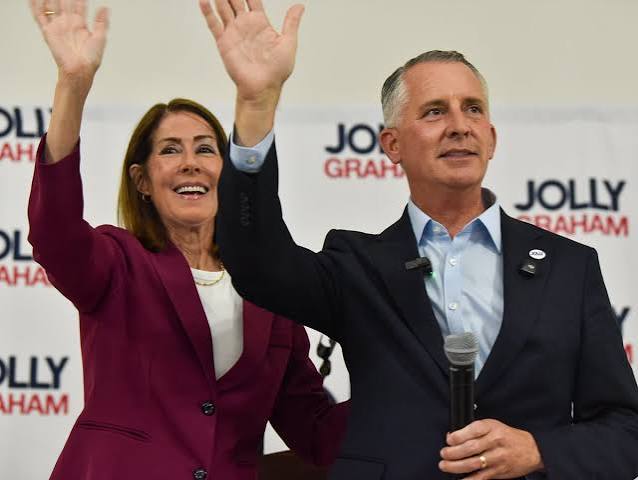
He chose former Congresswoman Gwen Graham as his running mate, a familiar name in Florida politics who finished as the runner-up behind Gillum in the 2018 Democratic primary. Graham is also the daughter of the late former governor and U.S. Senator Bob Graham.
Race Goes Largely Unmentioned–But Could It Be A Deciding Factor?
Donalds has represented his congressional district since winning in 2020 following two terms in the state legislature and quickly emerged as a nationally recognized and vocal supporter of President Trump. He is also one of the president’s most high-profile Black supporters.
However, in the August Republican gubernatorial primary, political analysts noted that even as Donalds easily snagged the nomination, he lost 16 counties in the heavily-conservative northwestern portion of the state that is commonly referred to as, “The Panhandle”.
That outcome has sparked speculation among many political analysts who now wonder if that result occurred due to a number of hard-right, White Republicans in the area being reluctant to vote for a Black man.
And some analysts wonder if that is the case, could that again become a potentially complicating factor for Donalds’ chances in November, while potentially providing an opening for Jolly, who is White and a former Republican.
The 2026 Republican gubernatorial ticket is also noteworthy from a racial standpoint since it is the first time in Florida history that a White person will not be on the ticket: Donalds selected Bryan Avila, a former state senator who resigned to run alongside Donalds as lieutenant governor. Avila is a Hialeah native who was born to parents who emigrated from Cuba.
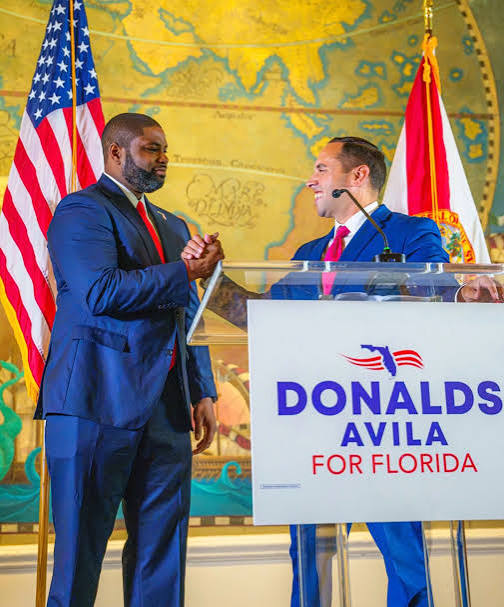
Some political analysts in the state are waiting to see if some of the state’s Republican voters will be impacted by not seeing a White person on the ticket while on the other hand, both candidates on the Democratic ticket are White.
Meanwhile, other analysts wonder if instead Donalds’ Panhandle struggles came as a result of his notoriously close ties to Trump, whose polling numbers are falling nationwide.
Notably, Donalds made headlines in recent days when he appeared to have scrubbed his official website of its extensive mentioning of Trump, a president whose approval now sits in the low 30s nationally.
However, in a statement, a Donalds campaign sourse told The Hill that Trump’s name is “all over the website” and added that the campaign was “grateful to have” the increasingly unpopular president’s endorsement.
The political news site noted, however, that Trump’s name is no longer at the top of the Donalds campaign website, where a banner once bragged that Donalds is “Trump Endorsed”, while asking site visitors to chip in a few bucks.
On the other side of the ticket, Jolly has worked to increase his outreach to Black voters as some members of the state’s Black political class have expressed skepticism with his campaign and its decision to not select a Black or Latino running mate for Jolly.
Longtime Democratic Gainesville-area elected county commissioner, Cynthia Chestnut, made headlines in the race when she publicly endorsed Donalds after saying she desired to see a Black man serve as governor in her lifetime.
However, other elected officials in her area–which is strongly Democratic–have endorsed Jolly.
Polling shows a close race: According to research released last week by polling company St. Pete Polls, which was commissioned by Florida Politics, Donalds has 44% support and Jolly has 43% among likely General Election voters.
Another 4% picked someone else and 9% are undecided with just a few weeks to go until Election Day.
Check This Out...
-
More Than 520,000 Ballots Have Been Cast In Georgia Since Early In-Person Voting Began On Tuesday
-
20 Days Away: Democratic U.S. Senator Jon Ossoff, Republican Mike Collins Debate: Epstein Files, Tariffs, And Allegations Of Antisemitism Figure Prominently In Second And Final Debate Between The Two Candidates
-
Early In-Person Voting Begins Today October 13
-
Democratic Michigan Senate Candidate Dr. El-Sayed Addresses Past Obama Criticism, Jewish Safety In Meet The Press Interview
-
In November, Democrats Could Take A Majority Of Governorships For The First Time Since 2010