

The enactment of the federal 21st Century ROAD to Housing Act could dramatically shift the real estate market in East Point by blocking corporate single-family home buyers and unlocking major funding for affordable housing development. The historic bipartisan legislation, authored in part by Georgia Senator Raphael Warnock, recently became law after automatically executing without the President’s signature: Trump previously signaled he would not sign the popular housing bill unless its passage was tied to his controversial SAVE America voting bill.
The housing bill passed with a veto-proof majority.
The law targets the nationwide housing supply crisis by streamlining local development, cutting regulatory red tape, and capping institutional corporate investment.
For the City of East Point, an active metro Atlanta suburb already pursuing its own community growth strategies, this federal shift could reshape neighborhoods, protect local buyers, and accelerate major local redevelopment projects.
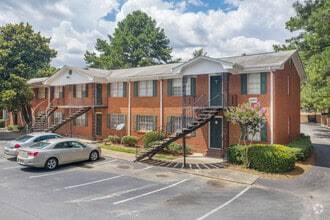
Leveling the Playing Field for Local Buyers
Metro Atlanta has long served as a primary target for institutional investors. According to housing data, large corporations and private equity firms own more than one in four single-family rental homes in the Atlanta area. This aggressive corporate buying power has historically pushed housing prices up and boxed out first-time local buyers.
The new law introduces pivotal changes for East Point families looking to buy a home:
- Corporate Caps: It legally blocks massive institutional investors from purchasing further single-family homes.
- Exemptions for Supply: It notably carves out an exception for build-to-rent developers, continuing to draw private building capital into the region.
- Tenant Protections: The law establishes a dedicated renter outreach resource through the Department of Housing and Urban Development (HUD) to support tenants renting from major corporations.
By limiting corporate bidding wars, local residents stand a much better chance of securing homeownership.
Accelerating Local Affordable Housing
Several councilmembers in East Point’s local government are already pushing for inclusive growth. The city currently utilizes Low-Income Housing Tax Credit (LIHTC) assistance to support major mix-income initiatives.
The 21st Century ROAD to Housing Act directly complements these local efforts by injecting new financial mechanisms:
| Key Provision | How it Works | Potential East Point Impact |
|---|---|---|
| Federal Innovation Fund | Provides a $200 million annual fund to reward proactive cities. | East Point can apply for federal grants to offset development costs for infrastructure. |
| Zoning Modernization & Pre-Approved Templates | Streamlines environmental reviews and cuts administrative red tape. | Accelerates the city’s current Zoning Ordinance Rewrite designed to ease multi-family permitting. |
| Vacant Structural Conversion Pilots | Funds programs transforming empty commercial assets into residential housing. | Offers a unique opportunity to redevelop aging retail or vacant commercial properties near historic corridors. |
Syncing with East Point’s Community Vision
The arrival of the new federal housing law perfectly aligns with internal community demands. The city’s recent Housing Assessment Report highlighted that local residents strongly prioritize protecting property ownership from out-of-state organizations and focusing on affordable options for fixed-income seniors.
With the federal government stepping in to penalize mass-scale single-family acquisitions, ongoing city initiatives like the 60-unit affordable development at The 55 and the multi-phase Wagon Works complex can advance with less localized market distortion from corporate speculators.
While it will take time for federal regulations to completely materialize at the local building department level, the 21st Century ROAD to Housing Act offers East Point an influx of tools, cash, and protections. It marks a significant turning point in the city’s battle to keep its neighborhood character intact while expanding access to affordable housing.
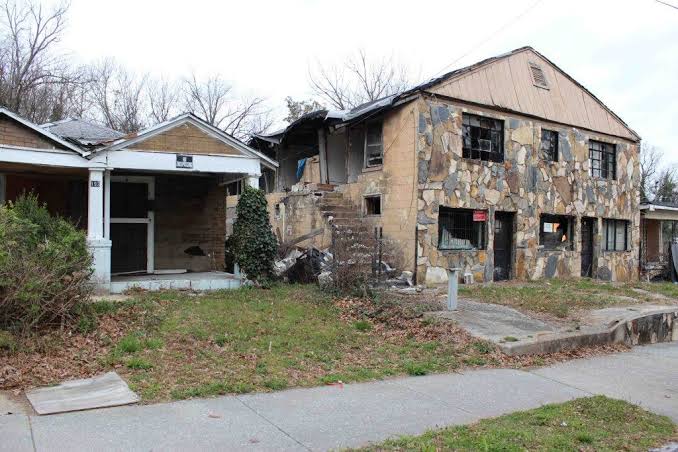
U.S. Senator Raphael Warnock Steps In, Leads Congressional Push
Authored by Georgia Senator Reverend Raphael Warnock, his corporate housing provision represents a sweeping shift in federal real estate oversight. It was enacted as part of the broader 21st Century ROAD to Housing Act, widely recognized by lawmakers as the most significant federal housing reform package in over three decades.
Curbing Corporate Wall Street Buyers
The core of the Warnock provision directly targets institutional real estate practices that critics argue have hollowed out local real estate options for families:
- The Ownership Cap: The law prohibits large institutional investors and private equity firms that already own 350 or more single-family homes from purchasing any additional single-family properties.
- Severe Financial Penalties: Corporations violating the purchasing ban face a mandatory fine equal to $1 million or three times the purchase price of the property, whichever amount is greater.
- Reinvesting Fines: All cash penalties collected from corporate violators are legally earmarked to fund new housing construction and financial assistance programs for first-time homebuyers.
- Built-to-Rent Limitations: Institutional investors who build new single-family homes explicitly for the rental market are now required to sell them after seven years, granting the current tenants the right of first refusal to purchase the property.
Responding to ‘Ground Zero’ of the Housing Crisis
The legislation follows years of mounting public frustration over Wall Street’s aggressive expansion into middle-class neighborhoods. Real estate investment firms have increasingly used automated algorithms and all-cash offers to rapidly snap up affordable, entry-level homes—often outbidding ordinary families and cutting off avenues to generational wealth.
According to data cited by Senator Warnock’s Office, metropolitan Atlanta has served as the “ground zero” for this trend. More than one in four single-family rental homes (exceeding 72,000 properties) in the Atlanta metro area are currently controlled by large corporations. This has severely reduced local inventory, artificially inflated home values, and pushed rental prices out of reach for working-class residents.
Broader Impacts of the ROAD to Housing Act
While the private equity ban has grabbed the national spotlight, the underlying 21st Century ROAD to Housing Act features over 40 provisions aimed at boosting housing supply and lowering costs across the United States:
- Fair Housing Reform: Includes Warnock’s Appraisal Modernization Act, a measure explicitly designed to combat racial bias in home valuations.
- Regulatory Relief: Speeds up federal environmental assessment reviews to accelerate new home developments.
- Zoning Incentives: Establishes competitive federal grant programs to reward local governments that modernize zoning and streamline building permits.
- Rural Housing Support: Refreshes underfunded federal rural housing initiatives and offers forgivable loans for low-income weatherization and home repairs.
On Monday, Senator Warnock and Atlanta Mayor Andre Dickens hosted a press conference in the city’s Adamsville neighborhood to discuss the Act.
See the video below:
Check This Out...
-
Happening Tonight: East Point City Council Meeting
-
City Of East Point To Host Dog Party Sunday, October 25: City Themes Event As “Howl-O-Ween Pawty”
-
75 Year Old East Point Grandmother Who Was Shot While Passing Out Food Tells WSB-TV She Can’t Walk, Was In Rehab For Months; Yearns To Pass Out Food Again: “I Miss It Every Time I’m Supposed To Go Out”
-
East Point Water Department Wins Georgia Water Association Award (GAWP) For Third Consecutive Year
-
Early In-Person Voting Begins Today October 13