

Following the passing of global icon Dolly Parton on Tuesday, August 25, 2026, at age 80, the entertainment world is looking back at her legendary career, highlighting an extraordinary chapter in music history: her deeply rooted bond with the late Whitney Houston.
The connection between the two powerhouse vocalists remains anchored by one of the most successful songs ever recorded, “I Will Always Love You,” a track that transformed both women’s lives and reshaped modern popular culture.
The Blueprint and Saying No to Elvis
Parton originally wrote and recorded the heartfelt ballad in 1973 as an emotional farewell to her longtime television partner and mentor, Porter Wagoner. The song climbed to the top of the country charts twice—first upon its initial release in 1974, and again in 1982 when Parton re-recorded it for The Best Little Whorehouse in Texas.
The track almost took a different historical path when Elvis Presley sought to record a cover. However, his manager, Colonel Tom Parker, insisted that Parton sign over 50% of the song’s publishing rights. In a move that became a masterclass in music business strategy, Parton refused to yield her ownership.
“I wanted to hear Elvis sing it, and it broke my heart,” Parton later recalled of the painful but crucial decision. By maintaining full rights, she paved the way for a historic collaboration of talents a decade later.
The Reimagining for The Bodyguard
In 1992, Whitney Houston took the track and engineered a soaring, R&B-infused pop power ballad for the soundtrack of her cinematic debut, The Bodyguard. Houston’s rendition exploded globally, spending a historic 14 weeks at No. 1 on the Billboard Hot 100. The soundtrack went on to sell over 45 million copies worldwide, securing its place as the top-selling film soundtrack of all time.
Parton often shared the story of the first time she heard Houston’s version while driving her car. The overwhelming force of Houston’s acapella intro and subsequent vocal performance forced Parton to pull over to the side of the road to process the sheer brilliance of the arrangement.
“When Whitney did ‘I Will Always Love You,’ I mean look what a grand song she made out of that simple, heartfelt song,” Parton remarked in a retrospective interview. “Whitney is the one who took it worldwide and really made it a household song.”
The House That Whitney Built
The commercial success of Houston’s cover generated over $10 million in royalties for Parton during the 1990s alone. Rather than simply absorbing the financial windfall, Parton directed a significant portion of those funds back into the community.
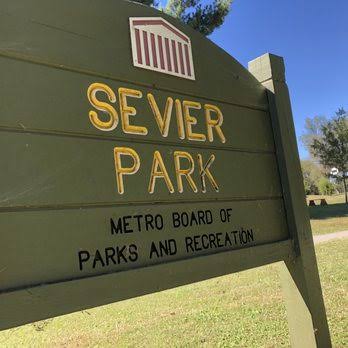
Parton purchased a commercial property complex in Sevier Park, a predominantly Black neighborhood in Nashville, explicitly choosing the location to honor Houston’s monumental contribution. To her close associates and the local community, Parton affectionately referred to the development as “the house that Whitney built.”
The public sisterhood between the two reached its peak at the 1994 Grammy Awards, where Parton personally walked onto the stage to present Houston with the Grammy for Best Pop Vocal Performance, Female.
Houston, who passed away in 2012, highly respected Parton’s artistry in return. “I was so concerned when I sang her song how she’d feel about it,” Houston said in a 1993 interview. “When she said she was floored, that meant so much to me.”
As millions of fans stream Parton’s catalog this week, the legacy of “I Will Always Love You” stands tall as a testament to two distinct and dynamic artists who turned a simple farewell poem into an eternal monument of American music.
Check This Out...
-
90s-2000s R&B Fans Are In For A Treat: A New Verzuz Battle Featuring Carl Thomas Vs. Case: Thursday, October 22 At 9:00 P.M.
-
The East Point News Rewind: The Dynamic Superiors Made History And Dazzled Audiences In The 1970s With Hit Songs–And A Lead Singer Who Wore Make-Up And Occasionally Performed In Drag
-
The East Point News Offers A New Feature To Readers: The East Point News REWIND. It Offers A Look At Unique Music And Entertainment Figures Who Quietly Impacted Both Entertainment And Culture
-
Legendary R&B And Soul Singer Freddie Jackson Dies, Shocking Longtime Fans: Jackson Turned 70 Years Old This Past Friday, Performed In Atlanta Two Weeks Ago
-
Actor And Comedian Reggie McFadden Dies At 57: McFadden Worked On “In Living Color”, “Def Comedy Jam” And More