
In the human world, a bad date might end in an awkward handshake. In the animal kingdom, it often ends in murder.
Biologists call it sexual cannibalism—a phenomenon where one partner (almost always the significantly larger female) kills and consumes the other during or after copulation. While it sounds horrific, scientists note it is a highly successful evolutionary survival strategy. The male’s sacrifice provides immediate, high-protein nourishment that ensures the survival of the female and her future offspring.
Here is a look at six species where the line between romance and survival is deadly thin:
The Praying Mantis: A Brainless Execution

Perhaps the most famous executioner in nature, the female praying mantis is notorious for biting off her partner’s head mid- or post-mating. Surprisingly, the male can continue copulating even after decapitation, as his reproductive movements are controlled by nerves in his abdomen rather than his brain. This brutal ritual occurs in about 25% of all mantis encounters.
The Black Widow Spider: Living Up to Its Name

The black widow spider earned its somber title because females occasionally snare and eat the much smaller males after mating. While research shows this behavior is highly common in enclosed, stressful laboratory settings, field biologists note that males in the wild are occasionally able to escape the web before becoming a post-sex snack.
The Green Anaconda: The Ultimate Breeding Trap

For the green anaconda, mating takes place in a “breeding ball,” where up to a dozen males twist around a single, massive female for weeks to compete for fertilization. Once the ordeal ends, the female—who can outweigh the males by hundreds of pounds—will sometimes strangle and consume one of her suitors. Biologists believe this gives her the massive nutrient boost required to survive her long gestation period.
The Octopus: A Suffocation at Arm’s Length

Sexual cannibalism is a constant threat for several octopus species, including the blue-ringed octopus. Females have been documented wrapping their powerful tentacles around a male’s mantle to suffocate him after mating. To survive the encounter, some male octopuses have adapted to mate from a cautious distance using a specialized arm, while others use paralyzing venom to temporarily incapacitate the female long enough to flee.
The Jumping Spider: A High-Stakes Dance Routine

Male jumping spiders must perform highly elaborate visual dances—waving their legs, vibrating, and jumping—to convince a female that they are a mate rather than food. However, the performance doesn’t guarantee safety. If the female remains hungry after copulation, she will quickly overpower and eat her dancing partner.
The Scorpion: Fueling the Next Generation

Unlike many arachnids, female scorpions give birth to live young rather than laying eggs. Carrying up to 100 live babies on her back requires immense energy. To secure a vital, high-protein meal for the long road ahead, a female scorpion will frequently turn on her mate immediately after their courtship “dance” concludes.
Suicidal Reproduction
Several animal species experience an evolutionary phenomenon known as semelparity (or “suicidal reproduction”), where they exhaust themselves to death during or immediately after a single intense mating season. While this fatal strategy occurs in various insects, spiders, and fish (like salmon), it is exceptionally rare and dramatic in mammals. [
1. The Antechinus (Marsupial Mouse)

The mouse-like Antechinus of Australia participates in what scientists call a two-week “mating frenzy.” Males frantically mate for up to 14 hours at a time with as many females as possible. To sustain this energy, their bodies produce a massive surge of testosterone and stress hormones. This spike completely destroys their immune systems, causing organ failure, internal bleeding, and fur loss. By the end of the breeding season, every single adult male in the population is dead.
2. Pacific Salmon

Pacific salmon swim hundreds of miles upstream against fierce currents to return to the freshwater streams where they were born. During this grueling journey, they stop eating entirely and use every ounce of energy to develop sperm (or eggs) and fight for territory. By the time they spawn, their digestive tracts have disintegrated and their muscles are entirely spent. Within days of mating, the males die of starvation and physical collapse.
3. Labord’s Chameleon

Found in Madagascar, the Labord’s chameleon has one of the shortest lifespans of any four-legged vertebrate. They live for only about 4 to 5 months. After spending their short lives growing rapidly, the males enter a hyper-aggressive breeding season, fighting rival males and mating constantly. The sheer physical stress and high hormone levels exhaust them so completely that the entire adult male population drops dead from exhaustion right after the breeding cycle ends.
4. Northern Quoll

The Northern quoll is a carnivorous Australian marsupial that prioritizes mating over basic survival. During the breeding season, males will travel up to several miles a night looking for mates, completely giving up sleeping and grooming. This “lethal libido” leaves them severely sleep-deprived, emaciated, and covered in parasites. They die of total exhaustion long before the females give birth.
5. Mayflies
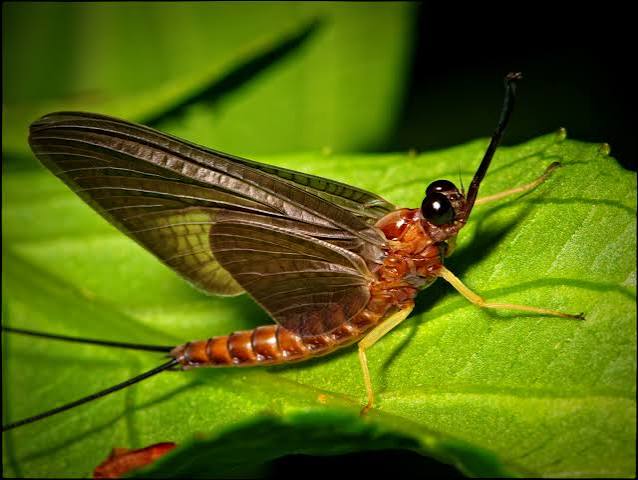
Adult mayflies have a lifespan that lasts anywhere from a few hours to a couple of days. They emerge from the water en masse solely to reproduce. In fact, adult mayflies do not even have mouthparts or a digestive system—they cannot eat. A male fly lives entirely on stored energy from its larval stage, swarming to find a mate in a frantic aerial dance. Once his energy reserves hit zero, he collapses and dies.
Check This Out...
-
Civil Rights Icon And Former Atlanta Mayor And U.S. Ambassador Andrew Young Gets Emotional Over Keisha Lance-Bottoms’ Historic Gubernatorial Victory: Young Helped Lead Fight For Civil Rights, Was The First Black Person To Run For Georgia Governor
-
Highly Anticipated Annual Florida-Georgia Game Kicks Off Today At Mercedes-Benz Stadium At 3:30 P.M.: Bulldogs Enter Game As Win Favorites
-
Former Ward D Councilmember Stephanie Gordon Sponsors Tribute To Former Councilmember, State Representative Joe Heckstall: Bridge Dedicated To The Legacy Of East Point’s First Black Councilmember
-
Ugly Loss: Georgia Bulldogs Players Told To Put Helmets On As They Exited The Field Due To Alabama Fans Throwing Water Bottles, Cans At Team: Fan Appears To Shove Bulldogs Player’s Head: Georgia Fans React On Social Media As SEC Expected To Weigh In
-
Georgia Bulldogs Win In Regular Season At Alabama For First Time Since 2007, Now 6-0: Late Game No-Call On Assumed Penalty Stirs Controversy: Bulldogs Poised For #1 Ranking With Texas Loss