

This Is Part One Of The East Point News Tri-Cities PLUS Series
Next Week In The Series: South Fulton’s Pivot From Old Unincorporated Warehouse Hub To One Of The Nation’s Most Desirable Destinations For Black Newcomers To The Region
By: Mike Herring/East Point News Editor
It doesn’t have the sheer size of South Fulton and its abundance of massive commercial spaces and large, palatial homes with expansive lawns.
It doesn’t have College Park’s amphitheatre and sports attractions.
And it doesn’t have East Point’s MARTA station and lower priced homes.
But evidently, it doesn’t need any of them.
What Hapeville does have is a thriving social scene, a solid grouping of committed global commercial partners, and a determination to keep improving on a formula that works.
Hapeville is, quite frankly, 2.4 square miles of determination.
To understand the explosive rise of Hapeville, one must look at the intersection of concrete, steel, and aviation fuel. Over the past century, this small municipality has consistently punched above its weight, transforming from a quiet farming community into one of the most economically vital hubs in the Southeast.
The catalyst for Hapeville’s initial boom arrived on two wheels and four fenders. In 1917, Central Avenue was designated as part of U.S. Highway 41. Almost overnight, a steady stream of regional commerce poured through the city center, prompting the construction of brick storefronts, banks, and hotels to service weary travelers.
However, it was the sky that truly dictated Hapeville’s destiny. In 1925, city leaders made a high-stakes bet on the future of flight, converting an old racetrack into Candler Field. That small airfield rapidly evolved into Hartsfield-Jackson Atlanta International Airport. Today, the world’s busiest airport sits directly at Hapeville’s doorstep, anchoring the local economy and drawing global logistics networks to the area.
The Industrial Engine and the Post-War Boom
Hapeville’s growth shifted into overdrive following World War II. In 1947, the Ford Motor Company opened its massive Atlanta Assembly plant here. The facility became an economic powerhouse, churning out iconic vehicles like the Ford Taurus and attracting thousands of workers and their families from across the Deep South. To house this new workforce, residential neighborhoods sprouted almost overnight, defining the city’s post-war architectural footprint.
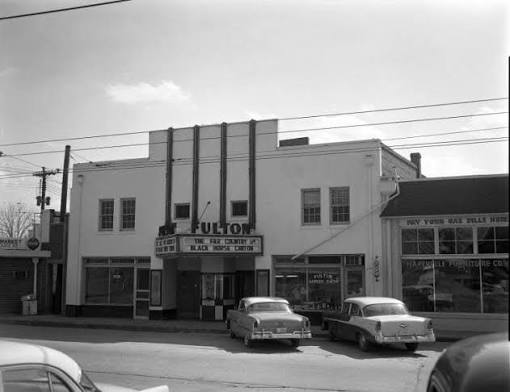
Helping to draw traffic to the smallest of the Tri-Cities was The Fulton Theater, a local movie house and entertainment venue that opened in 1939 at 764 South Central Avenue. Operating alongside the Hangar Theater as one of the city’s first official cinemas, it served the growing post-WWII Tri-Cities community before eventually closing.
By the time Interstates 75 and 85 were carved through the Georgia clay in the 1950s and 1960s, Hapeville found itself completely surrounded by the state’s most critical transportation arteries. The town was no longer just a suburb; it was the literal gateway to Atlanta, ensuring that any business needing to ship goods regionally had to pass through its borders.
⏱️ TIME CAPSULE: HAPEVILLE’S CHRONOLOGY
| Year | Milestone Event | Economic Impact |
|---|---|---|
| 1891 | Dr. Samuel Hape incorporates the city. | Establishes a rural residential escape. |
| 1917 | Central Avenue joins U.S. Highway 41. | Brings heavy interstate auto commerce. |
| 1925 | Candler Field opens on an old racetrack. | Births the future hub airport. |
| 1946 | S. Truett Cathy opens the Dwarf Grill. | Spawns the global Chick-fil-A franchise. |
| 1947 | Ford opens the Atlanta Assembly plant. | Sparks a massive post-war housing boom. |
| 1960 | Interstates 75 and 85 fully open. | Locks the city into the regional highway grid. |
| 2006 | Ford permanently closes the assembly plant. | Threatens severe local economic stagnation. |
| 2015 | Porsche opens North American Headquarters. | Reclaims industrial space for elite tourism. |
| 2026 | Mixed-use projects push a 10.3% growth surge. | Solidifies the city’s modern arts renaissance. |
Overcoming the 2006 Industrial Crisis
The city’s resilience faced its ultimate test in 2006 when Ford permanently shuttered the Atlanta Assembly plant, wiping out thousands of industrial jobs and threatening to leave a gaping, 122-acre crater in the center of the local tax base. Many predicted the town would slide into economic stagnation; some residents vocally encouraged the city’s annexation into next door Atlanta’s city limits.
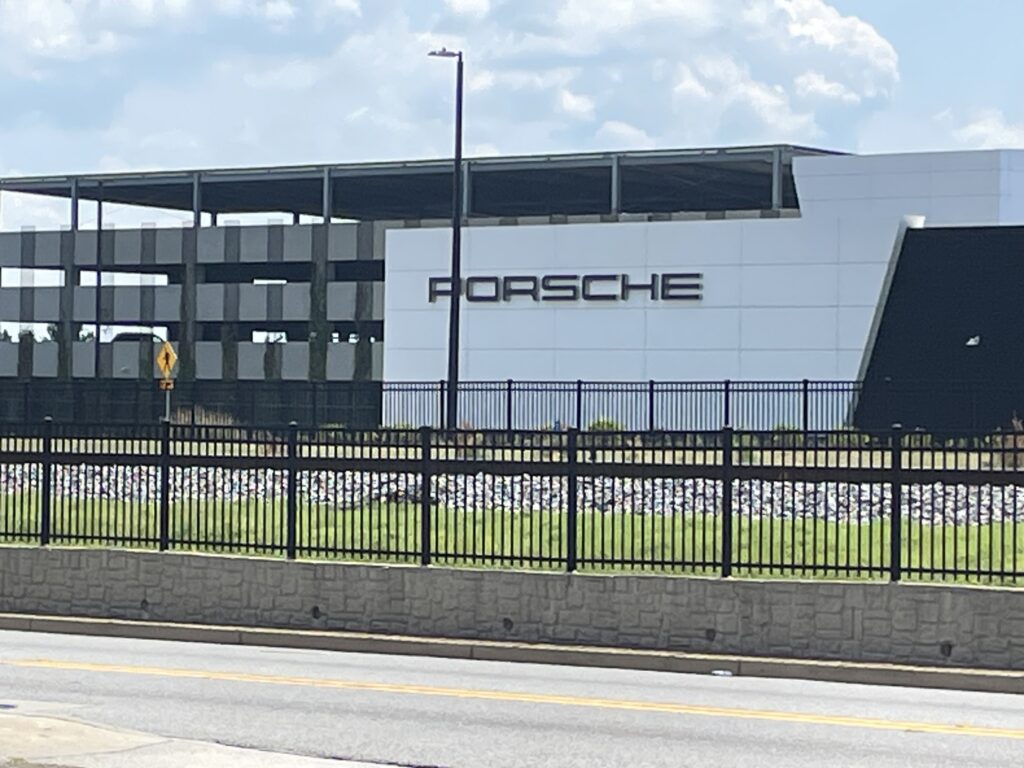
Instead, civic leaders executed a masterclass in economic pivoting. Porsche Cars North America saw potential and claimed the historic Ford site to build its gleaming, multi-million dollar headquarters and Porsche Experience Center. Featuring a 1.6-mile driver development track visible from the highway, the development ensured the town remained an elite automotive destination while drawing affluent tourists from across the globe.
But today, as Hapeville boasts a plethora of new-looking places to spend and live, this historic 2.4-square-mile municipality is officially running out of room to grow. Completely hemmed in by massive transportation infrastructure, the city has hit a hard physical wall, sparking a high-stakes transition from traditional suburban sprawl to aggressive vertical urbanism.
With annexation legally and physically impossible, Hapeville cannot build outward. To continue to thrive, it must build inward and upward–and focus on reimagining and converting some of its older commercial spaces. And that’s what it appears to be doing.
From Auto Shops to Multi-Level Townhomes
The space crunch is radically altering the city’s visual landscape. Nowhere is this more evident than in the downtown core, where low-slung, multi-generational auto repair shops are rapidly disappearing–another closing chapter from the city’s extensive past as a hub for Ford automobile production. In their place, developers are snatching up every available square foot of asphalt for transit-oriented, high-density residential projects.
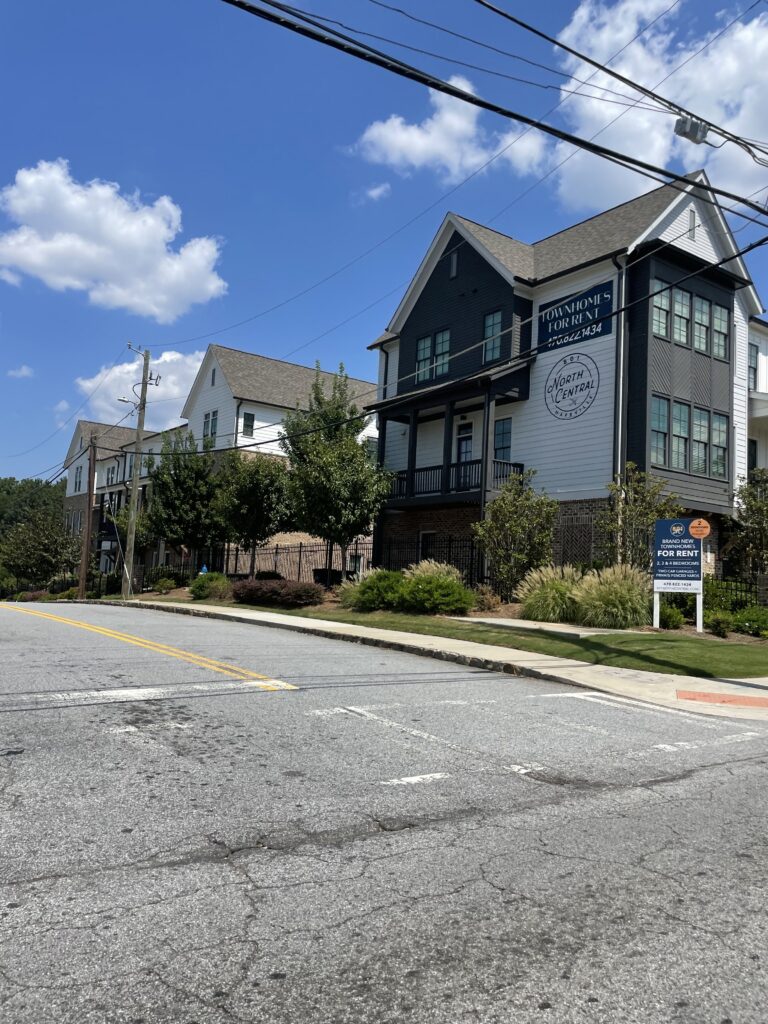
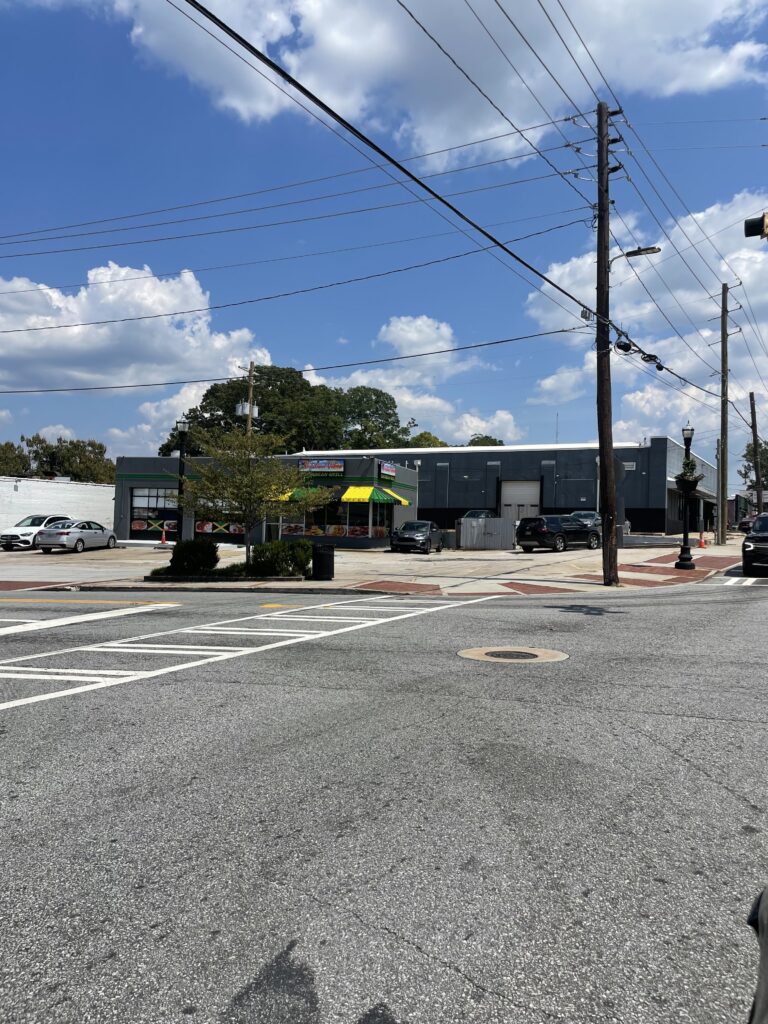
Developments are sprouting up around the city to exemplify this new era. These projects trade open land for multi-level, brick-clad boutique townhomes, packing higher population densities into historically commercial footprints. Nearby, adaptive reuse projects are filling the remaining gaps, such as the transformation of former industrial space into the Swimmerman Swim School on North Central Avenue.
The Legacy of Infill Zoning
This structural evolution is not accidental; it is mandated by survival. Driven by the Atlanta Regional Commission’s Livable Centers Initiative (LCI), local officials have systematically rewritten zoning laws. New codes enforce strict “build-to” lines close to sidewalks, actively banning the massive surface parking lots that defined 20th-century suburban design.
The blueprint for this reinvention was set years ago with the redevelopment of the historic Ford Assembly Plant. Rather than leaving the massive industrial footprint vacant, the city successfully pivoted, transforming the plot into the high-profile Porsche Experience Center and adjacent mixed-use hotel complexes.
As the final pockets of vacant land vanish, Hapeville stands as a living case study for the Atlanta metro area. Forced to adapt to its rigid borders, the city is proving that when you completely run out of room to grow, the only remaining direction is up.
Corporate Roots and Cultural Renaissance
Simultaneously, home-grown giants have provided an unwavering foundation. Delta Air Lines keeps its sprawling global headquarters firmly planted on Hapeville’s borders. Meanwhile, Chick-fil-A—which opened its legendary Dwarf House diner here in 1946—continues to draw culinary pilgrims eager to eat at the birthplace of the modern chicken sandwich.
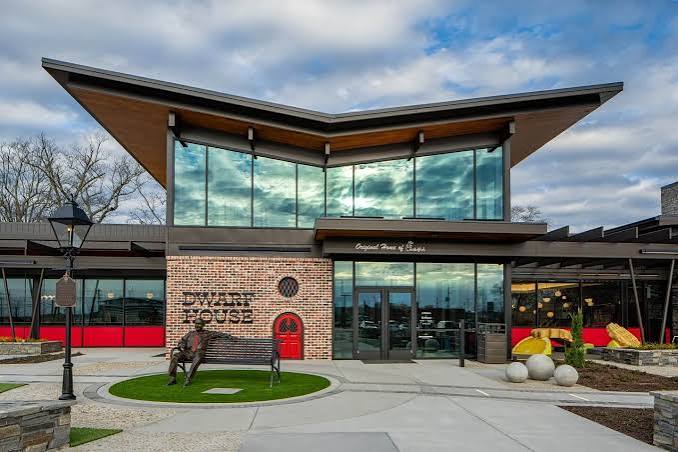
Today, a distinct cultural shift is driving the city’s latest population surge. By intentionally branding itself as a premier regional haven for the arts, Hapeville has attracted a wave of public murals, independent artisan studios, and theaters.
This lifestyle appeal, coupled with a recent 10.3% jump in population driven by new high-density townhomes and mixed-use developments, proves that this historic transit hub is successfully rewriting its blueprint for the 21st century, and the public is taking notice.
The Price Of Growth
As the growth and development kicked in and buildings have gone up, so has the cost of shelter. Hapeville has now become significantly more expensive over the last several years, transforming from an affordable Tri-Cities airport suburb into a premium, trendy enclave. The cost of living in Hapeville is now 4% higher than the national average and 11% higher than the Georgia state average.
While the broader real estate market has leveled off slightly from its pandemic peaks, Hapeville’s baseline prices remain dramatically higher than they were historically.
Hapeville’s median price tag of $405,490 virtually matches the broader Atlanta benchmark of $410,000. Buyers looking in Hapeville are no longer finding “suburban discounts” compared to the city; they are paying urban-intown prices.
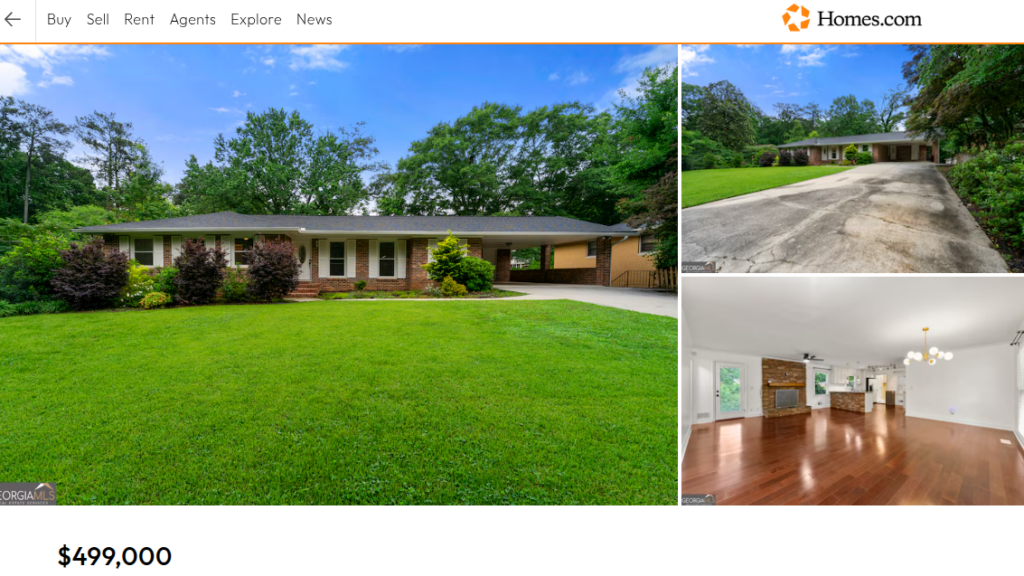
Within the local cluster, Hapeville is roughly 10.5% more expensive than College Park and a massive 47.5% more expensive than East Point.
While College Park features a lower city-wide median price ($366,800), its Historic College Park neighborhood is actually the most expensive sub-market in the entire area, with a median clearing of $486,000. However, Hapeville has a much higher baseline price across the entire city footprint.
The Demographic Picture: Segregated Past, Fight For Equal Workers Rights For Black Workers, And On To Majority-Minority City Today
But a look at the melting pot of success that is Hapeville today requires a deeper look back at the Hapeville of many yesterdays ago. Like the rest of the South, before it became a small preferred destination in Georgia, for much of its history Hapeville maintained an ironclad approach to segregation, establishing rigorous local enforcement of the legalized subjugation of its Black residents.
The city’s historic train station, The Hapeville Depot, featured physically segregated entrances, ticket windows, and waiting rooms designed to keep Black and White passengers strictly separated.
But while downtown Hapeville was legally designated for White residents, the historic Black community of Plunkett Town emerged just on the outskirts. Plunkett Town residents provided critical, low-wage manual labor for the area, heavily contributing to the early cutting of Hapeville’s timber and infrastructure building while being excluded from living inside city lines.
Note: With development came eventual displacement: In the 1970s, the entire neighborhood of Plunkett Town–a once thriving majority Black community–was razed and completely demolished to clear land for an expansion of the Hartsfield-Jackson Atlanta International Airport.
Industrial Turning Point–Black Workers Resist
A major turning point in Hapeville’s segregated history centered on the Atlanta Ford Assembly Plant, which operated in Hapeville for decades.
While the plant was a massive driver of the local economy, Black workers were initially barred from high-paying, skilled positions and subjected to segregated facilities.

Local civil rights advocates and Black autoworkers—frequently referred to in local history as “Community Builders”—led sustained efforts to fight racial discrimination and pushed for desegregation within the plant’s union and labor ranks, paving the way for economic mobility in the Tri-Cities area.
Today’s Picture: Majority-Minority
As of recent U.S. Census Bureau estimates, Hapeville, Georgia has a population of approximately 6,630 residents. It today is recognized as a majority-minority city, with more than half of its residents identifying as minority.
Race and Ethnicity
Hapeville is regarded as a diverse community, with a racial makeup that is significantly more varied than the overall average for the state of Georgia. According to recent American Community Survey (ACS) tracking, the racial breakdown is roughly:
- Black or African American: 35.9%
- White: 29.8%
- Hispanic or Latino (of any race): 27.1%
- Asian: 4.9%
- Two or more races / Multiracial: 2.1%
- Native American or Other: 0.1%
Additionally, approximately 15.1% of Hapeville’s population is foreign-born, and 27.9% of residents speak a language other than English at home
Age and Gender Breakdown:
The population skews slightly male and represents a balanced spread of young families and working-age professionals:
- Median Age: The median age is roughly 37 years old, tracking closely with both the regional Atlanta metro area and state averages.
- Age Distribution: About 22.8% of the city’s population consists of children under 18, while seniors aged 65 and older make up roughly 10.2% of the local citizenry.
- Gender Ratio: Roughly 55% of the population is male and 45% is female.
Income and Households
- Median Income: The median household income sits around $45,888.
- Household Structure: There are roughly 2,940 households in the city. The local social structure includes a higher-than-average population of single adults. Roughly 30% of adults are married, while 70% are single.
- Primary Industries: Due to its physical proximity to the airport, the most prominent employment sectors for local residents include Transportation & Warehousing, Accommodation & Food Services, and Information systems.
Summary
Today, Hapeville is a historic Georgia city with small-town charm and an active social scene, a city that has overcome segregation and the shameful displacement of Black residents in the once-successful and historic Plunkett Town district to now becoming a destination for Black professionals, entrepreneurs, and artistic souls.
Hapeville also avoided near-financial disaster a generation ago to emerge as financially stable suburb today. Along the way, it has become a city that won’t stop finding ways to renew itself while blending old neighborhoods with a walkable downtown, popular local dining, and a preservation of its global roots as the home of major corporations.
Check This Out...
-
Ugly Loss: Georgia Bulldogs Players Told To Put Helmets On As They Exited The Field Due To Alabama Fans Throwing Water Bottles, Cans At Team: Fan Appears To Shove Bulldogs Player’s Head: Georgia Fans React On Social Media As SEC Expected To Weigh In
-
Georgia Bulldogs Win In Regular Season At Alabama For First Time Since 2007, Now 6-0: Late Game No-Call On Assumed Penalty Stirs Controversy: Bulldogs Poised For #1 Ranking With Texas Loss
-
Minutes Away From Kickoff At 7:30 P.M.: The #2 Ranked Georgia Bulldogs Travel To Alabama To Face The 6th Ranked Crimson Tide: Both Teams Enter The Celebrated Matchup Undefeated
-
Hurricane Isaias Is Now A Category 3 Hurricane: East Point And Metro Atlanta Impact To Be Felt Later Today, Tomorrow: Flood Watch In Effect, Governor Declares Statewide State Of Emergency: How To Prepare
-
Atlanta Humane Society Announces Dog Adoption Event in Marietta On Saturday, October 10 From 12 P.M. – 3 P.M.