
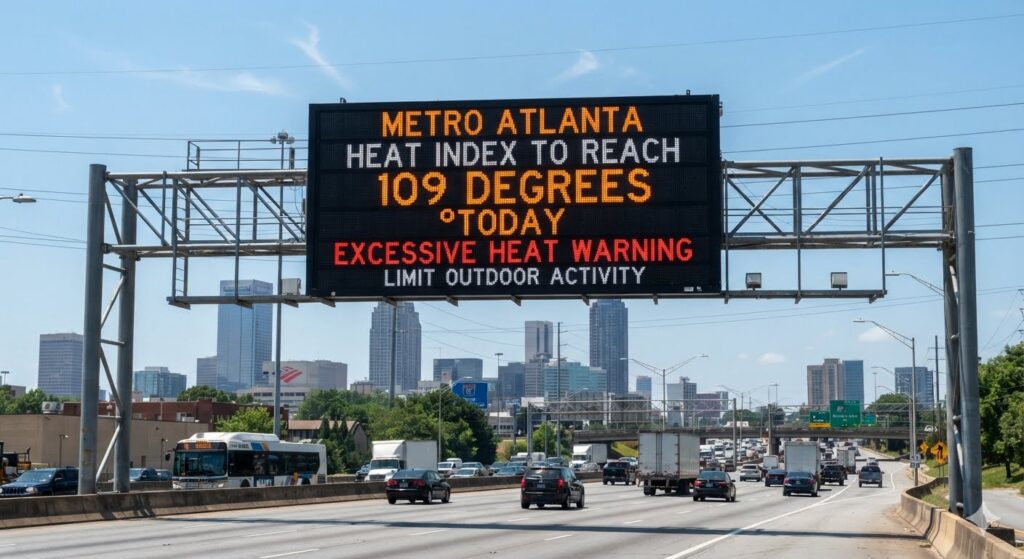
The National Weather Service has issued a Heat Advisory for a massive portion of north-central and metro Georgia, warning residents that a combination of extreme temperatures and stifling humidity will create hazardous outdoor conditions. The advisory takes effect at noon today, August 14, and is scheduled to remain in place until 8:00 PM EDT on Saturday, August 15, 2026.
Forecasters warn that peak heat index values will climb up to 109°F across the region. Because humidity levels and overnight lows are expected to remain exceptionally high, the human body will have limited opportunities to cool down naturally, significantly increasing the risk of heat-related illnesses.
Areas Impacted Across Metro Atlanta
The advisory broadly encompasses the core counties and surrounding suburbs of the Atlanta metropolitan area, including:
- Fulton County (including downtown Atlanta, Alpharetta, and Roswell to the north, East Point, South Fulton, College Park, and Hapeville to the south)
- DeKalb County (including Decatur and Stone Mountain)
- Gwinnett County (including Lawrenceville, Duluth, and Norcross)
- Cobb County (including Marietta and Smyrna)
- Clayton County (including Lovejoy and Jonesboro)
- Cherokee and Forsyth Counties to the north
- Henry and Fayette Counties to the south
- Douglas and Paulding Counties to the west
Officials Urge Extreme Caution
Local emergency management agencies are advising residents to limit strenuous outdoor activity during peak heating hours between noon and 6:00 PM. High school athletic departments and construction crews across the metro area are adjusting schedules to early morning or late evening hours to protect athletes and laborers.
Public safety officials emphasize the importance of checking on vulnerable neighbors—particularly the elderly and those without adequate air conditioning. Pet owners are also strictly reminded to bring animals indoors and never leave a child or a pet inside a vehicle, where internal temperatures can become fatal within minutes.
Recognizing Heat Illness
Health department officials urge the public to recognize the critical differences in heat-induced medical conditions:
- Heat Exhaustion: Characterized by heavy sweating, dizziness, rapid pulse, and nausea. Victims should be moved immediately to a cool, air-conditioned space and given water.
- Heat Stroke: A life-threatening emergency marked by a body temperature over 103°F, confusion, fainting, and hot, dry, or heavily sweating skin. If heat stroke is suspected, bystanders should call 911 immediately and attempt to cool the victim down using ice packs or cold water.
Cooling centers are expected to open in several metro municipalities. Residents seeking immediate relief or looking to locate their nearest public air-conditioned facility can check their local county government portals for updated operational hours.
Connect Google Workspace apps, like Gmail, for a more helpful experienceContinue
Check This Out...
-
Six Flags Over Georgia Re-Opens Days After 42 Year Old Atlanta Teacher Died In Tragic Accident: Six Flags Faces Growing Scrutiny, Questions Over Ride Safety: Park President Issues Statement
-
Longtime Fox 5 ‘Good Day Atlanta’ Anchor, Former Atlanta Braves Star Ron Gant Leaving The Station: Gant Has Hosted Show For 14 Years, Says He Doesn’t Plan To Leave Atlanta
-
Bill Water Advisory Lifted For 5 Five South Fulton Cities: Atlanta Watershed Management Announced The Advisory Several Days Ago
-
Man Dies At 6 Flags Over Georgia After Fall From Roller Coaster; Four Injured: “Goliath” Ride Is 200 Feet High, Hits Speeds Of Up To 70 MPH
-
Hurricane Isaias Leaves Downed Trees, Flooding, And Thousands Without Power Across Southeast, Metro Atlanta: At Least 2 Confirmed Dead