
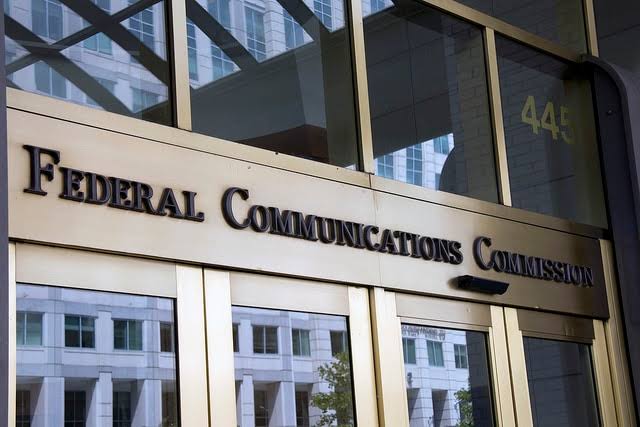
Democrats and press freedom advocates are raising urgent alarms over what they warn is a systematic weaponization of the Federal Communications Commission (FCC) as an instrument of federal censorship. The growing anxiety peaked following a direct threat by President Trump to have the agency punish NBC News anchor Kristen Welker, sparking a fierce national debate over the limits of executive power and the First Amendment.
The controversy erupted after Welker, the moderator of Meet the Press, noted during a broadcast segment for a local Washington, D.C. affiliate that candidates backed by the president during the current primary cycle had experienced “mixed results”.
Incensed by the characterization, Trump took to Truth Social, declaring that Welker would be “reported to the FCC for rebuke or punishment” due to what he termed “purposeful inaccuracy”. He questioned how such commentary could be allowed on “freely given Public Airwaves” and explicitly called on FCC Chairman Brendan Carr to treat the broadcast as a “Threat to our Country”.
But independent fact-checkers noted that Welker’s assessment was accurate; while Trump maintains a high success rate in low-stakes races, high-profile endorsed candidates like Representative Cory Mills in Florida and Representative Andy Ogles in Tennessee recently lost their respective primary bids.
A “Dangerous” Precedent
Democratic officials and media experts argue that using a federal regulatory body to police editorial commentary bypasses strict constitutional boundaries.
Democratic FCC Commissioner Anna Gomez publicly condemned the threat against Welker, labeling it “dangerous”. Gomez stated plainly that the FCC has no legal authority to punish journalists an administration dislikes, warning that intimidation tactics “undermine the foundation of our democracy”.
An NBC News spokesperson directly responded to the executive swipe, stating, “Kristen is one of the best in the business and we stand by her”. Journalists across the industry have similarly rallied to her defense, pointing out that the FCC regulates broadcast license holders—not individual journalists.
The Escalating Battle Over Free Speech
The threat against NBC is not an isolated incident. Press advocates note it is part of a broader pattern of escalation against media companies. The dispute comes on the heels of a major federal lawsuit filed by Disney and ABC against the FCC. The lawsuit alleges an unconstitutional, retaliatory campaign by the administration to force early broadcast license renewals for eight local ABC stations.
The unprecedented early review was ordered by FCC Chair Brendan Carr just one day after Trump publicly demanded that ABC terminate late-night host Jimmy Kimmel for making jokes targeting the First Family. In their filing, Disney and ABC argue that the administration is using state power to punish disfavored expression, calling the behavior an un-American abuse of authority. Legal experts have noted that stripping a network of its broadcast licenses is historically rare, calling it a regulatory “death penalty” that would force media companies into compliance.
Chilling Effect on Free Speech
First Amendment groups, including the Cato Institute, warn that even if the FCC is legally barred from actively pulling licenses over editorial content, the constant threat of regulatory retaliation creates a destructive chilling effect. Industry insiders worry newsrooms may begin quietly self-censoring to avoid multi-million dollar legal battles or aggressive regulatory audits.
By treating the independent agency as a personal arbiter of truth, Democrats warn the administration is attempting to establish a system where criticizing the president or reporting objective political facts carries the risk of government-enforced economic ruin.
Check This Out...
-
Six Charlotte Cops Face Termination Over Texts Allegedly Containing Text Message Thread Filled With Racial Slurs, Racial Profiling, And Police Brutality: Allegedly Competed To Pull Over The Most Black Drivers: Texts Came To Light Amid Flock Camera Misuse Investigation
-
Handcuffs With That Order? Popular San Diego Chef Allegedly Kidnapped And Shot Ex-Girlfriend In Iowa In 2014, Then Fled The State: Social Media Popularity Led U.S. Marshals To Him
-
Federal Judge Blocks Deportation Of 28 Year Old NYC Man Shot By ICE Agents Thursday: Who Is Oscar Belgal, And What Are The Circumstances Surrounding His Case?
-
Mike Ditka Dies At 86: Legendary Chicago Bears Player And Later Head Coach Led The ’85 “Bad News Bears” To Super Bowl Win
-
Colorado Parents Who Take Their Small Kids On Record-Breaking Mountain-Climbing Ventures Reported To Child Protective Services By Online Critics, Won’t Be Prosecuted