
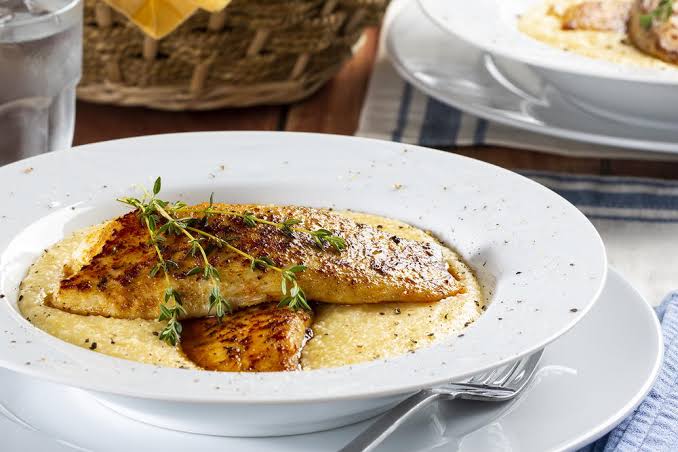
Before it found its way onto the menus of upscale metropolitan bistros and brunch spots across the nation, fish and grits was a meal born strictly out of necessity, geographic abundance, and cultural resilience.
The iconic pairing is deeply rooted in the American South—specifically the coastal Lowcountry region of South Carolina and Georgia. It represents a culinary collision of Native American agriculture and West African traditions, shaped by generations of Gullah Geechee people who transformed simple, local ingredients into a timeless staple of Southern cuisine.
A Convergence of Two Worlds
The foundation of the dish lies in the ground-corn porridge known as grits. Centuries ago, the Muskogee (Creek) tribe taught European settlers and enslaved Africans how to mill Indian corn into a coarse, boiled hominy.
For enslaved populations along the southeastern coast, these corn rations became a daily staple. To supplement their diets, laborers fished the local tidal creeks, harvesting whatever was abundant—often croaker, whiting, or catfish.
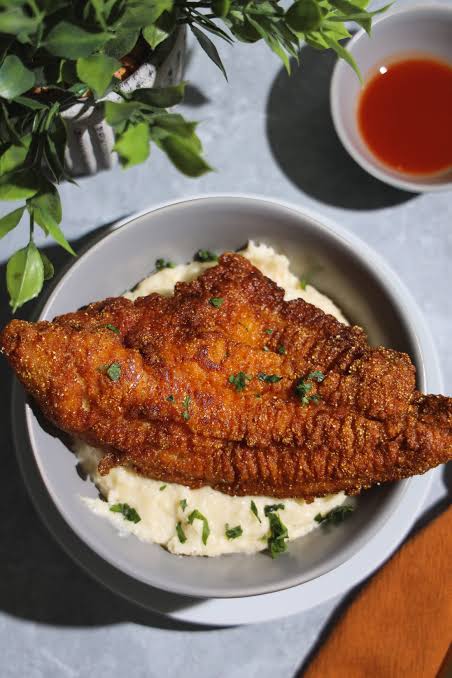
The combination of fish and grain porridge was not a random invention; it closely mirrored the traditional diets of coastal West Africa, where starchy porridges were routinely paired with seasoned fish and seafood stews.
The Gullah Geechee community—descendants of enslaved West Africans who maintained isolated, distinct cultural traditions on the Sea Islands—perfectly adapted these ancestral flavor profiles to the landscape of the American South.
The Original Working-Class Breakfast
Long before it was considered a delicacy, fish and grits was known simply as a working-man’s breakfast. For generations of coastal fishermen, dockworkers, and laborers, the meal provided the heavy sustenance needed for long, grueling shifts on the water.
Fishermen would head out into the marshy creeks with a single pot, cooking down a cheap bag of cornmeal over an open flame and frying up the freshest catch of the morning. It was inexpensive, highly accessible, and deeply comforting.
From Tidal Creeks to Contemporary Menus
As the decades passed, the dish migrated from coastal shacks into Black home kitchens across the South, eventually traveling north during the Great Migration.
Today, the humble breakfast has undergone a culinary renaissance. Modern chefs frequently elevate the classic with stone-ground heirloom corn, sharp cheeses, and perfectly blackened or golden-fried fillets. Yet, despite its contemporary glow-up, the soul of fish and grits remains anchored in the resilience and resourcefulness of the coastal South. It stands as a delicious, edible map of American history—one spoonful at a time.
Check This Out...
-
Around 10,000 Children Are In Need Of A Loving, Safe Home In Georgia: Here’s How You Can Become A Foster Parent Or Adopt A Child
-
Happening Today: Hip Hop Icons And East Point Legends Outkast Launch Merch With Waffle House, Host Collab Drop At Centennial Olympic Park Restaurant At 11 A.M.
-
PINK RIBBONS AND PERSONAL JOURNEYS: OCTOBER MARKS GLOBAL BREAST CANCER AWARENESS MONTH
-
The Taste Of Survival: Chitterlings Came Out Of Necessity But Managed To Become A Soul Food Delicacy: The Story Of The “Chitlin” Plate–And Who Still Eats Them Today
-
Hispanic Heritage Months Begins This Week: Events And Celebrations Run From September 15 To October 15: South Fulton Features “México en el Corazón” Tour At Wolf Creek Sunday + More