

For decades, the script for American customer service followed a familiar, cost-cutting playbook: route the calls overseas. But as U.S. consumers grew increasingly vocal about their frustration with international call centers, corporate America spotted a new savior. Companies are now turning en masse to artificial intelligence agents to replace traditional offshoring, promising seamless, 24/7 support without the logistical headaches of managing overseas vendors.
Yet, this massive technological migration is exposing a sharp rift between corporate balance sheets and actual human preferences. What was promised as a friction-free revolution is turning into a messy corporate experiment.
The Core of Consumer Frustration: Foreign Customer Service
The corporate pivot is heavily driven by historically low customer satisfaction metrics associated with foreign call centers. Industry data reveals a stark division in customer experience based entirely on location: domestic U.S. call centers average an 81% satisfaction rate, whereas offshore centers plummet to 62% satisfaction.

Furthermore, a comprehensive study by Deloitte found that 42% of businesses experienced a direct, quantifiable drop in customer retention specifically because they outsourced their support abroad.
American consumers cite language and nuance barriers as their primary pain points. While many international agents speak fluent English, callers report immense frustration with a lack of local idiom comprehension, forcing them to repeatedly explain basic contexts.
Compounding the problem is the “script trap.” Because foreign agents are tightly restricted by rigid corporate protocols, callers frequently report feeling like agents are simply reading FAQs aloud rather than listening to the problem.
The $15 Billion Automated Pivot
Driven by the desire to erase these offshore metrics while slashing overhead, the AI customer service market has exploded, recently surpassing $15 billion in value. Tech heavyweights and consumer brands alike have begun deploying advanced generative AI systems capable of handling everything from airline bookings to insurance claims.

The shift has come at a steep human cost. Industry giants have collectively trimmed thousands of human support roles over the past few years. According to projections from research firm Forrester, nearly 50% of customer service roles could be automated by 2030, putting millions of jobs in jeopardy.
Why Companies Don’t Just “Hire American”
If foreign labor frustrates consumers, why not simply bring the jobs back to the United States? For corporate chief financial officers, the answer is a matter of glaring financial reality: hiring American customer service agents is roughly 3 to 4 times more expensive than offshoring or automating.
The Wage Chasm: In the U.S., a standard customer service representative commands an hourly wage of $15 to $22. When factoring in mandatory corporate taxes, healthcare benefits, and overhead, the true cost to the employer jumps to $25 to $35 per hour.
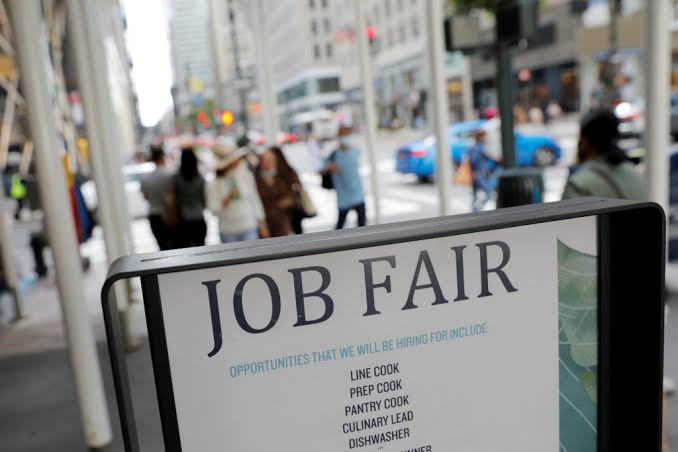
In contrast, agents in the Philippines or India cost companies just $3 to $6 per hour, all-inclusive. Software-based AI agents operate for mere pennies per hour.
The Retention Crisis: The domestic call center industry suffers from a staggering annual turnover rate of 30% to 45%. American workers frequently view call center roles as stressful, low-prestige stopgap employment, locking companies into an expensive loop of continuous recruiting and training.
Overseas, these roles are highly competitive, sought-after corporate careers that attract college graduates who stick around.
Around-the-Clock Logistics: Finding U.S. workers willing to staff overnight shifts, holidays, and weekends is notoriously difficult and requires premium “shift differential” pay. Global offshoring natively solves this by utilizing daytime working hours in opposite time zones to cover the American night shift seamlessly.
Trapped in the “Bot Loop”
While executives cheer the reduced overhead of AI and regulators circle foreign vendors, everyday Americans however are quietly resistant to the digital replacement as well. Multiple consumer surveys indicate that 85% of Americans now explicitly prefer a real person over an AI agent—proving that the desire for basic human empathy still trumps technological workarounds.
The rush to automate has triggered a severe drop in customer trust. Users increasingly report feeling trapped in circular bot conversations, endlessly repeating keywords just to speak with a supervisor.
The tech, it seems, rushed ahead of its capability. Research firm Gartner points out that AI is still entirely unequipped to replicate human empathy, nuanced judgment, or creative problem-solving when a billing issue gets complicated.
The backlash may soon force an expensive corporate U-turn. Gartner predicts that half of the companies that aggressively cut customer service staff for AI will eventually have to rehire human workers to salvage broken brand loyalty.
Washington Intervenes
The consumer backlash over foreign outsourcing has escalated so severely that it has triggered a heavy-handed response from federal regulators. Under the leadership of Chairman Brendan Carr, the Federal Communications Commission (FCC) voted unanimously to launch a sweeping regulatory proceeding targeting offshore call centers.
The FCC’s strict proposals include:
The Right to Transfer: A mandate requiring companies to give consumers the right to immediately transfer to a U.S.-based agent upon request.

Mandatory Location Disclosure: Forcing providers to openly disclose to the consumer at the beginning of a call when a representative outside the U.S. is handling the interaction.
English Proficiency Standards: Mandating that offshore staff pass certified testing to prove fluency in “American Standard English”.
Data Security Rules: Requiring that calls involving sensitive consumer transactions be handled strictly within the United States to prevent overseas data leaks and robocall scams.
Regulation of AI and Bots
TCPA Enforcement: The FCC has clarified that outbound AI-generated voice calls fall under the Telephone Consumer Protection Act (TCPA) as artificial or prerecorded voice calls, requiring strict consumer consent.
Inbound Bots: There is currently no sweeping federal mandate specifically regulating inbound customer service AI bots, though individual states have begun introducing disclosure laws for artificial intelligence.
Check This Out...
-
AI Skeptics Say The Technology Could Kill Humans: How And Why They Believe It Could Happen
-
NASA Readies Sunday Launch Of Historic Nancy Grace Roman Space Telescope: Powerful Lens Will Allow View Of Billions Of Galaxies, Dark Universe In Record Time
-
Meta Agrees To Settle For $17.1 Billion: But What Does The Settlement Mean, What It Changes–And Who Gets The Money?
-
What Does The Immediate Future Of AI Look Like?
-
Getting That YouTube Bag: Who Are The Highest Paid YouTubers, And How Much Money Are They Making?