
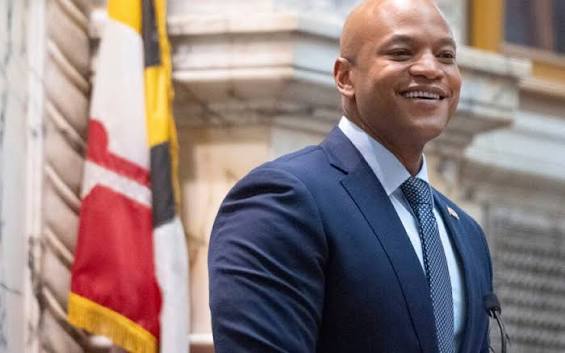
To understand the rapid, historic ascent of Maryland Governor Wes Moore, one must first look back to the streets of the Bronx and a pivotal choice made by a devoted mother determined to ensure a bright future for her son more than three decades ago.
Today, Moore, 47, stands as the nation’s only sitting Black governor, a role model for young Black men across the country, and a formidable force in the national Democratic Party. For a party actively seeking a fresh generational voice, Moore has rapidly transitioned from a first-term executive into a premier “rising star”, sparking intense donor interest and heavy speculation regarding the 2028 presidential nomination.
Yet, those close to the Governor note that his star-bright political brand—which seamlessly blends elite academic credentials, combat military service, and corporate acumen—was forged from a childhood defined by sudden tragedy and a near-miss with the criminal justice system.
From At-Risk Youth to Rhodes Scholar
Born in Takoma Park, Maryland, on October 15, 1978, Moore’s life was fractured at age three when his father, a radio journalist, died of a rare, treatable virus. Swept away by grief and economic uncertainty, his mother moved the family to the Bronx, New York.
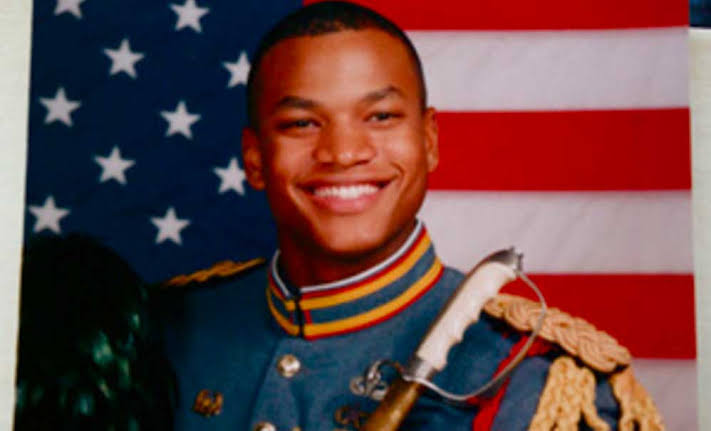
As a youth, Moore found himself caught between the strict environment of an elite private academy and the escalating pressures of his neighborhood. His grades plummeted, and after an arrest for graffiti, his mother made a sacrificial financial leap, enrolling her 12-year-old son in the Valley Forge Military Academy in Pennsylvania.

The rigid structure proved transformative. Moore went from trying to run away to leading his peers as a company commander. Reflecting on that environment in his writing, Moore noted the profound weight of peer influence on at-risk youth: “The expectations that others place on us help us form our expectations of ourselves.”
What followed was a dizzying sequence of elite achievements. Moore returned to Maryland to graduate Phi Beta Kappa from Johns Hopkins University, secured a prestigious Rhodes Scholarship to Oxford University, and deployed to Afghanistan as a captain and paratrooper with the 82nd Airborne Division.
The Tale of Two Lives
Moore transitioned from military combat to the corridors of national power and finance, serving as a White House Fellow before a lucrative stint as an investment banker on Wall Street.
But it was a literary debut in 2010 that cemented his public identity. In his national bestseller, The Other Wes Moore, he juxtaposed his own trajectory with that of another young Black man from Baltimore sharing his exact name, who was serving a life sentence for felony murder.
“The chilling truth is that his story could have been mine,” Moore wrote in the memoir, capturing a theme that still anchors his political philosophy on opportunity. “It’s unsettling to know how little separates each of us from another life altogether.”
He leveraged that fame into social entrepreneurship before spending four years as the CEO of the Robin Hood Foundation, a powerhouse New York anti-poverty non-profit. “Poverty is not a state of mind,” Moore frequently stated during his tenure, “and escaping concentrated and generational hardship is an unimaginable mountain to climb.”
Why His Star Is Rising
When Moore launched his outsider bid for Maryland Governor in 2022, political analysts immediately recognized his unique political potency. He went on to win the general election in a historic landslide.
In the process, he became Maryland’s first Black governor.
His national profile expanded exponentially following his round-the-clock crisis management during the catastrophic collapse of Baltimore’s Francis Scott Key Bridge. Furthermore, as the chair of the National Governors Association—the first Black governor to hold the post—Moore has established a powerful national megaphone.
He has also gained notoriety as a nationally recognized, outspoken critic of the Trump administration.
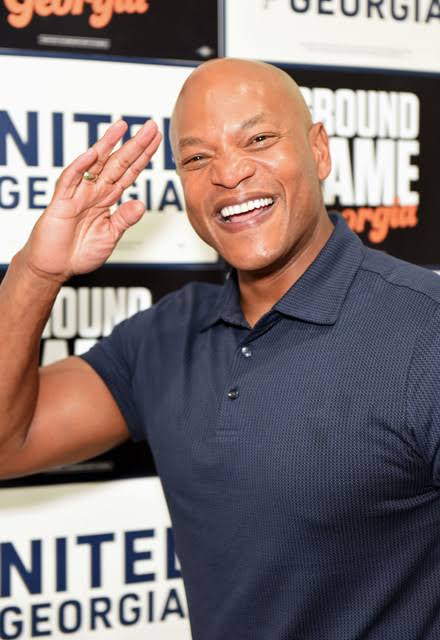
In an interview with The Root, Moore emphasized his independent governance style, flatly stating, “I’m nobody’s simp,” signaling a willingness to push back against political extremes and the Washington establishment.
In a recent appearance on CNN’s State of the Union, Moore expanded on what he believes his party must deliver, arguing that voters are actively rejecting politicians who prioritize partisan gridlock over real-world economic pain. “Voters desire a focus on pathways to work, wages, wealth, affordability, faster housing construction, and safe streets,” Moore told anchor Jake Tapper. “If leadership protects existing problems, people will express their dissatisfaction.”
The Gravitational Pull of 2028
As national Democrats survey a wide-open landscape for the 2028 presidential primaries, Moore’s name is consistently grouped by insiders alongside top-tier contenders like California Governor Gavin Newsom and Georgia Senator Jon Ossoff.
Party fundraisers view him as a figure who can bridge the party’s fractious coalition. His status as a combat veteran allows him to frame democratic policies through a lens of service. “Patriotism is not waving a flag around,” Moore frequently notes when discussing public service.
For his part, Moore continues to practice the calculated discipline required of rising executives. When pressed directly on NBC’s Meet the Press about whether he would completely rule out an Oval Office run, Moore swatted down the immediate horse race.
“Yeah, I’m not running for president,” Moore told moderator Kristen Welker, insisting that if re-elected to his current post, he intends to finish his term. “I’m excited about reelection, and focused on Maryland… I’m excited about what I’m going to be able to do for the people of Maryland.”
Yet, as he continues to deliver high-profile national speeches and travel to critical battleground states like Michigan, the political gravity pulling him toward the national stage remains a central storyline of early 2028 maneuvering. For the young man who once faced an uncertain future on the streets of the Bronx, the ceiling of American politics now appears entirely within reach.
Check This Out...
-
Ugly Loss: Georgia Bulldogs Players Told To Put Helmets On As They Exited The Field Due To Alabama Fans Throwing Water Bottles, Cans At Team: Fan Appears To Shove Bulldogs Player’s Head: Georgia Fans React On Social Media As SEC Expected To Weigh In
-
Georgia Bulldogs Win In Regular Season At Alabama For First Time Since 2007, Now 6-0: Late Game No-Call On Assumed Penalty Stirs Controversy: Bulldogs Poised For #1 Ranking With Texas Loss
-
Minutes Away From Kickoff At 7:30 P.M.: The #2 Ranked Georgia Bulldogs Travel To Alabama To Face The 6th Ranked Crimson Tide: Both Teams Enter The Celebrated Matchup Undefeated
-
Hurricane Isaias Is Now A Category 3 Hurricane: East Point And Metro Atlanta Impact To Be Felt Later Today, Tomorrow: Flood Watch In Effect, Governor Declares Statewide State Of Emergency: How To Prepare
-
Atlanta Humane Society Announces Dog Adoption Event in Marietta On Saturday, October 10 From 12 P.M. – 3 P.M.