
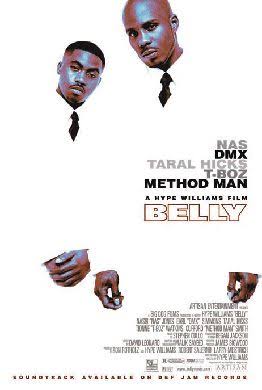
When music video auteur Hype Williams released his feature directorial debut Belly in the autumn of 1998, mainstream film critics largely dismissed it. Reviewers attacked its loose, wandering narrative structure and accused the director of prioritizing flashy music-video style over storytelling substance.
Yet, nearly three decades later, Belly has achieved what few films ever manage: A permanent, revered status as an untouchable cult classic. The film did not survive through box office metrics, but through its profound, lasting blueprint on Hip-Hop culture, fashion, and the visual language of modern cinema.
A Tale of Two Paths
The narrative follows two lifelong friends and New York City street hustlers who have amassed wealth through a ruthless lifestyle of armed robberies and drug dealing. As the story unfolds, the two men find themselves pulled in drastically different directions.
Tommy “Buns” Bundy, played with a fierce, unpredictable energy by the late Hip-Hop legend DMX, seeks to aggressively expand their criminal empire by entering a dangerous new synthetic heroin trade. His ambitions quickly draw the heat of federal authorities and bloodthirsty international rivals.
Conversely, Sincere, portrayed with a quiet intensity by rap icon Nas, grows increasingly disillusioned by the surrounding bloodshed. Finding solace in African history and black empowerment, Sincere begins planning an exit from the underworld, dreaming of moving his girlfriend Tionne (played by TLC’s Tionne “T-Boz” Watkins) and their young daughter to Africa.
A Time Capsule of Hip-Hop Royalty
Beyond its plot, Belly serves as the ultimate celluloid time capsule for late-1990s urban culture. It captured generation-defining musical icons at the absolute peak of their cultural powers, marking the cinematic acting debuts of both DMX and Nas.
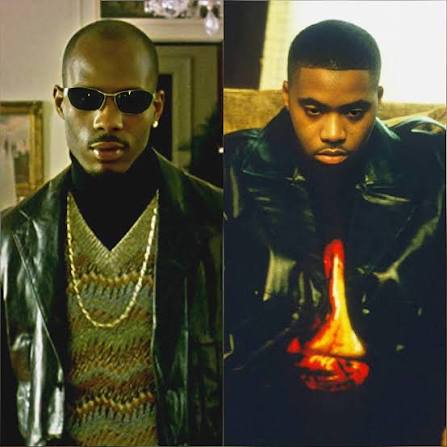
DMX’s raw performance perfectly mirrored his real-life musical persona, capturing lightning in a bottle. In contrast, Nas provided a quiet, philosophical counterweight. The stellar supporting cast—featuring Method Man as a cold-blooded hitman and Jamaican dancehall icon Louie Rankin as the unforgettable drug kingpin Ox—ensured that the movie was deeply rooted in the authentic fabric of the era’s music scene.
The Architecture of Williams’ Visual Genius
To understand why Belly endures, one must look at how it redefined the visual language of cinema. Williams, alongside legendary cinematographer Malik Sayeed, treated the film not just as a script, but as a series of moving paintings. Utilizing hyper-saturated neon blues, deep fluorescents, and extreme wide-angle fish-eye lenses, the filmmakers transformed a gritty underworld into a surreal, dreamlike noir landscape.
The film’s opening sequence—a slow-motion, black-light-drenched armed robbery inside the iconic Tunnel nightclub, set to Soul II Soul’s “Back to Life”—is widely considered one of the greatest openings in film history. By stripping away traditional realism and replacing it with a high-fashion, high-art aesthetic, Belly elevated the street genre into an operatic masterpiece. The sequence was so technically elaborate that it reportedly consumed a massive chunk of the film’s modest $3 million production budget in just the first few days of shooting.
The Soundtrack
Equally responsible for the film’s legendary status is the Belly Original Motion Picture Soundtrack, released via Def Jam Recordings. Instead of operating as a separate marketing tool, the soundtrack serves as the movie’s literal narrative spine, injecting emotional depth where the script’s dialogue leaves open spaces.
The soundtrack curated a gold standard tracklist of East Coast Hip-Hop, Reggae, and R&B masters:
“Grand Finale”: The album’s explosive lead single features a powerhouse line-up of DMX, Nas, Method Man, and a rising Ja Rule.
“Top Shotter” (The “Here Comes the Boom” Anthem): Often colloquially referred to by its thunderous DMX hook, “Here Comes the Boom”, this track is a massive cross-cultural collaboration pairing DMX with Jamaican icons Sean Paul and Mr. Vegas. It famously matches the high-octane energy of the film’s New York-to-Jamaica drug pipeline storyline.
“Devil’s Pie”: A classic, sparse boom-bap anthem by neo-soul singer D’Angelo and produced by DJ Premier, which critiqued the excesses of materialism.
Grit and Wu-Tang Roots: The tracklist features foundational hits like Jay-Z’s “Crew Love,” Gang Starr’s “Militia (Remix),” and Wu-Tang Clan’s eerie “Windpipe”.
The Blueprint for Modern Aesthetics
While 1998 critics failed to see the film’s value, the creative community took immediate notes. The stylistic choices pioneered in Belly can be seen across the next 25 years of visual media. From the neon-tinted, hyper-stylized worlds of the John Wick franchise to the dreamlike, moody lighting of HBO’s Euphoria, modern directors continue to pull from Williams’ playbook.
Furthermore, the film’s interior design choices—most notably Tommy’s ultra-minimalist, stark white mansion with glowing blue television sets—became a foundational aesthetic for Hip-Hop luxury, heavily influencing music videos, home decor, and fashion trends of the early 2000s.
Take A Look Back At 1998’s Belly (Warning: Explicit Language and Visuals)
Check This Out...
-
90s-2000s R&B Fans Are In For A Treat: A New Verzuz Battle Featuring Carl Thomas Vs. Case: Thursday, October 22 At 9:00 P.M.
-
The East Point News Rewind: The Dynamic Superiors Made History And Dazzled Audiences In The 1970s With Hit Songs–And A Lead Singer Who Wore Make-Up And Occasionally Performed In Drag
-
The East Point News Offers A New Feature To Readers: The East Point News REWIND. It Offers A Look At Unique Music And Entertainment Figures Who Quietly Impacted Both Entertainment And Culture
-
Legendary R&B And Soul Singer Freddie Jackson Dies, Shocking Longtime Fans: Jackson Turned 70 Years Old This Past Friday, Performed In Atlanta Two Weeks Ago
-
Actor And Comedian Reggie McFadden Dies At 57: McFadden Worked On “In Living Color”, “Def Comedy Jam” And More