
More than 30 years after Waiting To Exhale took theaters by storm, its stories, its soundtrack, and its inspiring, delicious characters continue to rent large areas of spaces in our heads–and our hearts as well. Angela Bassett (Bernadine), Loretta Devine (Gloria), Lela Rochon (Robin) and the late Whitney Houston (Savannah) showed the many dimensions of friendship, loyalty, and Black Love, both romantic and non-sexual, in a film that continues to impact culture a generation and a half removed from its groundbreaking Big Screen release.
In movie theaters across the country, throngs of Black women–friends, sisters, mothers, daughters, neoghbors—bought out entire rows of seats to catch a look at the widely promoted film featuring a can’t miss ensemble of cinematic excellence as they explored themes familiar to everyone who watched: Motherhood, sisterhood, and the age old challenge of finding and holding onto a good man.
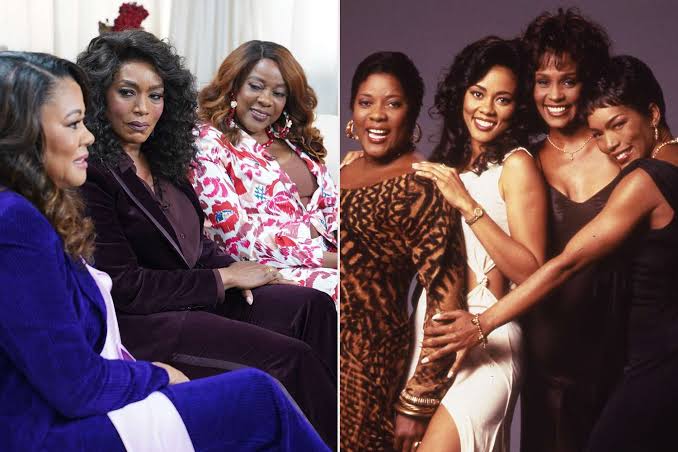
The characters were sophisticated, beautiful and beautifully dressed, successful, educated, elegant, flawed, insecure, and completely relatable. When Bernadine, betrayed by her husband, famously torched his luxury car and walked away in slow motion, theater audiences hollered in unified validation.
When Bernadette cried after meeting a new and handsome Wesley Snipes who loved the same sort of woman Bernadette had lost her husband too, the audience absorbed her pain.
When Savannah took control of her heart and her emotions and told her cheating lover that she was checking out as his side chick, then solidifying her decision by dumping a cool drink on him, we all rejoiced.
And when Gloria tearfully admitted her own insecurity prevented her from finding love for so long, we cried too.
This wasn’t just a movie; it was group therapy. It was an experience. It was in many ways, an explorative purging.
“This movie helps you to do what it says,” Devine said in an interview. “It helps you to exhale and to enjoy what love and friendship is about. If you are in a relationship and if you have friends, you go, ‘Oh yeah. That’s me.'”
“‘Waiting to Exhale’ was all kinds of love,” Devine said. “Dealing with all of the different situations that can happen if you are in love, how to raise your kids, having new babies. She covered everything.”
And while some critics derided the movie as anti-Black men, in actuality it was simply pro Black women while at the same time offering a blueprint for Black men to learn how to be a better man for Black women.
Hollywood’s Wake-Up Call
Before Waiting to Exhale, studio executives operated under a rigid, flawed dogma: films led by an all-Black cast, specifically Black women, were “niche” and could not perform well at the box office.
The film shattered that myth in its opening weekend, debuting at number one and grossing over $81 million domestically.
Across the country, studio heads were forced to look at the cold, hard numbers. The film proved the immense purchasing power of Black audiences, particularly Black women, who had been historically ignored by mainstream Hollywood. The success of Waiting to Exhale paved the way for a new era of Black-led cinema and television, directly opening doors for projects like The Preacher’s Wife, Soul Food, and eventually, the television empires of Shonda Rhimes and Mara Brock Akil.
The Soundtrack of a Generation
And then there was the music. Music that has lived as long as the movie. The impact of the film extended far beyond the silver screen and leaked into the airwaves of every radio station in America–in the case of a few tracks, for years. Singer songwriter and producer Babyface engineered a companion soundtrack consisting entirely of Black female artists, creating a sonic time capsule of 1990s R&B.
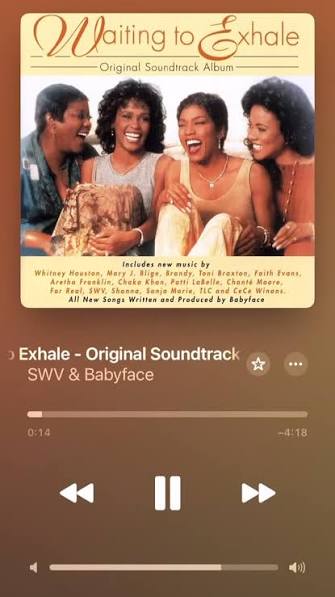
From Whitney Houston’s triumphant “Exhale (Shoop Shoop)” to TLC’s raw “Silly Ho” and Mary J. Blige’s soulful “Not Gon’ Cry,” the album became the definitive anthem for women navigating heartbreak and self-discovery.
In hair salons, college dorm rooms, and car stereos from New York to Los Angeles, the soundtrack was on a continuous loop. It achieved multi-platinum status, racked up Grammy nominations, and cemented the idea that women’s (Black women’s) emotional journeys were worthy of the highest level of artistic production.
A Cultural Exhale
But more than anything, Waiting to Exhale changed the social fabric of how American women talked to one another. The film popularized the concept of the “Holding Your Breath” metaphor—the collective stress of holding down careers, raising families, and searching for love while putting one’s own needs last.
The movie gave women permission to let go. It sparked a national trend of women-only viewing parties, brunch clubs, and discussion groups where women openly talked about standards in relationships, financial independence, and the vital importance of female friendships. It shifted the narrative from women competing over men to women anchoring one another through life’s storms.
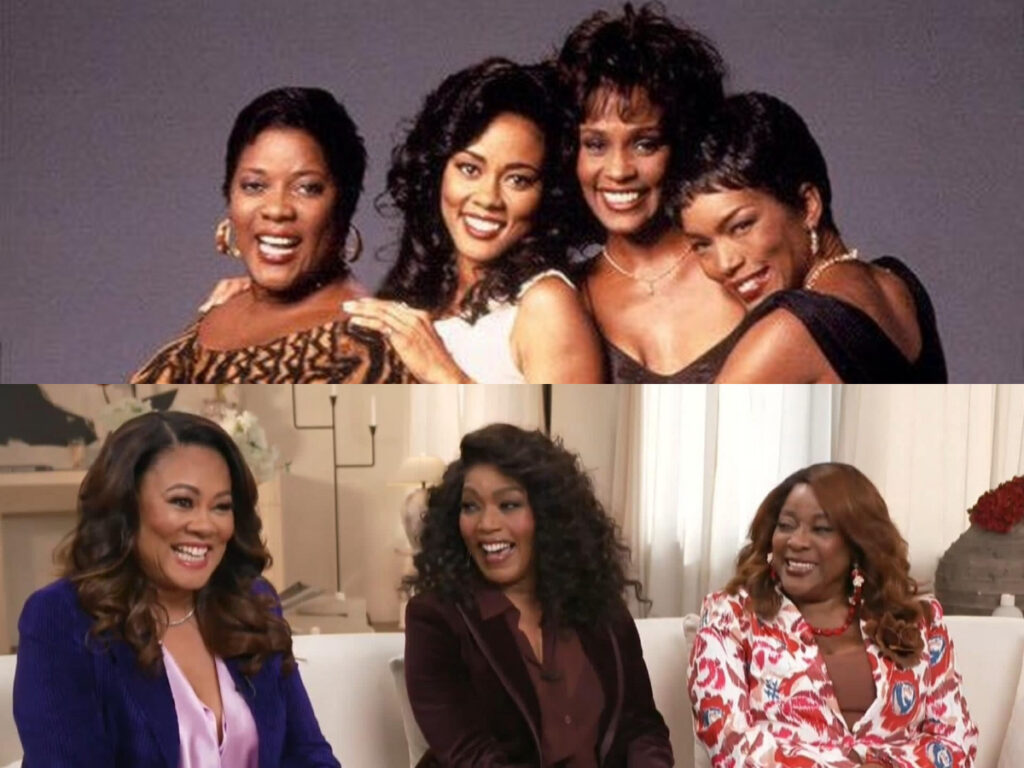
The resonance was so deep that, for years to come, the story’s reception and impact would be studied by cultural scholars. When Jacqueline Bobo published her book-length study of Black Women as Cultural Readers, Waiting to Exhale was a recurring reference point. And when Black women authors are asked about their influences, the movie Waiting to Exhale and the novel remain touchstones, the movie often the first point of entry. Danyel Smith called them “era-defining” and Tara M. Stringfellow wrote that McMillan taught her that “sisterhood is as necessary as air.”
Will There Ever Be A Part 2?
There is no official movie sequel to the 1995 hit Waiting to Exhale. While author Terry McMillan wrote a 2010 book sequel titled Getting to Happy, the planned film adaptation was permanently canceled following the tragic passing of Whitney Houston in 2012, as the remaining cast felt it couldn’t be done without her.
However, the legacy of the story continues. In 2020, it was announced that a Waiting to Exhale television series was in development with 20th Television and executive producer Lee Daniels. This upcoming adaptation is reportedly being reimagined to focus on the children of the four original friends as they navigate modern relationships and careers.
There currently is no release date.
What It Means In 2026
The lessons of love and togetherness so beautifully and poignantly displaced on Exhale teach today’s generation what it actually means to love and to lose love, and how to heal on the road to being a better and stronger version of one’s self.
It also teaches how having a core group of friends can help one endure the roughest patches life has to offer.
Check This Out...
-
Around 10,000 Children Are In Need Of A Loving, Safe Home In Georgia: Here’s How You Can Become A Foster Parent Or Adopt A Child
-
Happening Today: Hip Hop Icons And East Point Legends Outkast Launch Merch With Waffle House, Host Collab Drop At Centennial Olympic Park Restaurant At 11 A.M.
-
PINK RIBBONS AND PERSONAL JOURNEYS: OCTOBER MARKS GLOBAL BREAST CANCER AWARENESS MONTH
-
The Taste Of Survival: Chitterlings Came Out Of Necessity But Managed To Become A Soul Food Delicacy: The Story Of The “Chitlin” Plate–And Who Still Eats Them Today
-
Hispanic Heritage Months Begins This Week: Events And Celebrations Run From September 15 To October 15: South Fulton Features “México en el Corazón” Tour At Wolf Creek Sunday + More