
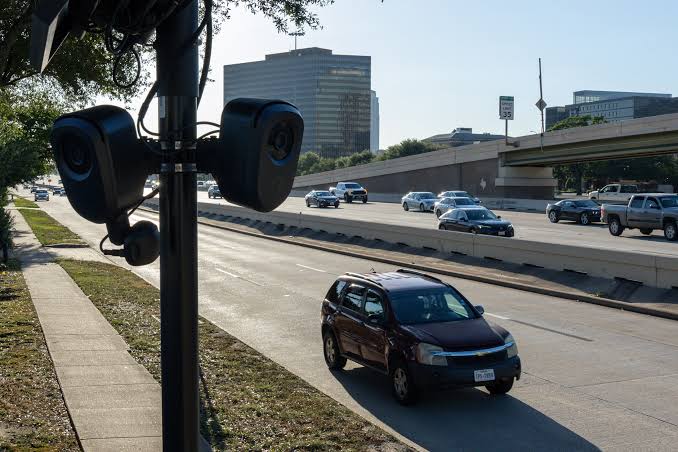
A wave of criminal charges, firings, and suspensions has swept through law enforcement agencies nationwide, as a mounting number of police officers face discipline for misusing Flock Safety’s automated license plate reader (ALPR) network. The escalating crisis has thrust the mass surveillance technology into intense controversy, exposing deep vulnerabilities in how public safety data is protected.
Internal investigations and state audits reveal that what was intended as a tool to track stolen vehicles and violent criminals is increasingly being weaponized for personal stalking, domestic spying, and unauthorized surveillance.
A Database Used for Personal Stalking
Nationwide, more than 50 law enforcement officers have been formally accused or convicted of abusing the Flock Safety database. The fallout has been swift: at least 27 officers have lost their jobs through termination or forced resignation, and multiple individuals now face severe criminal charges.

Investigators have found that officers frequently bypass strict departmental policies to run thousands of impermissible, unauthorized searches. The primary target of these rogue searches? The ex-girlfriends, spouses, romantic partners, and coworkers of the officers themselves.
Sweeping Misconduct Uncovered Across the U.S.
The scale of the abuse spans multiple states, with several major clusters emerging from recent audits:
Athens-Clarke County, Georgia: On October 7, 2026, Athens-Clarke County Police Chief Jerry Saulters announced the immediate termination of Officer Tyler Vaughn. The firing came after a fellow officer blew the whistle on Vaughn, triggering an internal probe that revealed he had improperly used the ALPR system to search his former girlfriend’s license plate numerous times.
In response to the breach, the department immediately restricted system access exclusively to supervisors and higher-ranking officials, while referring the case to the Georgia Bureau of Investigation (GBI) for a criminal probe.
Albany and Atlanta, Georgia: Our state has become a primary focal point for data abuse. The GBI recently filed criminal charges against five Albany police officers who were fired after an audit exposed “serious policy violations”.
Meanwhile, the Atlanta Police Department launched internal reviews into 79 flagged abnormal search patterns.
Indianapolis: Five officers from the Indianapolis Metropolitan Police Department (IMPD) were hit with over 60 criminal charges, including fraud, stalking, and official misconduct, for executing thousands of unauthorized searches on personal connections.
Wisconsin: In Milwaukee, an Internal Affairs detective was criminally charged with felony stalking for using Flock to spy on citizens. In nearby Menasha, a police officer was sentenced to six months in jail for using the network to illegally track his ex-girlfriend.
Communities Mobilize as Outrage Grows
As these systemic tracking abuses come to light, residents are growing increasingly vocal and organized in their opposition. Once-quiet town halls are transforming into heated accountability forums as voters demand immediate guardrails.
In Georgia, groups like the Athens Anti-Discrimination Movement have launched community forums to teach citizens how to protect their privacy. At a tense town hall organized last month by Democratic State Representative Eric Gisler, local resident Ellen Walker captured the mounting public frustration: “We’re putting safeguards on after the horses left the barn,” she warned.

The skepticism is yielding tangible pushback; just last week, a Flock camera on Tallassee Road in Athens was physically vandalized—part of a growing nationwide “guerrilla mindset” where frustrated citizens are taking matters into their own hands to disable local cameras.
This intensifying public anger is forcing a political shift. Local governments are realizing the political liability of automated dragnets. In a striking move this week, an Ohio city’s police department announced it would completely discontinue it’s Flock camera contract, concluding that the law enforcement value of the network was entirely outweighed by its “potential detriment” and threat to civil liberties.
Similar fights are brewing in communities across Georgia, as residents put pressure on locally elected officials to take a stand on Flock implementation and usage.
Tech Safety Controls Made Mandatory
Civil liberties groups, including the American Civil Liberties Union (ACLU), have long warned that the rapid expansion of unmonitored ALPR cameras creates an inescapable dragnet. Because Flock cameras are mounted broadly on public roadways to log millions of vehicle movements, critics argue that the lack of uniform judicial oversight invites abuse.

In response to the mounting public backlash, Flock Safety made its AI-powered “Audit Assistance” tool mandatory for all 7,000+ law enforcement agencies using its software. The system automatically flags “abnormal activity”—such as an officer repeatedly querying a single license plate without an active case number—and alerts police leadership.
Ironically, it was this automated tracking tool that initially alerted departments in cities like Savannah, Georgia, to the illicit behavior of their own staff, providing the electronic paper trail that led to their arrests.
Check This Out...
-
Six Charlotte Cops Face Termination Over Texts Allegedly Containing Text Message Thread Filled With Racial Slurs, Racial Profiling, And Police Brutality: Allegedly Competed To Pull Over The Most Black Drivers: Texts Came To Light Amid Flock Camera Misuse Investigation
-
Handcuffs With That Order? Popular San Diego Chef Allegedly Kidnapped And Shot Ex-Girlfriend In Iowa In 2014, Then Fled The State: Social Media Popularity Led U.S. Marshals To Him
-
Federal Judge Blocks Deportation Of 28 Year Old NYC Man Shot By ICE Agents Thursday: Who Is Oscar Belgal, And What Are The Circumstances Surrounding His Case?
-
Mike Ditka Dies At 86: Legendary Chicago Bears Player And Later Head Coach Led The ’85 “Bad News Bears” To Super Bowl Win
-
Colorado Parents Who Take Their Small Kids On Record-Breaking Mountain-Climbing Ventures Reported To Child Protective Services By Online Critics, Won’t Be Prosecuted