
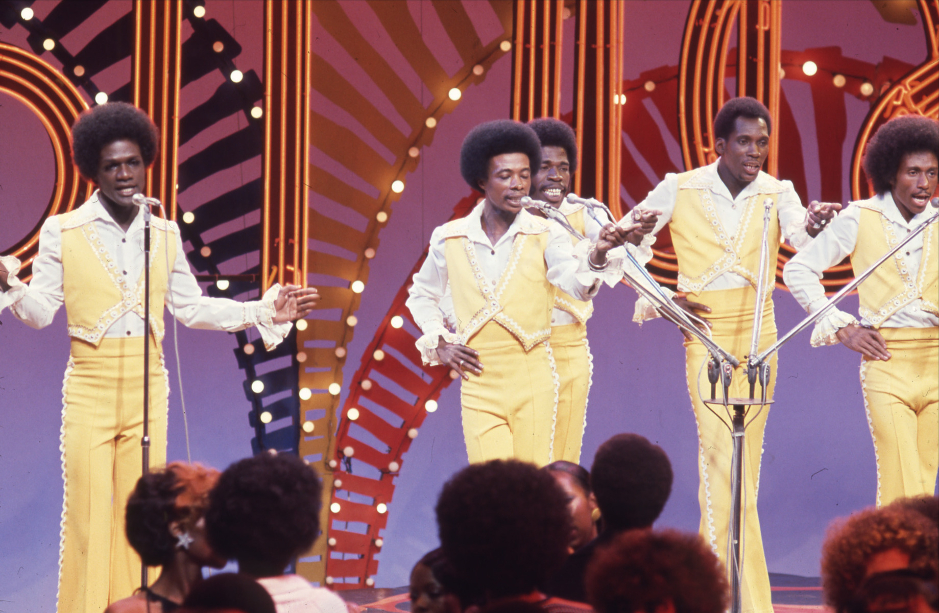
Decades before Lil Nas X, Frank Ocean, or Billy Porter redefined the boundaries of Black gay and queer expression in popular culture, a five-piece vocal group from Washington, D.C. quietly made history on American airwaves.
In the mid-1970s, The Dynamic Superiors signed with Motown Records and achieved a monumental milestone, becoming the first major-label Black R&B group fronted by an openly gay lead singer who wore make-up, occasionally dressed in drag for performances, and sang love songs to male audience members.
At a time when the music industry strictly enforced a rigid archetype of Black masculinity, the group—and their frontman, Tony Washington—chose absolute, unapologetic visibility.
Today, their story stands as a vital, often overlooked chapter in the evolution of R&B and LGBTQ+ history.
Boldly Authentic in a Conservative Era
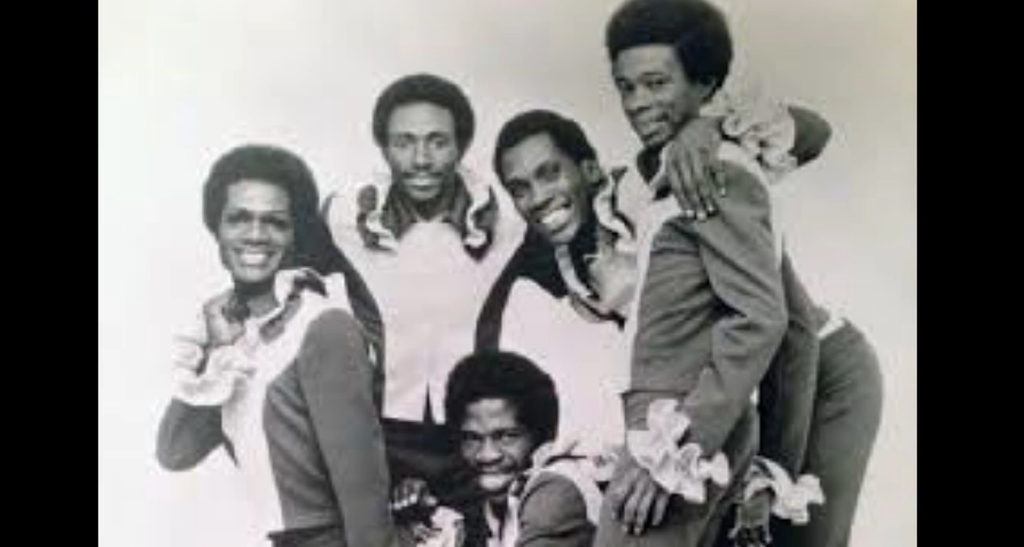
The Dynamic Superiors—comprising Tony Washington, George Spann, George Peterback Jr., Michael McCalpin, and Maurice Washington, brother to Tony—was discovered in 1973 at a performance in Atlanta. After Motown Records brass heard their sound, the group was quickly signed to a deal “on brown paper”.
And while their immaculate harmonies and sharp choreography aligned perfectly with the Motown tradition, their live performances were revolutionary.
“They were eclectic, to say the least,” said Valerie Simpson, one half of the iconic singing and songwriting duo Ashord & Simpson , in an interview with Tidal magazine. “I mean, they were way out”, she said. “You don’t buy a pink coat unless you want to be noticed. One member had on a blue fur coat.”
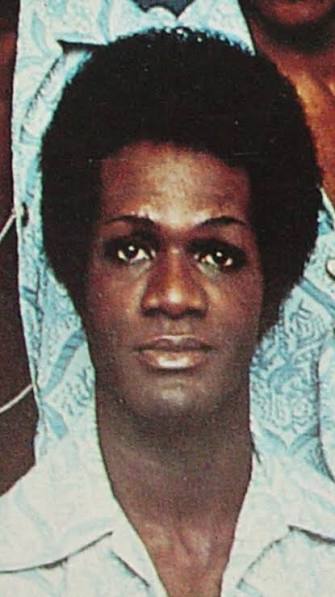
Tony Washington possessed a stunning, angelic falsetto, but it was his onstage persona that truly broke barriers. Decades ahead of his time, Washington performed in makeup, elaborate gowns, and capes. He didn’t hide his identity behind pronouns or double entendres; he openly serenaded men in the audience, bringing a radical Black queer identity into heterosexual, mainstream venues.
“I guess I was trying to push the clock ahead,” Washington said in a 1977 interview with The Advocate, referring to the Dynamic Superiors’ early years. “I wasn’t that flamboyant in the beginning. I tried to ease it on them, bit by bit. [Then] I thought to myself, ‘Man, my makeup is part of the program, so why not accept it?’”
The Power of the Motown Machine
What makes the story of The Dynamic Superiors even more remarkable was the backing of Motown itself. While few if any other major recording labels were willing to put money and muscle behind a group fronted by a flamboyantly gay Black male lead, under the leadership of label president Ewart Abner, Motown didn’t force Washington into the closet.
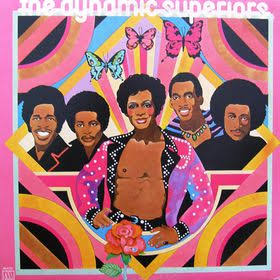
Instead, Motown leaned into his identity, even utilizing pink butterflies and soft, feminine aesthetics on the group’s album cover.
Abner’s investment and faith in Washington and the rest of the group was not just historic–it was risky: The Dynamic Superiors competed in a Black music market and era with chart-topping, iconic Soul acts such as The Temptations, The Four Tops, The O ‘Jays and The Spinners–super-talented Black male groups that did not feature an openly gay lead singer.
Up to that time, no other group had gained commercial success with such an arrangement.
To ensure their sound matched their star power, Motown paired the quintet with the legendary Ashford & Simpson, who worked on the group’s production.
The collaboration proved explosive, spawning the 1975 smash hit “Shoe Shoe Shine,” which surged into the Billboard R&B Top 20.
With chart-making success, Abner’s historic decision proved wise as audiences and music buyers showed their appreciation for the group’s immense vocal talent, powered by Tony Washington.
When the group took the stage on Soul Train, Washington’s fierce, high-camp energy beamed into millions of households across America, cementing their place in cultural history.
An Enduring, Unsung Influence
While a decline in label promotion led to the group’s eventual disbandment in the early 1980s, their impact never truly faded.
Ironically, Valerie Simpson believes the same dynamic that opened the door for the group to be signed to Motown actually limited its success.
“I don’t think the company was prepared to say that he was a gay man fronting a singing group,” Simpson said to Tidal. “[The group] didn’t get the exposure they needed to land them in a place where they were listened to by a larger audience.”
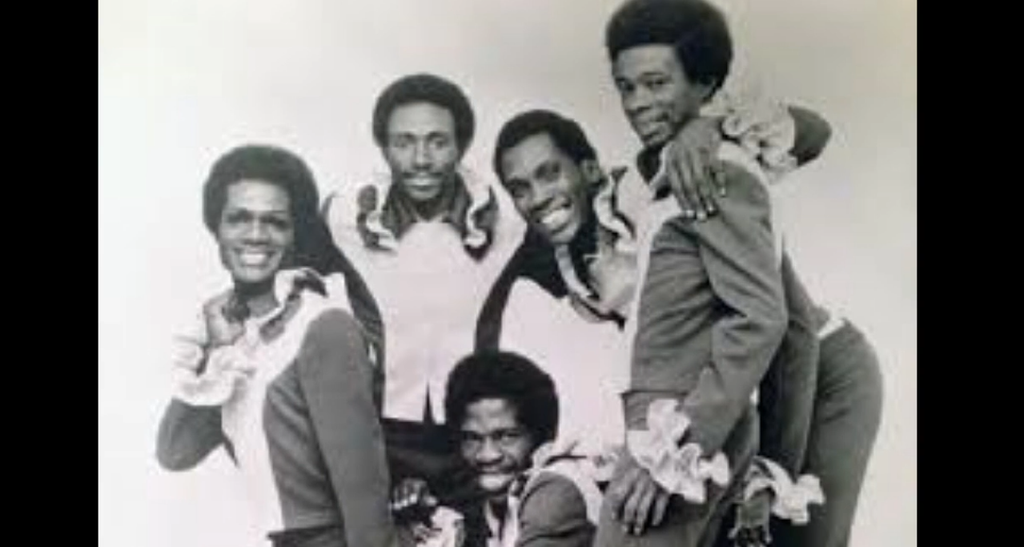
Nevertheless stalled by contemporary attitudes of the time, The Dynamic Superiors laid the foundational groundwork for later Disco icons like Sylvester, Pop visionaries like Prince, and the modern wave of openly gay and queer Black artists dominating the charts today.
More than 60 years after their debut, the music of The Dynamic Superiors remains a powerful testament to the timelessness of being true to oneself. They weren’t just a phenomenal Soul group—they were brave architects of a more inclusive musical future.
Where Are They Today?
Original lead singer Tony Washington died in 1989, years before seeing his trendsetting style become socially acceptable to a much broader audience.
Original member George Spann joined The Flamingos in 2001. The group was then reformed by George Spann in 2006, following the break-up of the Flamingos. The other members were three of the other Flamingos members: Larry Jordan, Earnest “Just Mike” Gilbert, and James Faison.
In 2010, Universal Music’s subsidiary, Soul Music.Com Records, finally released The Dynamic Superiors’ first two Motown albums, The Dynamic Superiors and Pure Pleasure on CD for the first time, in a 2-for-1 set.
The Dynamic Superiors no longer perform actively as a group.
Check This Out...
-
Happening Tonight: East Point City Council Meeting
-
City Of East Point To Host Dog Party Sunday, October 25: City Themes Event As “Howl-O-Ween Pawty”
-
75 Year Old East Point Grandmother Who Was Shot While Passing Out Food Tells WSB-TV She Can’t Walk, Was In Rehab For Months; Yearns To Pass Out Food Again: “I Miss It Every Time I’m Supposed To Go Out”
-
90s-2000s R&B Fans Are In For A Treat: A New Verzuz Battle Featuring Carl Thomas Vs. Case: Thursday, October 22 At 9:00 P.M.
-
East Point Water Department Wins Georgia Water Association Award (GAWP) For Third Consecutive Year