
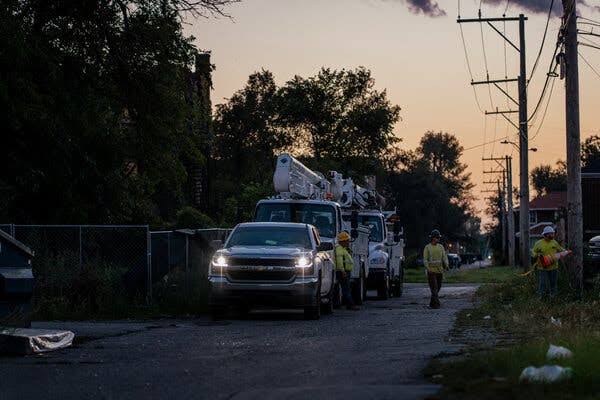
Gary, Indiana–to many best known as the birthplace of the late global music legend Michael Jackson and his talented siblings–is finally emerging from a historic, two-week blackout that exposed deep vulnerabilities in its aging power grid and sparked intense community outrage.
On August 11, 2026, a violent derecho tore through Northwest Indiana. Packing winds of up to 99 mph, the storm carried the force of a hurricane, instantly snapping nearly 300 local utility poles, destroying 27 substations, and knocking down 44 massive transmission towers across the region. The destruction knocked out electricity for more than 20,000 Gary residents at its peak, creating what the Northern Indiana Public Service Company (NIPSCO) described as the worst outage in its history.
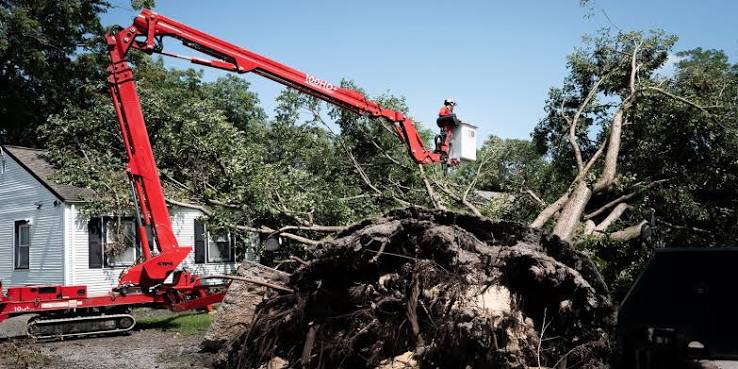
What followed was not a standard repair job, but a massive structural rebuild. Local utility provider NIPSCO faced immediate backlash as restoration timelines dragged from days into weeks, leaving residents in a city where roughly one in three lives in poverty to endure the stifling August heat.
For those trapped in the blackout, daily survival became an exhausting battle. “It’s literally like (Hurricane) Katrina out here. It really is,” one resident shared in a social media post documenting the pitch-black streets.
Even as some neighborhoods slowly saw lights crack back to life, the utility’s communication gaps left many in limbo. “I’ve had to rely mostly on Facebook to get any information,” noted Sandy Upshaw, 59, who was given three separate, incorrect restoration dates before her power finally returned.
Faith Leaders and Emergency Shelters Step In
As weeks passed without utility relief, community infrastructure stepped into the vacuum. Local emergency shelters, city community centers, and mobile food pantries became vital lifelines, providing hot meals, bottled water, and charging stations to thousands of displaced families.

The city’s faith-based network became the epicenter of the relief effort. The Tree of Life Missionary Baptist Church, which managed to keep its lights on, hosted a packed “Power Encounter” assembly. The event brought together celebrity pastors, local advocates, and weary citizens. Pastor Eric Boone noted that the crisis put the immense hardships of Gary’s residents on full display, prompting faith leaders to loudly decry “corporate greed” and demand institutional accountability.
State Regulators Launch Investigation, Lawsuit Filed
Political pressure mounted quickly as the blackout approached day 14. Indiana Governor Mike Braun and Gary Mayor Eddie Melton both condemned the slow response, calling the restoration pace entirely unacceptable.
On Monday, Governor Braun directed the Indiana Office of Utility Consumer Counselor to file a formal complaint, petitioning the Indiana Utility Regulatory Commission to launch an immediate investigation into NIPSCO. While praising the frontline lineworkers, Braun pulled no punches regarding executives: “NIPSCO is a monopoly utility that Hoosiers pay every month… NIPSCO management has failed to deliver adequate solutions.”
The state probe will specifically investigate whether NIPSCO failed to properly trim trees away from power lines and whether ratepayer funds approved for infrastructure upgrades were used as promised.
Compounding NIPSCO’s legal trouble, the utility is now facing a major class-action lawsuit filed on behalf of residents. The suit alleges systemic negligence regarding vegetation management and deferred grid maintenance. Meanwhile, Mayor Melton is pressuring NIPSCO to institute a 60-to-90-day moratorium on all service disconnections and late fees for affected Northwest Indiana residents.
A History of Disinvestment
For many in the majority-Black city, the prolonged crisis highlighted a painful, systemic reality. Utility watchdogs, including the Citizens Action Coalition, noted that NIPSCO has maintained a poor reputation for decades, marked by soaring utility costs and lagging customer service. Advocates argue that decades of regional infrastructure neglect and economic disinvestment left Gary uniquely vulnerable to a disaster of this scale, while wealthier, neighboring suburbs saw their power restored within mere days of the storm.
Power is targeted to finally return to the last remaining neighborhoods by midnight tonight, but the fallout from the historic storm is far from over.
The Numbers:
The regional utility provider, NIPSCO, reported that roughly 40,000 Gary residents were initially left without power following the severe storm on August 11, 2026.
As the outage dragged into a second week, more than 20,000 customers in Gary remained in the dark. Power was successfully restored to nearly the entire city by Tuesday night, August 25,
As of this morning, August 26th, the utility reported fewer than 640 customers remaining without electricity in the region.
According to recent metrics and the U.S. Census Bureau QuickFacts for Gary, the city’s demographics are structured as follows:
Total Population: 66,934 (down from 68,976 in 2020).
Racial Composition:
Black or African American: 76.2%
White (alone): 11.0%
Two or More Races: 7.8%
Hispanic or Latino (of any race): Roughly 5.1% to 6%.
Median Household Income: $38,731 (well below the national average).
Poverty Rate: 33.13%, meaning nearly one-third of the city’s population lives below the federal poverty line.
Median Age: 36.5 years.
Check This Out...
-
Six Charlotte Cops Face Termination Over Texts Allegedly Containing Text Message Thread Filled With Racial Slurs, Racial Profiling, And Police Brutality: Allegedly Competed To Pull Over The Most Black Drivers: Texts Came To Light Amid Flock Camera Misuse Investigation
-
Handcuffs With That Order? Popular San Diego Chef Allegedly Kidnapped And Shot Ex-Girlfriend In Iowa In 2014, Then Fled The State: Social Media Popularity Led U.S. Marshals To Him
-
Federal Judge Blocks Deportation Of 28 Year Old NYC Man Shot By ICE Agents Thursday: Who Is Oscar Belgal, And What Are The Circumstances Surrounding His Case?
-
Mike Ditka Dies At 86: Legendary Chicago Bears Player And Later Head Coach Led The ’85 “Bad News Bears” To Super Bowl Win
-
Colorado Parents Who Take Their Small Kids On Record-Breaking Mountain-Climbing Ventures Reported To Child Protective Services By Online Critics, Won’t Be Prosecuted