
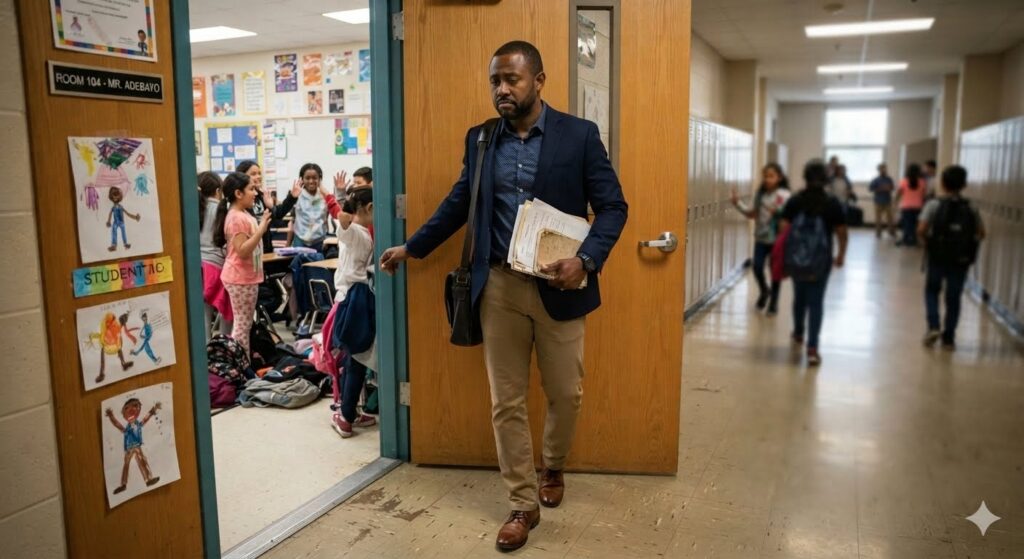
In a metropolitan area long celebrated as a national epicenter of Black culture, leadership, and commercial success, a sobering trend is playing out where it matters most: The front of the classroom. Despite the region’s diverse identity, metro Atlanta schools are grappling with a severe and compounding shortage of Black male educators.
While federal statistics reveal that Black men make up a meager 1.6% of the public school teaching workforce nationwide, the state of Georgia fares only marginally better at roughly 4%. Local education advocates emphasize that this minor bump does little to bridge the local representation gap, given that Black students comprise roughly 36% of Georgia’s statewide public enrollment—a percentage that climbs significantly higher within city boundaries and surrounding urban counties.
“The declining presence of Black male teachers in classrooms tells us in no uncertain terms: the nation struggles to recruit and keep male teachers of color,” Verdalia Turner, president of the Georgia Federation of Teachers, said in a previous interview. “We must have men in every profession, especially Black men, so all children of all races and ethnicities see African American men lead, teach, and nurture.”
Economic Pressures Trigger an “Exodus”
The localized drop in numbers is severely aggravated by a widening gap between teacher compensation and metro Atlanta’s soaring cost of living. Turner identified the core culprits driving men from classrooms as a combination of “compensation, conditions, culture, and a climate of disrespect.”
Because teaching remains a lower-paying field requiring a bachelor’s degree, Atlanta’s booming corporate, real estate, and tech sectors are successfully poaching top-tier diversity talent.
Indeed, the exodus of Black male teachers can easily be tied to economic factors, as many men recognize they are more likely to land a job earning six figures in the private sector as opposed to the cash-strained public school system.
Furthermore, local unions point out a severe lack of specialized administrative support. “Either the pay is not enough for them to support their families, there’s not support from their administration, or there’s no mentoring from seasoned teachers,” noted Remonia Toombs, executive director of the Fulton Federation of Teachers. “They just don’t feel supported.”
The Burden of the “Invisible Tax”
For the few Black male educators working in large local systems like Atlanta Public Schools (APS), DeKalb County, and Fulton County, the severe shortage intensifies workplace pressure. Research out of the Atlanta University Center (AUC) reveals that these teachers often balance a dual burden of cultural isolation while fighting off localized role-stereotypes.
Specifically, local educators report being subjected to an “invisible tax”, where they are routinely pigeonholed as building-wide disciplinarians for Black boys rather than being recognized or utilized primarily as intellectual, academic guides.
Subverting the Trend: The Intentional Exceptions
Despite the systemic decline, a few metro Atlanta schools have managed to successfully buck the trend through aggressive, localized recruiting efforts, proving that targeted representation is possible.
At Charles Drew High School in Clayton County, intentional building practices have driven the percentage of Black male educators to an astonishing 18%.
“In the school that I get to serve in, I’m not a unicorn at all,” said Alfred “Shivy” Brooks II, an economics teacher at the school and an APS school board member, in an interview with WSB-TV. “I’m a part of a tribe, a part of a village of Black men that show up every day.” Brooks, who utilizes his massive digital platform to advocate for classroom equity, emphasized that having a dense population of Black male teachers makes education look “aspirational” to the student body.
Similarly, the Charles R. Drew Charter School in East Lake has prioritized diversity as a strategic milestone, successfully raising its workforce diversity so that 13% of its entire K-12 teaching staff consists of Black men.
Rebuilding the Local Pipeline
Local community groups are actively intervening in the Atlanta market to rebuild the broken pipeline from the ground up. Programs like the Leading Men Fellowship recruit young Black men immediately following high school graduation, placing them into metro Atlanta pre-K classrooms to provide early literacy guidance. The program simultaneously helps finance their degrees to build a permanent local pipeline.
Educators nationwide agree that keeping Black men in the classroom is essential, not only for its cultural significance, but also for a more interpersonal reason: For a number of Black children growing up without a positive male figure in their households, their male teachers can easily become the most important and consistent male influence in their lives, which can positively impact growing minds.
Check This Out...
-
Six Flags Over Georgia Re-Opens Days After 42 Year Old Atlanta Teacher Died In Tragic Accident: Six Flags Faces Growing Scrutiny, Questions Over Ride Safety: Park President Issues Statement
-
Longtime Fox 5 ‘Good Day Atlanta’ Anchor, Former Atlanta Braves Star Ron Gant Leaving The Station: Gant Has Hosted Show For 14 Years, Says He Doesn’t Plan To Leave Atlanta
-
Bill Water Advisory Lifted For 5 Five South Fulton Cities: Atlanta Watershed Management Announced The Advisory Several Days Ago
-
Man Dies At 6 Flags Over Georgia After Fall From Roller Coaster; Four Injured: “Goliath” Ride Is 200 Feet High, Hits Speeds Of Up To 70 MPH
-
Hurricane Isaias Leaves Downed Trees, Flooding, And Thousands Without Power Across Southeast, Metro Atlanta: At Least 2 Confirmed Dead