
By: Mike Herring, The East Point News Editor
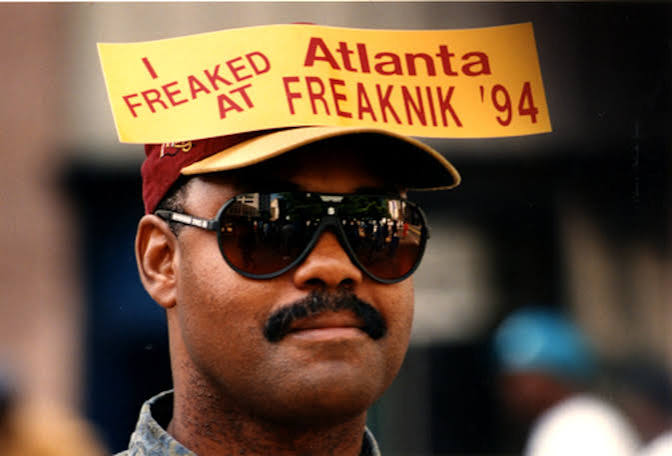
For several days during Spring Break, it was the Atlanta Party That Didn’t Stop. It was loud, throbbing Bass music. It was immense crowds as far as the eye could see. It was the biggest block party Atlanta had ever seen. And today, it’s the event of countless tales of legend–and freakin’.
It was the one and only Freaknik, the event that in many ways helped put Atlanta on the global map.
What started as the Black College Reunion in the early 1980s evolved into, a decade later, what was by far the biggest party Atlanta would host annually–at its peak in 1995 and 1996 drawing a quarter of a million people to the City.
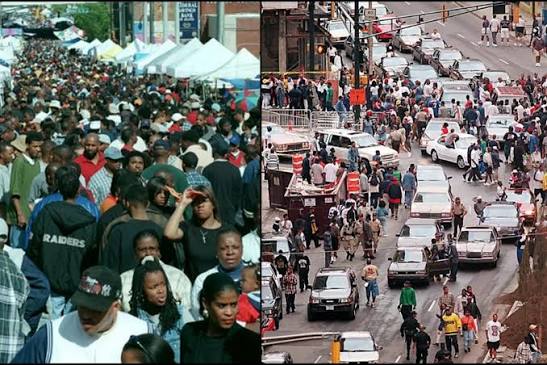
But the bigger the crowds became, the more controversial the event became until Atlanta city leaders began to take strong measures to scale back the party to the point that it became paralyzed.
How The Party Was Stopped: The Legal Mechanisms
During the mid-to-late 1990s, the City of Atlanta did not just rely on standard policing to manage Freaknik—city leaders used strict municipal codes, new traffic ordinances, and administrative blockades to dismantle the festival.
Driven by pressure from local businesses and the impending 1996 Olympic Games, the city leaned on its formidable bureaucracy to eliminate gridlock.
Cruising and Traffic Ordinances
Anti-Cruising Zones: The city passed ordinances making it illegal to drive repeatedly past the same traffic points within a set timeframe. Law enforcement posted nearly 300 “No Cruising Zone” signs across major areas like Peachtree Street and Piedmont Park.
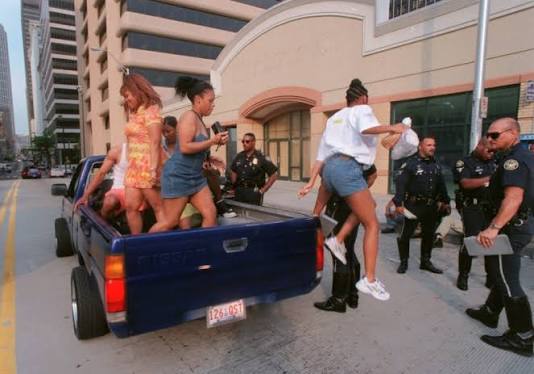
One-Way Street Conversions: The city passed temporary traffic ordinances transforming standard two-way roads into rigid one-way loops to prevent drivers from lingering, talking between cars, or blocking intersections.
Freeway Exit Blockades: Law enforcement utilized city traffic management authority to set up regular interstate ramp closures, cutting off incoming festival traffic before cars could even enter downtown neighborhoods.
Public Safety & Zoning Restrictions
Zero-Permit Denials: Because Freaknik lacked a centralized organizer, the city council and parks department passed strict rules denying any permits for Freaknik-affiliated vendor stalls, concerts, or large public park gatherings.
Strict Open-Container and Noise Codes: Atlanta police aggressively enforced municipal codes regarding public alcohol consumption and noise violations to break up sidewalk parties before they expanded.
Curfew Enforcements: The city strictly leveraged minor ordinances, including park curfew laws (closing parks at 11:00 PM), giving police legal grounds to clear crowd clusters.
Did Race Play A Role In Freaknik’s End?
As Freaknik grew into a massive gathering, public opinion split starkly along racial lines.
The White Backlash: Many White residents in neighborhoods like Midtown and Piedmont Park organized protest groups and picketed the Mayor’s house. While they cited traffic and noise, critics argued that their complaints heavily channeled racial anxiety regarding large gatherings of Black youth.
The Double-Standard Argument: Black students and civil rights groups pointed out a blatant double standard. They argued that White college students engaged in equally disruptive, alcohol-fueled behavior during spring break in beach towns like Daytona Beach, yet those cities accommodated them while Atlanta heavily policed its Black visitors. A 1995 Atlanta Journal-Constitution poll highlighted this chasm: 69% of Black residents supported Freaknik, while 62% of White residents thought it was bad for the city.
Respectability Politics and Black Leadership
Since electing its first Black Mayor, Maynard Jackson in the early 1970s, and as the Black Middle Class in the city expanded, Atlanta began to proudly market itself as the “Black Mecca”, governed by an influential Black political and economic elite. Freaknik forced these leaders into a major political crisis.
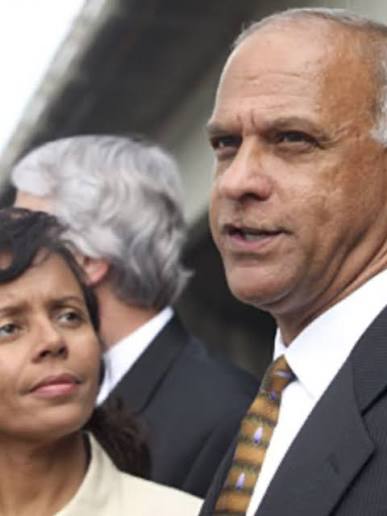
- Protecting the “Atlanta Way”: The city’s African-American Mayor Bill Campbell and the city council faced intense pressure to protect Atlanta’s image as an international business hub, especially with the 1996 Olympic Games approaching.
- Intra-Racial Tension: Many older, middle-class Black residents and church leaders grew uncomfortable with the event’s rowdy atmosphere. They worried the chaotic street behavior played into negative racial stereotypes and damaged the city’s reputation. Consequently, the final push to end Freaknik was designed and executed in large part by the city’s own Black leadership.
Shifting Realities: Safety Overrides the Debate
By the late 1990s, the conversation shifted from a strictly racial debate to a consensus on public safety. The event’s demographic evolved, drawing in crowds completely detached from the original HBCU student base.
As reports of looting, open violence, and severe sexual assault against women spiked, a racially diverse coalition of Atlantans—including Black female student groups and the Atlanta Committee for Black College Spring Break—officially declared that the party had become too dangerous and actively called for its end.
The Influence:
Launchpad for Southern Hip-Hop
Before Freaknik, the music industry was heavily dominated by New York and Los Angeles. Freaknik became a massive, decentralized marketing engine for the South.
OutKast’s Breakthrough: In 1994, OutKast released their legendary debut album, Southernplayalisticadillacmuzik, the exact same week as the festival. Because the city was trapped in gridlock, producers and artists physically handed tapes and CDs through car windows to thousands of influential tastemakers from across the country.
The Rise of LaFace and So So Def: Music executives like LA Reid, Babyface, and Jermaine Dupri used the massive crowds to test new records, cementing labels like So So Def and LaFace Records. Freaknik helped vault artists like Lil Jon, Ludacris, and Trina onto the national stage, permanently shifting the axis of hip-hop southward.
Cementing Atlanta as the “Black Mecca”
Freaknik proved that Black youth culture could generate an unprecedented level of economic and social gravity entirely independent of White mainstream spaces.
Unapologetic Black Joy: It offered a premier spring break destination influenced specifically by the HBCU experience.
The Digital-Age Blueprint: Years before smartphones and social media, Freaknik built a national network purely through flyers, the “grapevine,” and shoutouts on television shows like NBC’s A Different World.
Economic Boost: Tens of thousands of students got their first taste of Atlanta’s thriving economic ecosystem, prompting thousands of Black professionals to permanently relocate to the city after graduation.
The Controversy: Public Safety and Sexualized Trauma
Any honest assessment of Freaknik’s legacy must acknowledge the severe public safety failures that marked its final years.
Free And Off The Chain: As the festival swelled past 200,000 people, bad actors detached from the college scene flooded the streets. The festival became plagued by high-profile instances of looting, open violence, and property damage–which the local media were happy to report on. In hindsight, some historians and first-hand participants in Freaknik admit that public safety became less of a consideration as time went on, a devastating development that put some young women at risk for exploitation and sexual assault and helped lead to a growing negative perception of the event, which would contribute to its eventual downfall.
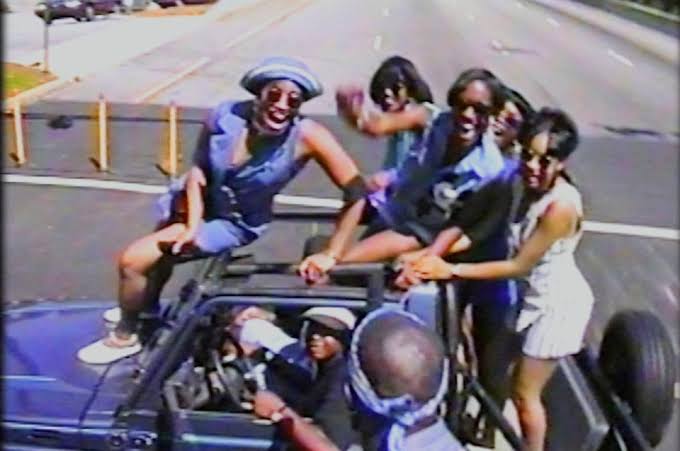
Violence Against Women: The most painful part of Freaknik’s legacy is indeed the too-often occurrence of sexual harassment and unfortunately assault that women experienced. Male-dominated crowds, sometimes but not always influenced by alcohol, grew a little too rowdy and friendly flirtation gave way to dangerous encounters where women were groped, trapped in vehicles, or attacked—a reality that ultimately forced Black female student leaders to demand the city shut the event down entirely.
A Prototype for Modern Festival Culture
Architecturally, Freaknik was the chaotic, unpermitted ancestor of the modern multi-day urban music festival. It proved the massive commercial viability of staging large-scale Black cultural events in Atlanta. Major modern, highly organized festivals like One Musicfest, A3C, and Broccoli City effectively inherited the spirit of community and music that Freaknik pioneered, but rebuilt it within safe, ticketed, and permitted structures.
The Aftermath: What Is Freaknik’s Actual Legacy?
Freaknik’s actual legacy is complex but compelling: While Freaknik helped transform Atlanta into the undisputed global capital of Black culture and Southern Hip-Hop, it simultaneously left behind a painful history of racialized institutional failure and public safety controversies.
But what it also did was expose the world to The Black Experience. Visitors and spectators from across the country and even exotic places overseas descended upon the City to get the Freaknik experience which at its core was about partying and togetherness, but also a celebration of freedom, unity, culture and expression: As Black people–In The South no less, where such expressions of Black Joy and Happiness on that same Georgia soil, in the prior century, would have been unthinkable, impossible, and immediately stifled.
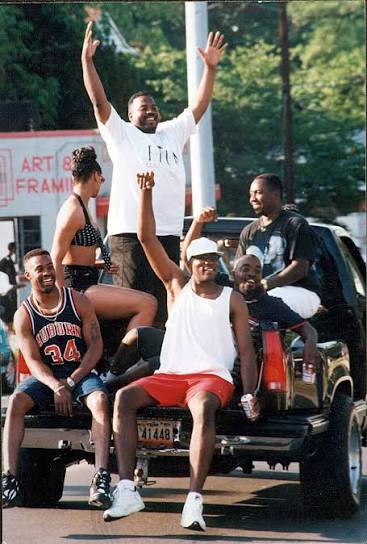
No doubt, Freaknik was about Freedom. And Sisterhood. And Brotherhood. And Togetherhood.
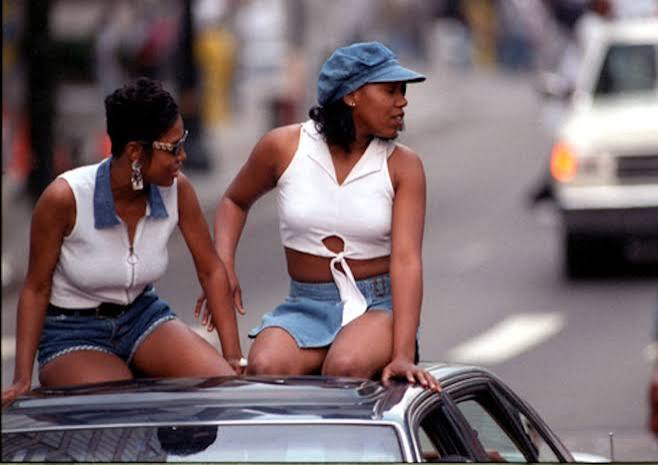
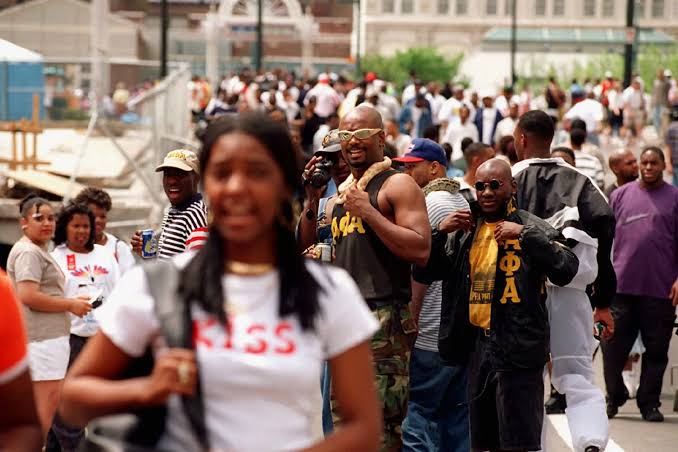
The City’s Modern View–And New Beginnings For “Freaknik”
Today, the term “Freaknik” is used for parties and events not just in Atlanta but in other areas of the country although the name is trademarked.
And though Freaknik is “technically” banned, in the sense that the city government won’t allow it to reincarnate itself and take the city back to the 90s, the name of course is not. Here’s a look at the Atlanta landscape for Freaknik today:
- Zero Street Access: The city enforces zero tolerance for street cruising, spontaneous block parties, or unpermitted park takeovers. The Atlanta Police Department actively shuts down unpermitted pop-up events.
- Historical Precedent: Following decades of safety issues, past city administrations banned all localized Freaknik activity. That infrastructure policy remains standard today to prevent traffic gridlock.
Where Freaknik is Allowed
- Private Venues: Promoters can legally host Freaknik-themed night parties, day parties, and casting calls, provided they take place entirely inside private nightclubs, restaurants, or rented properties.
- Ticketed Amphitheaters: The official FreakNik Festival is permitted only when organizers lease highly secure, closed venues—such as the Lakewood Amphitheatre—where crowd size, security, and parking are strictly managed.
- Neighboring Cities: Official brand organizers frequently partner with nearby jurisdictions like the City of College Park to host safe, multi-day music festivals outside Atlanta’s immediate city limits.
The Last Word
Today, one can judge Freaknik based on its successes and challenges however it remains one of the most iconic expressions of Black Unity that ever existed. Something so amazing, so wonderful, so all-encompassing, so culture-defining, and so powerful that it could only have happened in ATL.
Check This Out...
-
90s-2000s R&B Fans Are In For A Treat: A New Verzuz Battle Featuring Carl Thomas Vs. Case: Thursday, October 22 At 9:00 P.M.
-
Ugly Loss: Georgia Bulldogs Players Told To Put Helmets On As They Exited The Field Due To Alabama Fans Throwing Water Bottles, Cans At Team: Fan Appears To Shove Bulldogs Player’s Head: Georgia Fans React On Social Media As SEC Expected To Weigh In
-
Georgia Bulldogs Win In Regular Season At Alabama For First Time Since 2007, Now 6-0: Late Game No-Call On Assumed Penalty Stirs Controversy: Bulldogs Poised For #1 Ranking With Texas Loss
-
Minutes Away From Kickoff At 7:30 P.M.: The #2 Ranked Georgia Bulldogs Travel To Alabama To Face The 6th Ranked Crimson Tide: Both Teams Enter The Celebrated Matchup Undefeated
-
Hurricane Isaias Is Now A Category 3 Hurricane: East Point And Metro Atlanta Impact To Be Felt Later Today, Tomorrow: Flood Watch In Effect, Governor Declares Statewide State Of Emergency: How To Prepare