
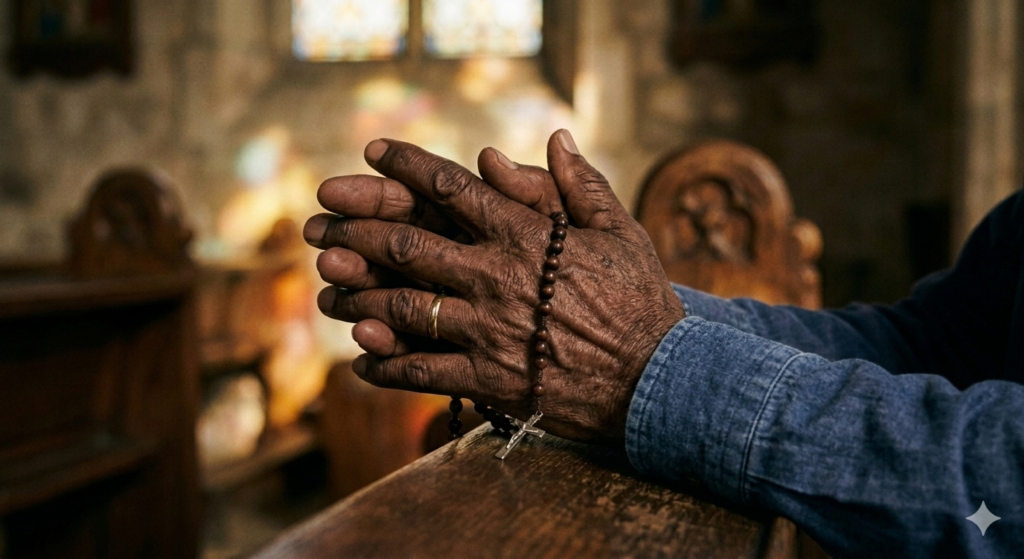
The Holy Bible says in (Philippians 4:6) that Believers should not be anxious but pray about everything, using “prayer and petition, with thanksgiving” (Philippians 4:6). For many millions of people across the world, prayer is a constant in their day-to-day lives, fulfilling what many spiritually-minded and religious people maintain as an exercise that brings one closer to God and closer to answers he or she may be seeking.
For centuries, prayer has been a cornerstone of spiritual life, but modern science is now attesting that this ancient practice also has profound physiological impacts on the human body. Far from being “just in the mind,” regular prayer can trigger measurable changes in everything from brain chemistry to cardiovascular health.
Rewiring the Brain
One of the most significant effects of prayer occurs in the brain. Researchers have found that consistent, focused prayer—often as little as 12 minutes a day—can actually “reshape” neural pathways.
Here are other ways science has discovered ways in which prayer impacts the human body and brain:
Frontal Lobe Activation: Prayer increases blood flow to the frontal lobes and the anterior cingulate, areas responsible for attention and emotional regulation.
Amygdala Regulation: Regular practice can decrease activity in the amygdala, the brain’s “alarm system,” leading to a significant reduction in fear and stress responses.
Gyrification: Long-term practitioners may even experience increased “folding” (gyrification) of the cerebral cortex, which improves information processing and emotional control.
The Relaxation Response
At its core, many forms of prayer induce what scientists call the “relaxation response.” This is the physiological opposite of the “fight-or-flight” state.
Heart Health: By activating the parasympathetic nervous system, prayer can lower blood pressure and heart rate. One study at Duke University Medical Center found that older adults who prayed regularly had significantly lower blood pressure than those who didn’t.
Chemical Shifts: Prayer has been linked to the release of “feel-good” chemicals like serotonin and oxytocin, which promote feelings of safety, connection, and emotional resilience.
Reduced Cortisol: Lowering stress hormones like cortisol can reduce the long-term risk of chronic issues like heart disease and diabetes.
Longevity and Healing
The cumulative effect of these physiological changes may even extend a person’s lifespan. Some research suggests that frequent private prayer is a predictor of survival, particularly in those managing chronic illnesses.
Immune Support: Evidence suggests that the reduction in chronic stress through prayer helps the immune system function more effectively, aiding in recovery from surgery or infection.
Pain Management: Prayer can alter pain sensitivity and intensity, sometimes through a process called deafferentation, which helps provide natural pain relief.
Not All Prayer Has the Same Impact
Interestingly, the nature of prayer matters, according to scientific researchers.
Positive Connection: Prayers centered on gratitude, adoration, or a “partnership” with the divine are most strongly linked to health benefits.
The “Attachment” Factor: Conversely, prayer rooted in fear, guilt, or a sense of “abandonment” by God can actually increase anxiety and psychological distress.
While scientists at institutions like Stanford Medical School and Harvard continue to study these connections, the current evidence suggests that a regular prayer practice acts as a powerful “reboot” for the human nervous system.
Check This Out...
-
Cleveland, Ohio Church Makes Waves After Co-Pastor Introduces The Congregation To Her Husband And Co-Pastor’s Second New Wife, Confirming Polygamous Marriage
-
End Of An Era: The Death Of Former Televangelist Jim Bakker At Age 86 Closes A Controversial Chapter In American Religious And TV History
-
The History Of Black Gospel Music: How It Evolved From The South’s Cotton Fields, The Civil Rights Era, On Through Disco And Hip Hop–And Where It Stands In Today’s Streaming And Social Media Era
-
When Suicide Hits Home: Coping Through Outside Help, Utilizing The 988 Emergency Service
-
Fast-Growing 2819 Church Brings Big Numbers, Younger Crowds To Greenbriar